Last updated 06.17.2026
I Swallowed My Filling — Do I Need to Go to the ER?
Learn what happens if you swallow a filling, when it becomes an emergency and how to protect your tooth until you see a provider.

Usually, no. In most cases, a swallowed filling passes through the stomach and digestive system without causing harm. If you can breathe normally, speak clearly and are not coughing, choking or wheezing, it is unlikely to be a medical emergency.
The bigger concern is whether the filling went into your airway instead of your stomach — and your tooth still needs attention either way. What you'll learn in this article:
Swallowing a filling is almost never dangerous — your body passes it naturally
Mercury fillings are safe to swallow in small amounts — no poisoning risk
The real concern is aspiration (inhaling it) — and the warning signs are unmistakable
Your tooth is now unprotected and needs care within 24–48 hours
There are simple steps you can take right now to protect it until your appointment
Your tooth is exposed. That part needs attention today. Schedule your appointment at Aspen Dental — we can assess the damage and replace your filling, often in a single visit.
What happens when you swallow a filling?
When a filling comes loose and you swallow it, it travels the same path as food — down your esophagus, through your stomach and out through your digestive system. Most fillings are small enough to pass without any issue. You will not feel it moving through, and it will not cause internal damage.
Is swallowing a filling dangerous?
For most adults, swallowing a filling poses no meaningful health risk. The digestive system is designed to handle small, non-sharp objects. A filling — whether it is a small piece or the whole restoration — will typically pass within a day or two without any symptoms.
Research on aspiration and ingestion in dental practice found that approximately 80–90% of swallowed dental objects pass through the digestive tract naturally, with complications requiring medical intervention occurring in fewer than 1% of cases.³
The situation is different for young children who have narrower airways and digestive tracts. If a child swallows a filling, contact your pediatrician or Poison Control (1-800-222-1222) for guidance.
What happens if you swallow a mercury filling?
This is the question that worries most people, but the answer is usually reassuring. Silver-colored amalgam fillings do contain mercury, but swallowing a small piece is not the same as mercury poisoning. According to the American Association of Poison Control Centers, swallowing part of an amalgam filling is not considered toxic because the mercury is bound to other metals, making it much less absorbable by the body.¹ The FDA also states that dental amalgam fillings are considered safe for most adults, and accidentally swallowing a small piece does not usually require emergency treatment.²
White composite fillings and temporary fillings are even less concerning because they do not contain mercury. They are made from resin or zinc oxide materials that are generally harmless in small amounts.
When you do need to go to the ER
There is one scenario where swallowing a filling becomes a genuine emergency: if you inhaled it into your airway instead of swallowing it into your stomach. This is called aspiration, and it is a different situation entirely.
What are the warning signs that I inhaled the filling instead of swallowing it?
Aspiration happens when a foreign object enters the airway instead of the esophagus — and it can happen quickly, especially during dental work or while lying back. The warning signs are distinct from simply swallowing something:
Persistent coughing that does not stop
Difficulty breathing or shortness of breath
Wheezing or a high-pitched sound when breathing
Chest tightness or discomfort
A feeling that something is stuck in your throat or chest
Choking that does not resolve on its own
If you have any of these symptoms, call 911 or go to the nearest emergency room immediately. An inhaled object can block the airway or travel into the lungs, where it can cause a serious infection called aspiration pneumonia if not treated promptly. If you swallow the filling and have none of these symptoms — you can breathe easily, speak normally and feel no chest discomfort — you do not need the ER. Your concern now shifts entirely to your tooth.
Is a lost filling a dental emergency?
No, it’s not an ER emergency — but it does need same-day dental attention. A lost filling won't send you to the hospital, but the tooth underneath is now unprotected. Fillings seal off the inner layer of the tooth — called dentin — from bacteria, temperature, and pressure. Without that seal, the exposed tooth can become sensitive, crack under normal bite pressure, or develop decay within days.
The window matters: most providers recommend being seen within 24–48 hours. The longer the tooth goes unprotected, the more likely a simple filling replacement becomes a more involved procedure.
Why does the exposed tooth need attention even if it doesn't hurt?
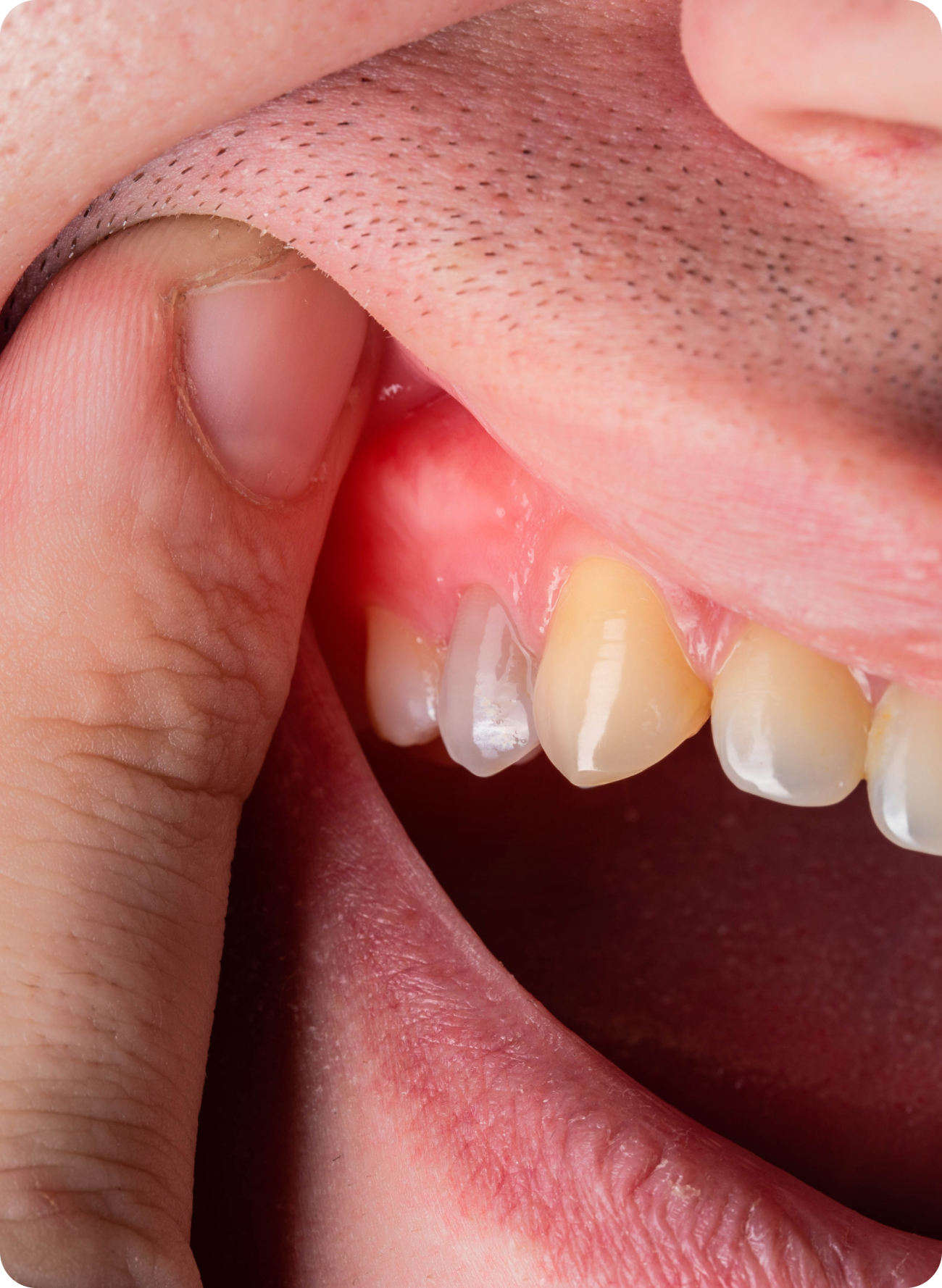
A lost filling does not always cause immediate discomfort, but the tooth is still vulnerable. Without the filling protecting it, bacteria can reach the inner part of the tooth and lead to decay, sensitivity or infection over time.
Many people start noticing sensitivity to hot, cold or sweet foods within a few hours or days. Left untreated, a simple lost filling can turn into a much bigger problem.
Even if the tooth feels fine, it is best to have it checked within 24–48 hours. The sooner the tooth is repaired, the easier the treatment usually is.
What to do until you can see a dental provider
While you arrange your dental appointment, these steps will help protect the exposed tooth:
Rinse gently with warm salt water
This helps clear any debris from the area without irritating the exposed surface.
Avoid chewing on that side
Pressure on an unprotected tooth can cause cracking or further damage.
Use temporary dental cement if needed
Over-the-counter products like Dentemp are available at most pharmacies and can cover the exposed area temporarily. This is not a fix — it is a short-term measure until you are seen.
Skip very hot, cold or sweet foods and drinks
The exposed dentin is sensitive to temperature and sugar. Avoiding these reduces discomfort until the tooth is restored.
Do not try to reuse the old filling
Even if you find it, a filling that has come out cannot simply be pressed back in. It needs to be professionally replaced.
When to see your dental provider
Schedule an appointment with your provider as soon as possible — ideally within 24–48 hours. Aspen Dental offers same-day and walk-in appointments at many locations, so you do not have to wait long to have the tooth evaluated and restored.
At your visit, your dental provider will examine the tooth, assess whether any decay has developed and place a new filling to seal and protect the area. In most cases, replacing a lost filling is a straightforward procedure.
If you notice any of the following before your appointment, call your dentist right away:
Throbbing or aching that does not ease up
Visible swelling around the tooth or gum
A bad taste or odor coming from the area
Fever
These can be signs of infection that need prompt attention.
I swallowed my filling FAQs
Will the filling show up on an X-ray if I need one later?
Amalgam fillings are metal and will appear on an X-ray. If you have imaging done for an unrelated reason and a provider notices a small metallic object in your digestive tract, it is worth mentioning that you recently swallowed a filling. Composite and temporary fillings are not visible on standard X-rays.
Can I wait a week to see a dental provider if the tooth doesn't bother me?
Waiting is not recommended, even without discomfort. An unprotected tooth can develop decay quickly because bacteria now have direct access to the softer dentin layer. What feels fine today can become a more serious problem within days. A 24–48 hour window is the standard guidance for a lost filling.
What if I'm not sure whether I swallowed it or it just fell out somewhere?
If you cannot find the filling and you have no breathing symptoms, it is reasonable to assume you swallowed it. The more important question is whether the tooth is now exposed — run your tongue over the area. If you feel a rough edge, a hole or unusual sensitivity, the filling is gone and the tooth needs attention regardless of where the filling ended up.
Is a temporary filling more dangerous to swallow than a permanent one?
No. Temporary fillings are typically made from zinc oxide or similar materials that are non-toxic in small amounts. They are softer and more likely to come loose, but swallowing one carries no greater health risk than swallowing a permanent composite or amalgam filling.
Do I need a new filling, or could the tooth need a crown instead?
That depends on how much of the original tooth structure remains. If the tooth is largely intact, a new filling is usually sufficient. If the tooth has cracked, weakened or lost significant structure since the original filling was placed, your provider may recommend a crown to fully protect it. Your provider will assess this at your appointment and walk you through the options.
Sources
¹Poison Control — Do dental fillings cause mercury poisoning? https://www.poison.org/articles/do-fillings-cause-mercury-poisoning
²U.S. Food and Drug Administration — Information for patients about dental amalgam fillings https://www.fda.gov/medical-devices/dental-amalgam-fillings/information-patients-about-dental-amalgam-fillings
³National Library of Medicine - Aspiration and ingestion in dental practice: a 10-year institutional review. National Library of Medicine - https://pubmed.ncbi.nlm.nih.gov/15493393/