Last updated 07.09.2026
Why is a salty or copper taste coming from one tooth?
Learn what can cause a salty or metallic taste from one tooth, how to recognize warning signs and when to seek dental care.

A salty or copper taste coming from one specific tooth often points to a dental problem, such as a draining infection, a leaking filling or inflamed gum tissue around that tooth. While the taste itself may seem harmless, it can be an important clue that something beneath the surface needs attention.
What you'll learn in this article
A salty taste may be a sign that an infection is draining from the tooth or surrounding gum tissue.
A copper or metallic taste can be linked to a leaking metal filling.
Cracked teeth and gum disease can also cause unusual tastes from one area of the mouth.
Some causes need prompt treatment, while others are less urgent.
Early evaluation can help prevent more serious problems.
If you're noticing a salty, metallic, or unusual taste from one tooth, schedule an appointment with an Aspen Dental provider. Finding the cause early can make treatment simpler and help prevent the problem from getting worse.
What causes a salty or copper taste from one tooth?
The key word here is one tooth. A taste that seems to come from one spot in your mouth is usually caused by a problem in that area, not by something affecting your whole body. Several dental conditions can cause this symptom.
Why does a draining abscess taste salty?
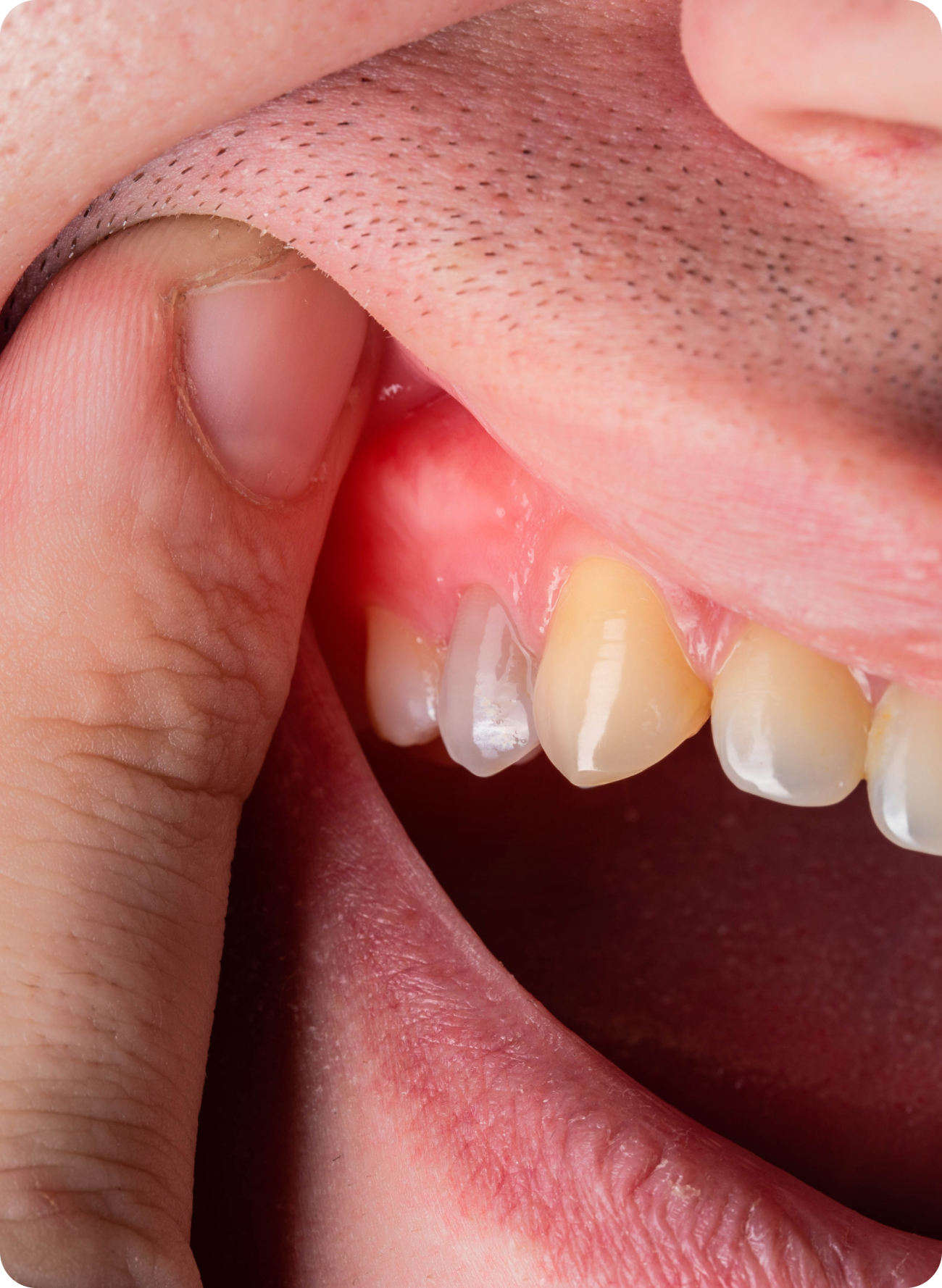
A dental abscess is a pocket of infection that forms inside or around a tooth. As pressure builds, the infection may drain through a small opening in the gum. The fluid contains bacteria, white blood cells and proteins that often create a salty or bitter taste.
You may notice the taste comes and goes or becomes stronger after eating or pressing on the area. A small pimple-like bump on the gum near the tooth is another common sign.
Even if the drainage relieves pressure, the infection is still present and needs treatment. According to the Cleveland Clinic, an untreated periapical abscess can spread beyond the tooth and affect nearby tissues if left untreated.1
Can a leaking filling cause a copper or metallic taste?
Yes. An older silver (amalgam) filling can wear down, crack, or pull away from the tooth over time.2 When saliva comes into contact with the exposed metal, it may create a copper or metallic taste.
A leaking filling can also let bacteria get underneath the restoration, increasing the risk of decay. If you notice a metallic taste around an older silver filling, have it checked by your dental provider, even if you do not have pain.
What is galvanic shock and why does it cause a copper taste?
Galvanic shock happens when two different metals in your mouth, such as a gold crown and a silver filling, interact with saliva and create a small electrical current.
This can cause a sudden metallic or copper taste from one area of the mouth. While it is usually not harmful, your dental provider can determine whether your dental restorations are causing the problem.
Could gum disease be the cause?
Yes. Advanced gum disease, called periodontitis, can create deep pockets between the teeth and gums where bacteria collect. Fluid from these areas may produce a salty or slightly metallic taste.
Gum disease often causes bleeding gums, gum tenderness, and ongoing bad breath. Although it usually affects more than one tooth, the taste may seem to come from one area if that spot is more inflamed than the others.
What about a cracked tooth or failing crown?
A cracked tooth can allow bacteria to reach the inner part of the tooth, leading to irritation or infection. A failing crown can create a similar problem if the seal between the crown and tooth breaks down. If you notice a new taste along with pain when biting, sensitivity or soreness around a crowned tooth, schedule an evaluation with your dental provider.
Can post-nasal drip cause a salty taste?
Sometimes. Mucus from a cold, allergies, or a sinus infection can leave a salty taste that seems to come from one area of the mouth.
Unlike the dental problems above, post-nasal drip is usually not an emergency. However, if the taste continues after your sinus symptoms improve, have your dental provider examine the tooth to rule out a dental cause.
Is a salty or copper taste from one tooth an emergency?
It depends on the cause.
When should you be seen right away?
Seek same-day care if the taste is accompanied by:
Swelling in your face, jaw, or neck
Fever
Difficulty swallowing or opening your mouth
Severe throbbing that does not improve with over-the-counter pain medication
These symptoms can be signs that an infection is spreading and needs prompt treatment.
If you have a salty or metallic taste without these symptoms, schedule an appointment within the next few days. While it may not be an emergency, the underlying problem should still be evaluated.
When to see your dental provider
A salty or copper taste from one tooth is usually a sign that something around that tooth needs attention. Your Aspen Dental provider can examine the area, take X-rays if needed, and identify the cause.
Treatment depends on what's causing the taste. It may involve treating an infection, replacing a leaking filling, addressing gum disease, or repairing a cracked tooth or failing crown. Finding the problem early can often help prevent more extensive treatment.
Why is a salty or copper taste coming from one tooth? FAQs
Can a tooth taste salty without any discomfort?
Yes. A draining abscess can reduce pressure as it drains, so you may notice little or no pain even though the infection is still present. A salty taste without discomfort should still be evaluated by your dental provider.
Can rinsing with saltwater help?
Saltwater can temporarily soothe irritated gums and reduce bacteria in the mouth, but it will not treat an infection, repair a filling or fix gum disease. It should only be used as a short-term comfort measure while you wait for your appointment.
How long can I wait before seeing a dental provider?
If you have swelling, fever or severe throbbing, seek care the same day. If the taste is your only symptom, schedule an appointment within the next few days. Waiting too long may allow the underlying problem to get worse.
Sources
1Cleveland Clinic. Periapical Abscess: Symptoms, Diagnosis & Treatment. https://my.clevelandclinic.org/health/diseases/24896-periapical-abscess
2U.S. Food and Drug Administration. Information for Patients About Dental Amalgam Fillings. https://www.fda.gov/medical-devices/dental-amalgam-fillings/information-patients-about-dental-amalgam-fillings