Last updated 06.18.2026
Why does one tooth suddenly feel higher than the others?
Learn why a tooth may suddenly feel elevated, what conditions can cause it and when it should be evaluated by a dental professional.

When one tooth suddenly feels higher than the others, it usually means the tissue around that tooth has become inflamed. Common causes include an infection, a cracked tooth, teeth grinding, or a bite that shifted after a recent filling or crown.
When this tissue becomes irritated, it can swell and slightly lift the tooth in its socket. Even a small amount of swelling can make the tooth feel taller than the surrounding teeth when you bite down.
What you'll learn in this article:
A tooth that feels high is often a sign of inflammation around the root
Infections and abscesses can make a tooth feel elevated and typically require treatment
A cracked tooth can create this sensation even when no damage is visible
A recent filling or crown may simply need a minor bite adjustment
Teeth grinding can inflame the supporting tissue and change how a tooth feels
Swelling, throbbing, or fever can signal a problem that should be evaluated promptly
If one tooth suddenly feels higher than the others, schedule an appointment with your dental provider. Identifying the cause early can help prevent the problem from becoming more serious.
What's actually happening around the tooth
The tissue around the tooth may be inflamed
The sensation is usually caused by inflammation in the periodontal ligament (PDL), the thin layer of tissue that helps hold the tooth in place and absorb chewing forces.
When this tissue becomes irritated, it swells. Because there is very little room around the tooth, even a small amount of swelling can push the tooth slightly upward in its socket.
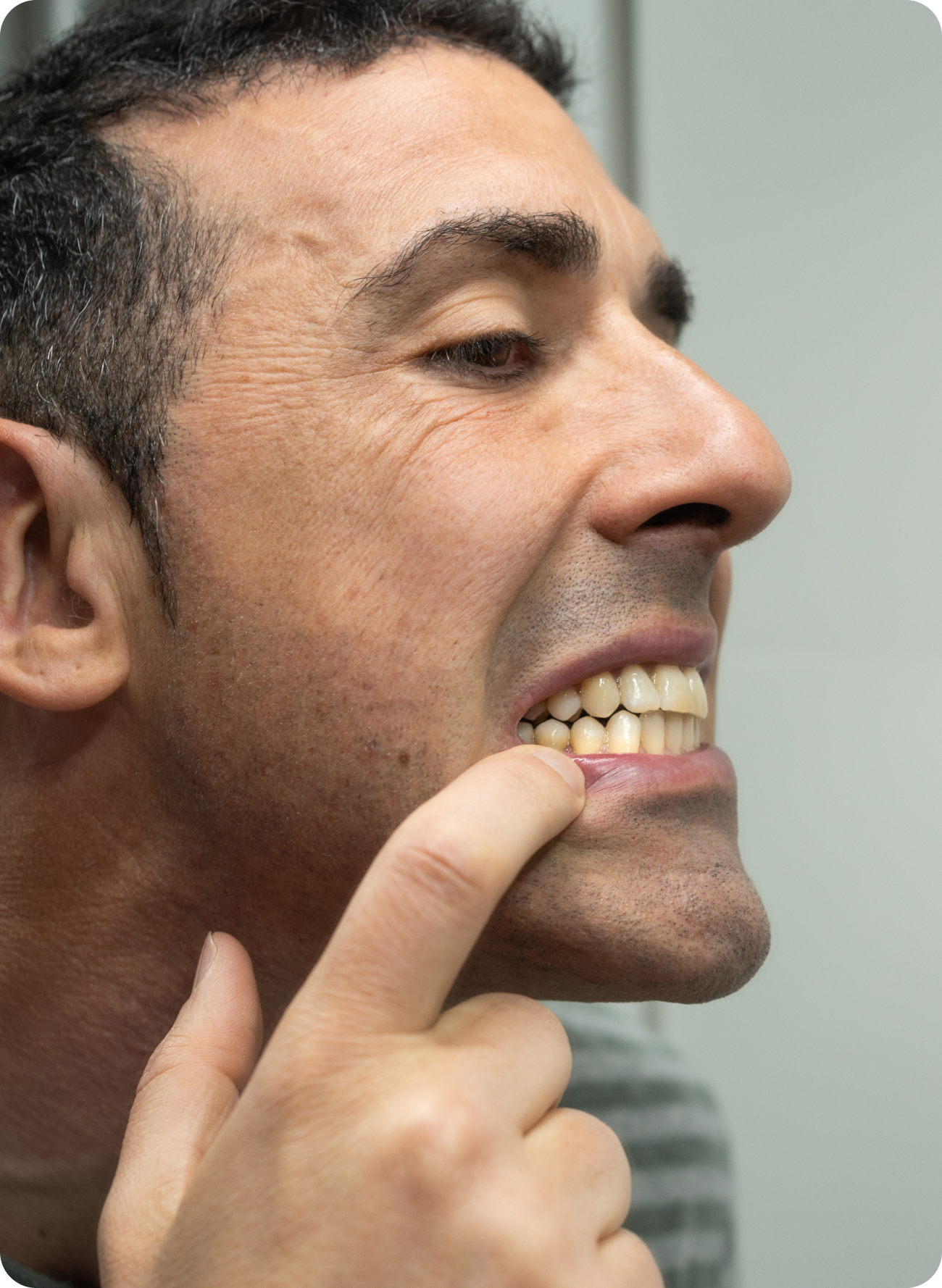
As a result, the tooth may hit before the others when you bite down. It can feel taller, tender, or sore when chewing. In some cases, it may ache even when you're not eating.
The tooth itself is not moving on its own. The feeling comes from the surrounding tissue reacting to an underlying problem, and identifying that cause is the key to treatment.
A dental abscess or infection
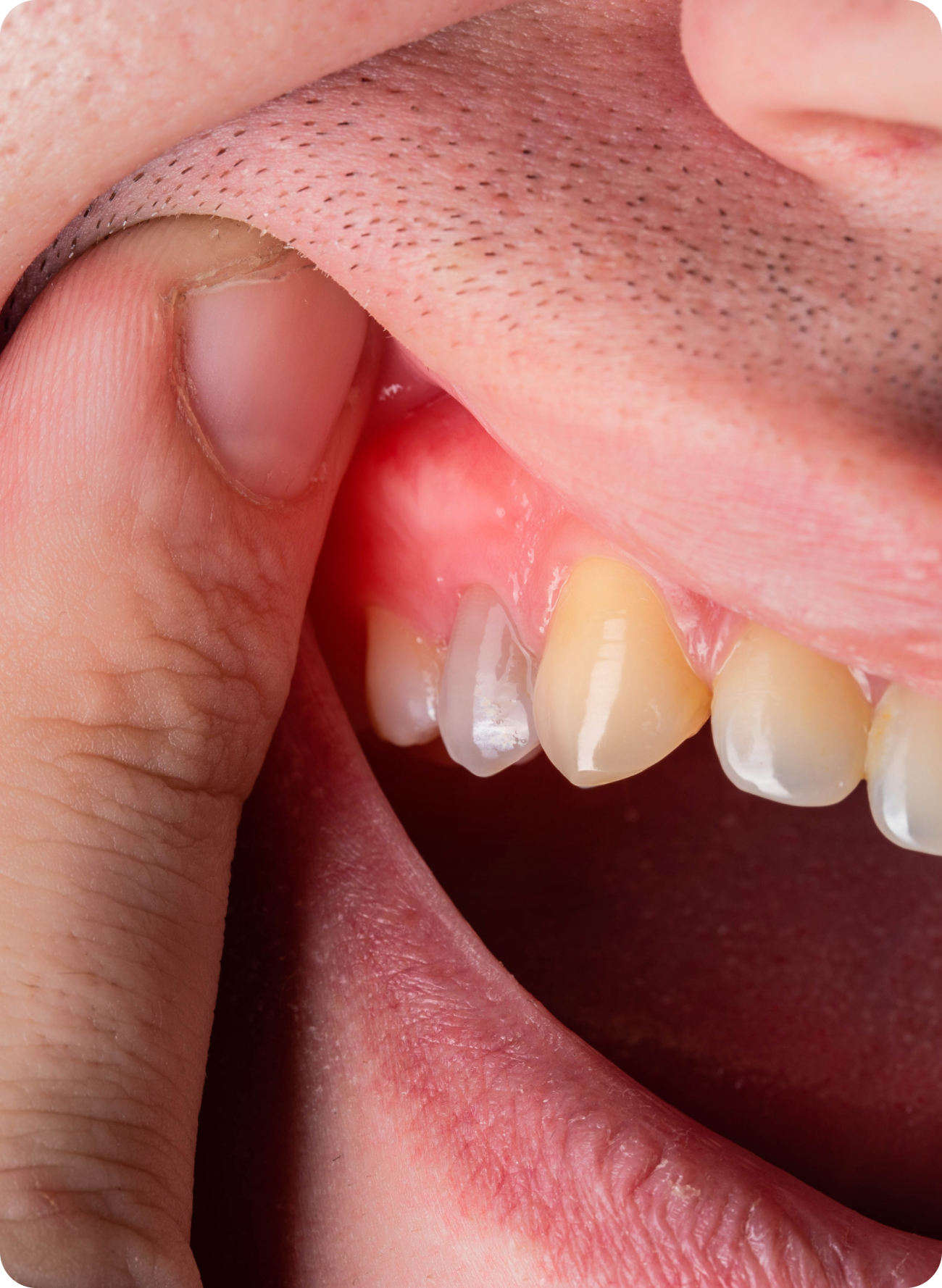
An abscess is a pocket of infection that forms at the root of a tooth or in the surrounding gum tissue. As the infection grows, it creates pressure inside the bone. That pressure pushes against the periodontal ligament, causing the tooth to feel elevated and tender — sometimes intensely so.
Abscesses do not go away on their own.¹ Left untreated, the infection can spread to surrounding teeth, the jaw, or other areas of the body. If the elevated feeling comes with throbbing, swelling in the gum or jaw, a bad taste in your mouth, or a small bump on the gum near the tooth, treat it as urgent and contact a dental provider the same day.
A cracked or fractured tooth
A crack in a tooth — even a hairline fracture that does not show up on an X-ray — can irritate the periodontal ligament and cause the tooth to feel high. The discomfort is often sharpest when biting down on something hard and may ease immediately after releasing the pressure.
Cracks can develop from chewing hard foods, an old filling that has weakened the tooth structure, or a minor impact you may not have noticed.² They are more common than most people realize and are treatable when caught early.
A recent filling, crown, or root canal
This is one of the most common — and easiest to fix — causes of a tooth feeling high. After a filling, crown, or root canal, you may not notice a bite problem until the numbness wears off. At that point, the tooth may hit before the others because the restoration is slightly too high.
A simple bite adjustment can usually solve the problem. Your dental provider can identify the uneven spot and make a small adjustment in just a few minutes. If the sensation started after a recent procedure, call your provider and ask whether a bite adjustment is needed.
Food trapped between the tooth and gum
Food can sometimes become lodged between a tooth and the surrounding gum tissue, especially fibrous foods like meat or popcorn hulls. The pressure can make the tooth feel tender, sore, or slightly elevated when you bite down.
Before assuming a more serious problem, gently floss around the area. If trapped food is the cause, removing it may provide quick relief.
Gum disease and bone loss
Advanced gum disease (periodontitis) gradually destroys the bone and tissue that hold teeth in place. As that support breaks down, teeth can shift, loosen, or begin to feel out of alignment. A tooth that feels higher than normal may be one that has lost some of its anchoring structure and is no longer sitting in its correct position.
Other signs of gum disease include bleeding when you brush, gums that look pulled away from the teeth, persistent bad breath, and soreness along the gumline.
Teeth grinding (bruxism)
Many people grind or clench their teeth at night without realizing it. Research estimates that 8% to 31% of adults grind their teeth, most without any awareness of it.³
Over time, that repeated pressure inflames the periodontal ligament around specific teeth — often the back molars — causing them to feel sore and elevated, especially in the morning.
If you wake up with jaw soreness, headaches or a tooth that feels high but has no other obvious cause, grinding may be the reason. A custom night guard can protect the teeth and allow the inflamed tissue to settle.
Sinus pressure (upper teeth only)
The roots of the upper back teeth sit very close to the sinus cavities. When the sinuses become congested or inflamed — from a cold, allergies, or a sinus infection — the pressure can radiate downward and make one or more upper teeth feel sore, sensitive, or slightly elevated.
This type of discomfort typically affects multiple upper teeth at once rather than a single tooth and tends to worsen when you bend forward or press on your cheekbones. It usually resolves once the sinus issue clears.
Symptoms that mean you should not wait
Most causes of a tooth that feels high can be evaluated at a scheduled appointment. A few symptoms should be addressed sooner. Seek same-day care if you notice any of the following alongside the elevated feeling:
Throbbing or intense soreness that does not ease with over-the-counter medication
Visible swelling in the gum, cheek, or jaw
A small pimple-like bump on the gum near the tooth
A bad or bitter taste in your mouth
Fever or a general feeling of being unwell
Soreness that is spreading to your jaw, ear, or neck
These symptoms can indicate an abscess or spreading infection that requires prompt treatment.
When to see your dental provider
If a tooth has felt higher than the others for more than a day or two — with or without other symptoms — it is worth having it evaluated. The underlying cause will not identify itself, and most of the conditions that create this sensation get easier to treat the sooner they are addressed.
A dental provider can examine the tooth, take X-rays if needed, and identify whether the issue is a bite adjustment, an infection, a crack, or something else entirely. Treatment options range from a simple bite correction to a filling, root canal or gum treatment depending on what is found.
Do not assume the feeling will go away on its own. Visit an Aspen Dental office near you and get a clear answer.
Why does one tooth feel higher than the others? FAQs
Will a tooth that feels high go back to normal without treatment?
It depends on the cause. If the elevated feeling is due to a slightly high filling or crown, the tooth may feel less noticeable over a few days as you adapt — but the bite imbalance is still there and can cause soreness or wear over time. If the cause is an infection, crack, or gum disease, the problem will not resolve without professional care. When in doubt, have it checked.
Is it safe to take ibuprofen while waiting for my appointment?
Over-the-counter anti-inflammatory medication like ibuprofen can help reduce swelling and ease discomfort temporarily. Follow the dosage instructions on the label. It is not a substitute for treatment — it manages the symptom, not the cause — but it is a reasonable way to stay comfortable while you wait for your appointment.
Can teeth grinding cause this even if I have never noticed it?
Yes. Most people who grind their teeth do so during sleep and are completely unaware of it. Common signs include waking up with a sore jaw, frequent morning headaches, worn or flattened tooth surfaces, and teeth that feel tender or elevated without any obvious dental cause. A provider can identify signs of grinding during a routine exam.
Why does the tooth feel worse when I bite down but better when I stop?
This pattern — discomfort on contact that eases when you release — is a classic sign of a cracked tooth or an inflamed periodontal ligament. The pressure of biting compresses the irritated tissue or forces the crack open slightly, triggering the sensation. Releasing the pressure allows the tissue to decompress. This symptom should always be evaluated, as cracks can worsen over time.
Can this happen after a tooth extraction nearby?
Yes. After an extraction, the surrounding teeth can shift slightly as the area heals, and inflammation from the extraction site can temporarily affect the periodontal ligament of adjacent teeth. A tooth near a recent extraction may feel elevated or tender for a short period. If the feeling persists beyond a week or two, or gets worse, contact your Aspen Dental provider.
Sources
¹National Institutes of Health — Apical Periodontitis: https://www.ncbi.nlm.nih.gov/books/NBK589656/
²American Association of Endodontists — Cracked Teeth: https://www.aae.org/patients/dental-symptoms/cracked-teeth/
³American Academy of Sleep Medicine — Sleep-Related Bruxism: https://aasm.org/resources/clinicalguidelines/bruxism.pdf