Last updated 06.18.2026
How long does a toothache last?
Learn how long common toothaches last, which symptoms signal infection and when dental discomfort requires prompt care.

Most toothaches last 1–3 days when caused by minor irritation.1 A toothache that persists beyond 48 hours — or that throbs, wakes you at night or comes with swelling — signals an underlying issue that won't resolve on its own. Schedule an appointment with your Aspen Dental provider before it progresses.
A popcorn hull caught in the gum clears in a day. A cavity, cracked tooth, or infection does not — and waiting rarely makes it better.
What you'll learn in this article:
Why tooth discomfort that suddenly stops isn't always a good sign
How long each common cause typically lasts — from minor irritation to abscess
Why discomfort reliably worsens at night
What's normal after a filling, root canal, or extraction — and what isn't
Which symptoms mean you shouldn't wait for a routine appointment
How long a toothache lasts depends on what's causing it
Some toothaches resolve on their own within a day or two; others signal a problem that will only worsen without treatment. Here is what to expect for the most common causes.
Minor gum irritation or food impaction
Discomfort from a piece of food lodged between the teeth, a minor gum abrasion or temporary inflammation typically resolves within 1–3 days once the irritant is removed. If tenderness lingers beyond three days or the gum begins to swell, something more than surface irritation is likely involved.
Cavities and tooth decay
Early-stage cavities often cause no noticeable discomfort at all. Once decay reaches the dentin — the layer beneath the enamel — you may notice sharp sensitivity to cold, sweet foods or pressure. This sensitivity does not go away on its own; it worsens as decay progresses toward the pulp. Without treatment, what begins as occasional sensitivity can escalate into constant throbbing over weeks to months.
Cracked or fractured tooth
A cracked tooth produces a distinctive pattern: a sharp jolt of discomfort when biting down, followed by quick relief when pressure is released.2 This pattern does not resolve without treatment. Depending on the depth of the crack, the tooth may remain manageable for weeks before the discomfort becomes constant — or it may worsen rapidly if the crack extends into the pulp.
Dental abscess or infection
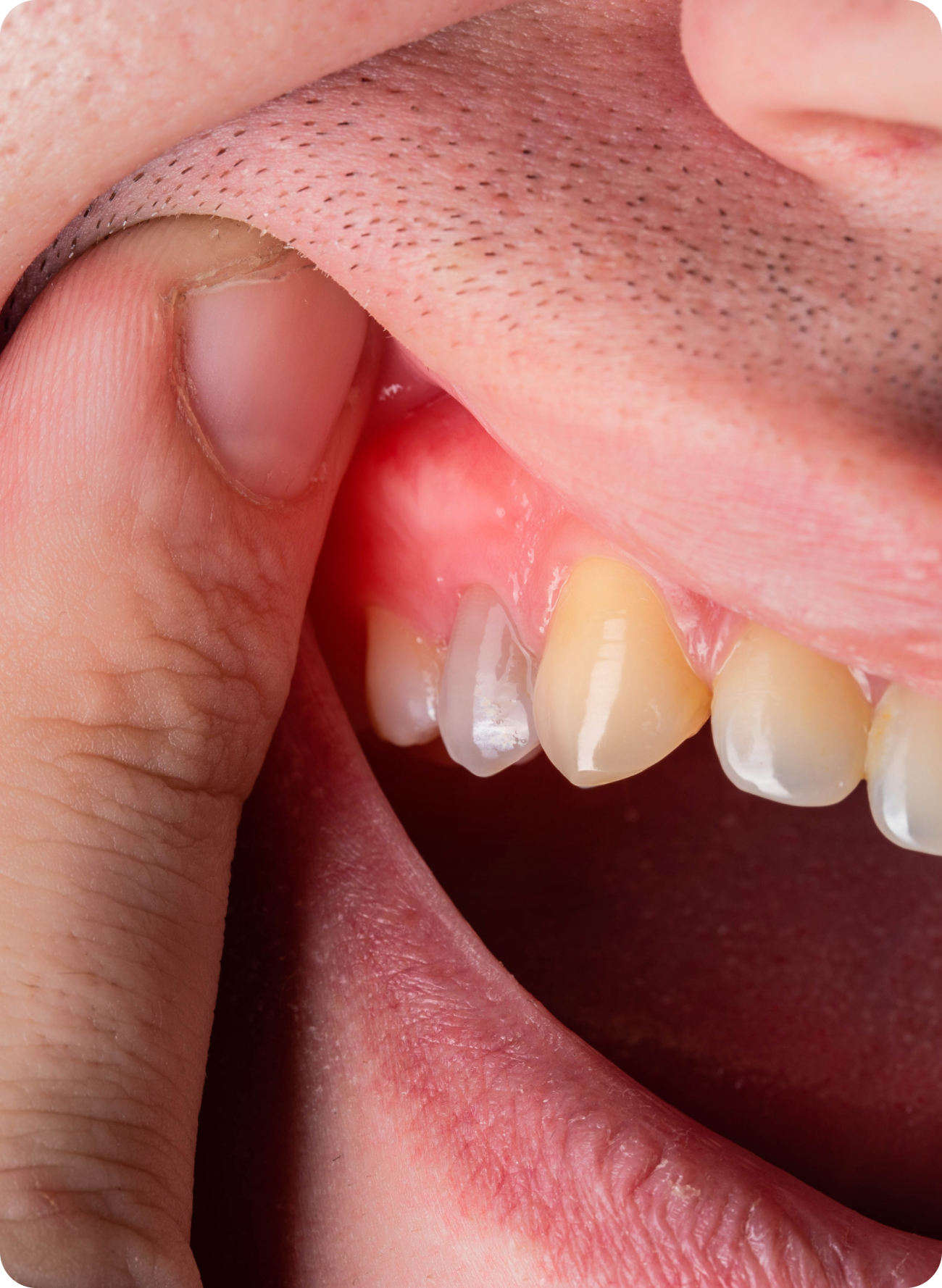
A dental abscess is a bacterial infection near the tooth root or surrounding gum tissue that will not resolve without treatment. It typically causes severe, throbbing discomfort along with swelling, fever, or a bad taste in the mouth.
Left untreated, the infection can spread beyond the tooth and jaw — and more than 15 million root canals are performed in the United States each year, the majority to treat infections that began as untreated decay or cracks that were straightforward to address when caught early.³
Wisdom tooth discomfort
Wisdom tooth discomfort often lasts 3–7 days as the tooth begins to break through the gums and usually feels like a dull ache near the back of the jaw that may radiate toward the ear or throat. Because wisdom teeth erupt in stages, symptoms may improve temporarily before returning as the tooth shifts again. If the gum around a partially erupted tooth becomes infected — a condition called pericoronitis — swelling and throbbing typically worsen and require professional treatment. Impacted wisdom teeth that cannot fully erupt may ultimately need extraction to permanently relieve the discomfort.
Teeth grinding (bruxism)
Chronic grinding — most often during sleep — puts sustained pressure on the teeth, jaw muscles, and TMJ. The pain is often felt across a larger area of the jaw rather than in one specific spot, and it may be accompanied by jaw soreness or headaches upon waking. It tends to ease through the day and return after sleep, which distinguishes it from decay or infection. A custom night guard from your provider can protect your teeth and reduce symptoms — mention morning jaw soreness or sensitivity on your next visit.
Sinus-related tooth sensitivity
Upper back teeth sit close to the maxillary sinuses. When those sinuses become inflamed or infected, the pressure can mimic a toothache — typically affecting multiple upper teeth rather than a single tooth. This usually resolves as the sinus condition clears, often within 7–10 days. If you have upper molar sensitivity alongside nasal congestion, facial pressure, or a recent cold, your Aspen Dental provider can help rule out a dental cause.
Why does a toothache get worse at night?
Lying down increases blood flow and pressure to the head, which amplifies throbbing in an inflamed tooth. Daytime activity and distraction naturally reduce your awareness of discomfort — at night, with fewer distractions, the same inflammation feels significantly more intense.
If discomfort is noticeably worse when you lie down, it's a reliable signal that inflammation or infection is present, not just surface sensitivity. Elevating your head with an extra pillow can reduce the intensity temporarily, but won't address the underlying cause.
What does it mean when a toothache suddenly stops?
When a tooth that has been throbbing for days suddenly stops hurting, it can feel like good news. It often isn't.
When the dental pulp becomes severely infected, the nerve can die — and a dead nerve can no longer transmit pain signals. The discomfort stops, but the infection doesn't. Bacteria continue spreading through the root canals and into surrounding bone, often forming a periapical abscess. By the time swelling appears in the jaw or face, the infection has already progressed significantly.
A tooth that stops hurting after days of throbbing should be evaluated promptly. Visit a dental office near you if this happens.
How long does discomfort last after treatment?
Understanding what is normal after common dental procedures helps you distinguish expected recovery from a complication.
After a filling
Some sensitivity to temperature and pressure after a filling is normal and typically resolves within 2–4 weeks. Sensitivity that worsens after the first week, or that becomes a constant ache rather than a triggered response, warrants a follow-up — the pulp may have been more affected than the filling alone can address.
After a root canal
The tooth and surrounding tissue will be sore for 2–7 days following a root canal. Over-the-counter anti-inflammatory medication (such as ibuprofen) taken on a consistent schedule — not just when discomfort peaks — is typically the most effective approach during this window. Soreness that intensifies after day three or persists beyond two weeks should be evaluated.
After a tooth extraction
Soreness after an extraction is expected for 3–7 days. The main risk during this period is dry socket — when the blood clot protecting the extraction site is dislodged. It produces a sharp, radiating ache that typically begins 3–5 days after the procedure and is distinctly more intense than normal post-extraction soreness.
What can help in the meantime?
While waiting for your appointment, a few approaches can reduce discomfort without masking symptoms that your provider needs to assess:
Ibuprofen is generally more effective for dental discomfort than acetaminophen because it reduces inflammation rather than just blocking pain signals. It typically takes 30–60 minutes to reach full effect. Follow dosage instructions on the label.
Saltwater rinse (half a teaspoon of salt in eight ounces of warm water) can reduce gum inflammation and help keep the area clean.
Cold compress applied to the outside of the cheek in 20-minute intervals can reduce swelling and numb the area.
These measures manage discomfort — they do not treat the underlying cause. If you are relying on them for more than a day or two, that is a signal to schedule an evaluation.
When to see your Aspen Dental provider
Schedule an appointment promptly if you experience any of the following:
Discomfort that has lasted more than 48 hours
Throbbing that wakes you at night or is constant rather than triggered
Swelling in the gum, cheek or jaw
Fever alongside tooth discomfort
Discomfort that suddenly stops after days of throbbing
Sensitivity to biting pressure that does not resolve within a few days
A bad taste or odor that suggests infection
Seek same-day or emergency care if swelling is spreading toward the eye or neck, if you have difficulty swallowing or breathing, or if you have a fever above 101°F alongside facial swelling. These are signs that an infection may be spreading beyond the tooth.
For everything else, schedule an appointment with your nearest Aspen Dental provider. Most causes of tooth discomfort are straightforward to diagnose and treat — and the earlier treatment begins, the more options are available.
How long does a toothache last FAQ
Can a toothache go away on its own without treatment?
Minor discomfort from gum irritation or a small food impaction can resolve within a few days. However, discomfort caused by a cavity, cracked tooth, infection or abscess will not resolve without treatment — it will worsen over time. If discomfort persists beyond 48 hours, professional evaluation is the appropriate next step.
How long does ibuprofen take to work for tooth discomfort?
Ibuprofen typically reaches its full anti-inflammatory effect within 30–60 minutes. For dental discomfort, taking it on a consistent schedule (every 6–8 hours with food, as directed on the label) is more effective than taking it only when discomfort peaks. It manages symptoms but does not treat the underlying cause.
Can a toothache cause a headache?
Yes. Tooth discomfort — particularly from an abscess, impacted wisdom tooth, or TMJ dysfunction — can radiate to the jaw, temples, and behind the eyes, producing a headache. This is called referred pain: the nerve pathways that carry tooth pain signals overlap with those serving the head and face. If you have a persistent headache alongside tooth sensitivity or jaw soreness, a dental evaluation can help determine whether the two are connected.
Is it safe to go to urgent care or the ER for tooth discomfort?
Urgent care centers and emergency rooms can provide temporary relief — typically antibiotics and pain medication — but they cannot perform dental treatment. They are appropriate if you have signs of a spreading infection (facial swelling, fever, difficulty swallowing) and cannot reach a dental provider. For all other situations, a dental office is the right setting for diagnosis and treatment.
Why does tooth discomfort come and go?
Intermittent discomfort — especially sensitivity that appears with certain foods or temperatures and then fades — often indicates early-to-moderate decay or a crack that has not yet reached the pulp. The fact that it comes and goes does not mean it is minor; it means the tooth is in a stage where treatment is still straightforward. Discomfort that becomes constant rather than intermittent signals that the condition has progressed.
How long can a toothache last without treatment?
Without treatment, a toothache caused by infection or decay can persist for weeks to months — though the character of the discomfort often changes as the condition progresses. In some cases, the nerve eventually dies and the acute throbbing stops, but the underlying infection continues. There is no safe window for delaying care when discomfort is persistent, worsening or accompanied by swelling.
Sources
1 Cleveland Clinic. Toothache: Symptoms, Causes & Remedies. https://my.clevelandclinic.org/health/diseases/10957-toothache
2American Association of Endodontists. Cracked Teeth. https://www.aae.org/patients/dental-symptoms/cracked-teeth/
3American Association of Endodontists. Root Canal Treatment. https://www.aae.org/patients/root-canal-treatment/what-is-a-root-canal/