Last updated 06.23.2026
I have a hole in my tooth, but it doesn't hurt — do I still need to see a provider?
Learn why cavities can grow without causing symptoms, what warning signs to watch for and why early treatment matters.

Yes, a hole in your tooth needs professional attention even when there's no discomfort. Tooth decay can progress silently for months before you feel anything, and by the time soreness appears, the damage is often much more advanced than it looks.
What you'll learn in this article:
A hole in a tooth can grow for months without causing symptoms — which is why many cavities go unnoticed early on
Tooth decay progresses in stages, and treatment becomes more involved as it moves deeper into the tooth
Certain warning signs can signal that the damage is more serious than it looks
A dental provider can determine how deep the cavity is and which treatment is most appropriate
Treating a small cavity early is usually faster, simpler and less costly than waiting until it worsens
Why a hole in your tooth doesn't always hurt
Your tooth is made up of three layers. The outermost layer is enamel — the hard, protective shell you can see. Beneath that is dentin, a softer layer. At the center is the pulp, which contains the nerve and blood supply.
Discomfort typically doesn't start until decay reaches the dentin or pulp. In the early stages, bacteria eat through enamel — and enamel has no nerve endings. That's why a small hole can form and grow without you feeling a thing.
If you've noticed a hole — even without any discomfort — scheduling an appointment with your dental provider is the right next step.
What causes a painless hole to form?
Several things can create a hole in your tooth without triggering soreness:
Early-stage decay
Bacteria in your mouth feeds on sugar and produces acid. That acid slowly eats through enamel, forming a pit or hole. At this stage, there's no nerve involvement — so no discomfort.
Enamel erosion
Acidic foods and drinks like soda or citrus juice, and conditions like acid reflux, can wear away enamel over time. The result can look like a small hole or rough spot on the tooth surface.
Tooth grinding
Grinding or clenching your teeth wears down enamel, especially on the biting surfaces. This can create flat spots or small holes that don't hurt right away.
A lost or worn filling
If an old filling cracks or falls out, it leaves a gap in the tooth. That gap may not cause immediate soreness — but it's an open door for bacteria.
A nerve that's no longer active
If decay has been present for a long time, the nerve inside the tooth may have already stopped functioning. When that happens, the tooth can no longer send discomfort signals — even if the infection is serious.
How decay progresses — even when you can't feel it
A hole doesn't stay the same size. Decay is an active process. Bacteria continue to break down the tooth structure underneath the surface, even when everything feels fine.
Here's how it typically moves:
Enamel stage: A small pit or hole forms on the surface. No discomfort. In very early cases, fluoride treatment can sometimes slow or reverse the damage before a filling is needed.1 Once a cavity fully forms, a filling is the standard treatment.
Dentin stage: Decay reaches the softer layer beneath the enamel. You may start to notice sensitivity to cold, sweet foods or pressure — or you may still feel nothing. Treatment is still straightforward but more involved.
Pulp stage: Decay reaches the nerve. This is when significant soreness, throbbing or swelling often begins. Treatment at this stage typically requires a root canal.
Abscess stage: Infection spreads beyond the tooth into the surrounding tissue. This can cause swelling in the jaw or face and requires urgent care.
The window between "no discomfort" and "serious problem" can close faster than most people expect.
Signs that suggest the problem may be more urgent
Even without obvious soreness, certain signs suggest the hole may be more advanced than it appears:
A dark or black spot inside or around the hole
Visible darkening of the tooth
Sensitivity to cold, sweet foods or biting pressure
A rough or sharp edge you can feel with your tongue
Food consistently getting stuck in the same spot
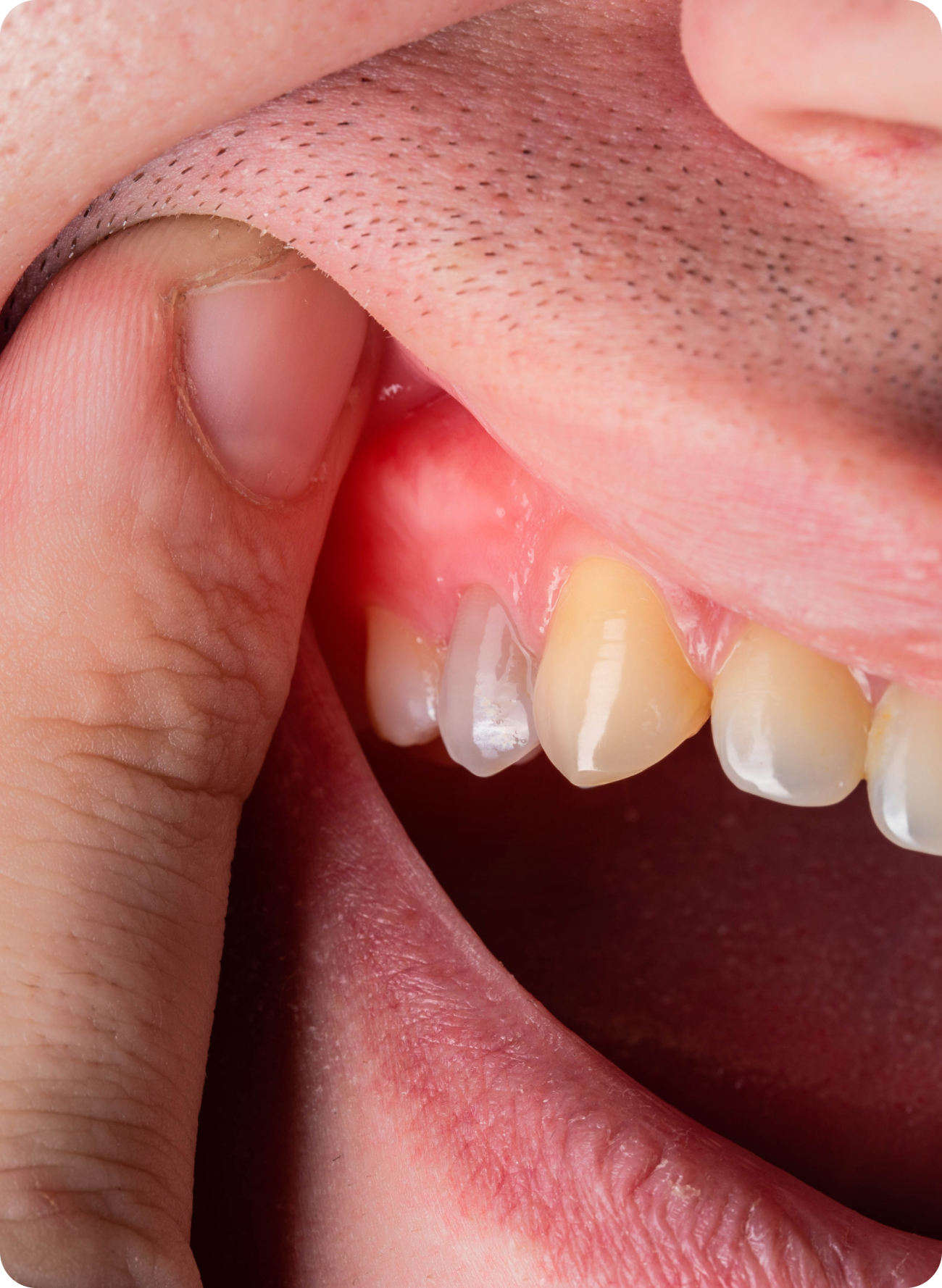
Any swelling in the gum near the tooth
A bad taste that doesn't go away
If you notice any of these alongside the hole, don't wait for your next routine checkup. Contact your dental provider sooner.
What to expect when you come in
Many people put off going in because they're not sure what the visit will involve. Here's what typically happens.
Your dental provider will examine the tooth visually and take X-rays to see how deep the decay goes. X-rays reveal what's happening beneath the surface — including decay that isn't visible from the outside.
Based on what they find, treatment options generally include:
A dental filling. For early-to-moderate decay, the damaged area is removed and the tooth is filled with a tooth-colored material. This is a quick, straightforward procedure.
A dental crown. If the hole is large or the tooth structure is significantly weakened, a crown may be needed to protect and restore the tooth.
A root canal. If decay has reached the nerve, a root canal removes the infected tissue and seals the tooth. Despite its reputation, the procedure itself is typically no more uncomfortable than getting a filling.
The earlier you come in, the more likely a simple filling is all you'll need.
How to reduce your risk of cavities
Preventing a hole from forming in the first place is simpler than treating one. The most effective steps are consistent brushing, flossing, and regular professional cleanings — which remove the plaque that bacteria feed on. A few habits make a meaningful difference:
Brush twice a day with a fluoride toothpaste — fluoride strengthens enamel and helps resist acid erosion
Floss once a day to remove plaque from between teeth, where cavities commonly form
Limit sugary and acidic foods and drinks, which fuel the bacteria that produce decay-causing acid
Drink water with fluoride, which helps protect enamel throughout the day
See your dental provider for regular checkups. X-rays catch decay before it becomes visible or painful
If you grind your teeth at night, ask your provider about a night guard. Grinding accelerates enamel wear and increases cavity risk over time.
When to see your dental provider
If you've noticed a hole in your tooth — with or without discomfort — schedule an appointment. There's no need to wait until something hurts.
More than 80% of Americans have at least one cavity by their mid-30s, according to Cleveland Clinic — making tooth decay one of the most common chronic conditions in the country and one of the most preventable when caught early. ³
According to the Mayo Clinic, many cavities go undetected until they've progressed significantly, because early decay often causes no symptoms at all. ¹ The American Dental Association notes that tooth decay is one of the most common chronic health conditions in the United States — and one of the most preventable when caught early. ²
If you're experiencing any swelling, a bad taste in your mouth or visible darkening of the tooth, treat that as a more urgent situation and contact an Aspen Dental office as soon as possible.
Visit a dental office near you to have the tooth evaluated and get a clear picture of what's actually going on.
I have a hole in my tooth but it doesn't hurt FAQs
Can a hole in my tooth get bigger on its own?
Yes. Decay is caused by bacteria that continue to break down tooth structure over time. Without treatment, a small hole will grow — often faster than expected. There's no stage at which decay naturally stops or reverses on its own.
Is it safe to use a temporary filling kit from the pharmacy while I wait for my appointment?
Over-the-counter temporary filling materials can cover a hole and reduce sensitivity in the short term, but they don't stop decay from progressing underneath. They're a short-term measure — not a substitute for professional treatment. Use them only to manage discomfort while you wait for your appointment, not as a reason to delay it.
What does a black hole in my tooth mean?
A black or dark spot inside a hole usually indicates more advanced decay. The dark color comes from bacteria and the breakdown of the tooth structure. It doesn't always mean the tooth is unsalvageable, but it does mean the decay has progressed beyond the earliest stage. An evaluation will determine how far it's gone and what treatment is needed.
Can a hole in a wisdom tooth be left alone if it doesn't hurt?
Not without a professional evaluation. A hole in a wisdom tooth carries the same risks as a hole in any other tooth — decay can spread to neighboring teeth, and infection can develop without warning. Whether the tooth should be filled or removed depends on its position and overall health, which your dental provider can assess.
How long can I wait before getting a hole in my tooth treated?
There's no safe waiting period. Decay doesn't pause. The longer a hole goes untreated, the deeper it grows — and the more complex the treatment becomes. A hole that needs a simple filling today may need a crown or root canal in a few months. The sooner you come in, the more options you have.
Sources
1American Dental Association. "Fluoride: Topical and Systemic Supplements. MouthHealthy. https://www.mouthhealthy.org/all-topics-a-z/fluoride
2Mayo Clinic. Cavities/tooth decay — Symptoms and causes. https://www.mayoclinic.org/diseases-conditions/cavities/symptoms-causes/syc-20352892
³ Cleveland Clinic. "Cavities (Tooth Decay): Symptoms, Causes & Treatment." https://my.clevelandclinic.org/health/diseases/10946-cavities