Last updated 07.10.2026
There's a hole in my gum and food keeps getting stuck — is it infected?
Learn what causes a hole in the gum, why food gets trapped there, signs of infection and when professional treatment may be needed

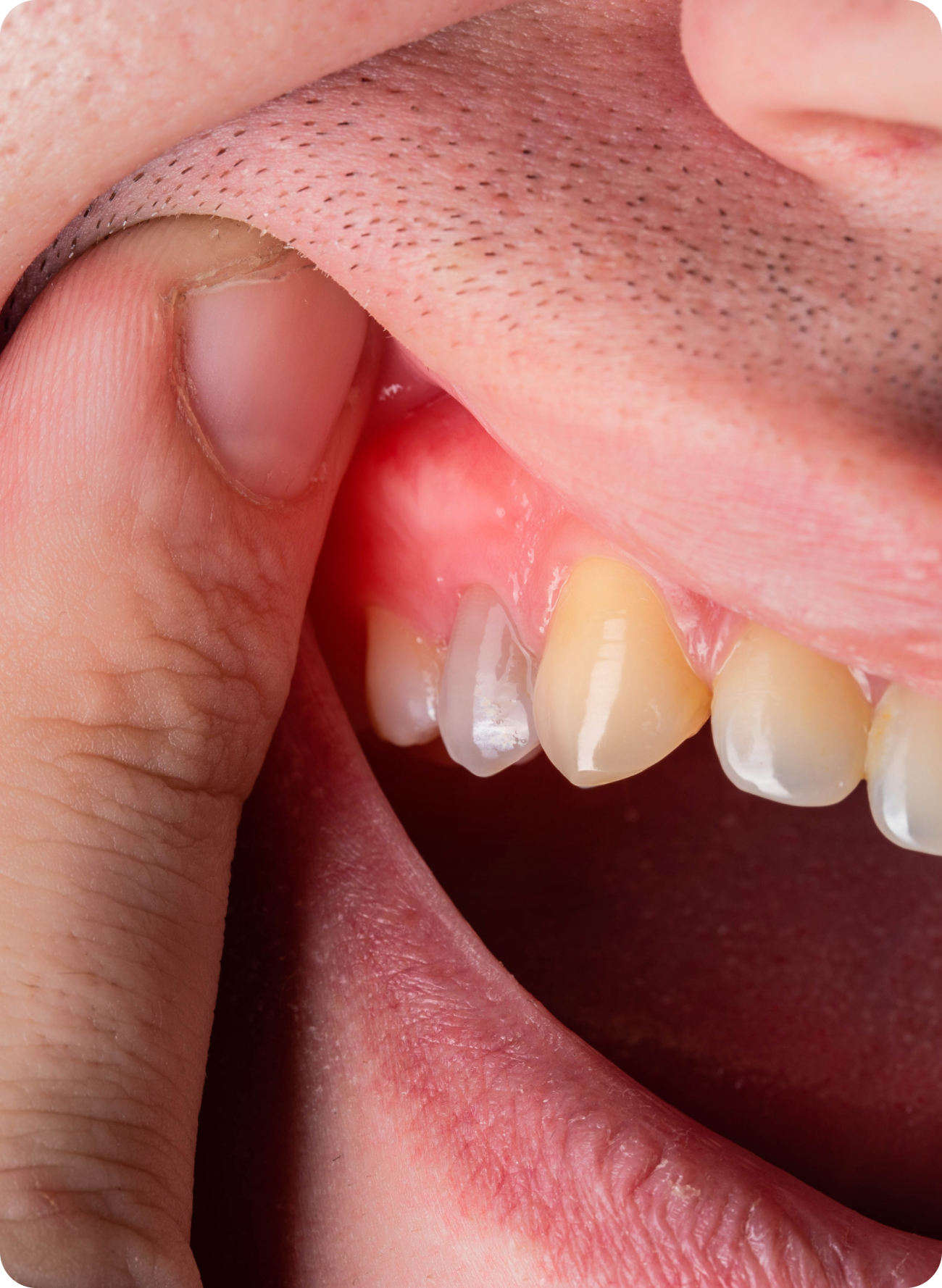
A hole in your gum is most often a periodontal pocket — a gap that forms when gum tissue pulls away from the tooth due to plaque buildup. While it can become infected, it is not always a sign of active infection. Food and bacteria can collect in that space, increasing the risk of infection and further damage to the surrounding tissue.
What you'll learn in this article:
A hole in the gum is often a sign that gum tissue has pulled away from the tooth
Food trapped in the area can fuel bacterial growth and infection
Swelling, throbbing, a bad taste, or drainage may be signs the area needs prompt attention
Periodontal pockets do not typically heal or close on their own
A healing extraction site is different from a gum pocket caused by gum disease
Home care may ease symptoms but cannot treat the underlying problem
If food keeps getting trapped in a hole near your tooth, schedule an appointment with your dental provider. An evaluation can determine the cause and help prevent the problem from getting worse.
What that hole in your gum actually is
The "hole" you're seeing is often a periodontal pocket — a space that forms when the gum pulls away from the tooth. Healthy gums fit snugly around each tooth. When plaque is not fully removed, it can harden into tartar, which irritates the gums and causes them to separate from the tooth.
The deeper the pocket, the more serious the problem. Providers measure pocket depth in millimeters. A depth of 1–3 mm is considered healthy. Pockets 4 mm or deeper are often a sign of gum disease and may require treatment. 1
If the hole appeared after a tooth extraction, the cause may be different. The socket left behind after a tooth is removed is a normal part of healing and usually closes on its own over several weeks. However, if the area becomes infected or develops dry socket, it can cause significant throbbing, soreness, or a foul odor and should be evaluated promptly.
Why does food keep getting stuck there?
Periodontal pockets create a physical trap. The gap between the gum and tooth acts like a pocket in a jacket — food particles fall in and can't easily come back out. Brushing and rinsing often can't reach deep enough to clear the debris. The food that collects there then feeds the bacteria already living in the pocket, which accelerates the infection process and causes the pocket to deepen further.
This is why food trapping is such an important warning sign. It's not just uncomfortable — it's actively making the problem worse every time you eat.
Signs the area may be infected
Not every gum pocket is infected right away, but the longer food and bacteria sit in that space, the higher the risk. Signs that the area has become infected include:
Swelling or puffiness around the gum near the affected tooth
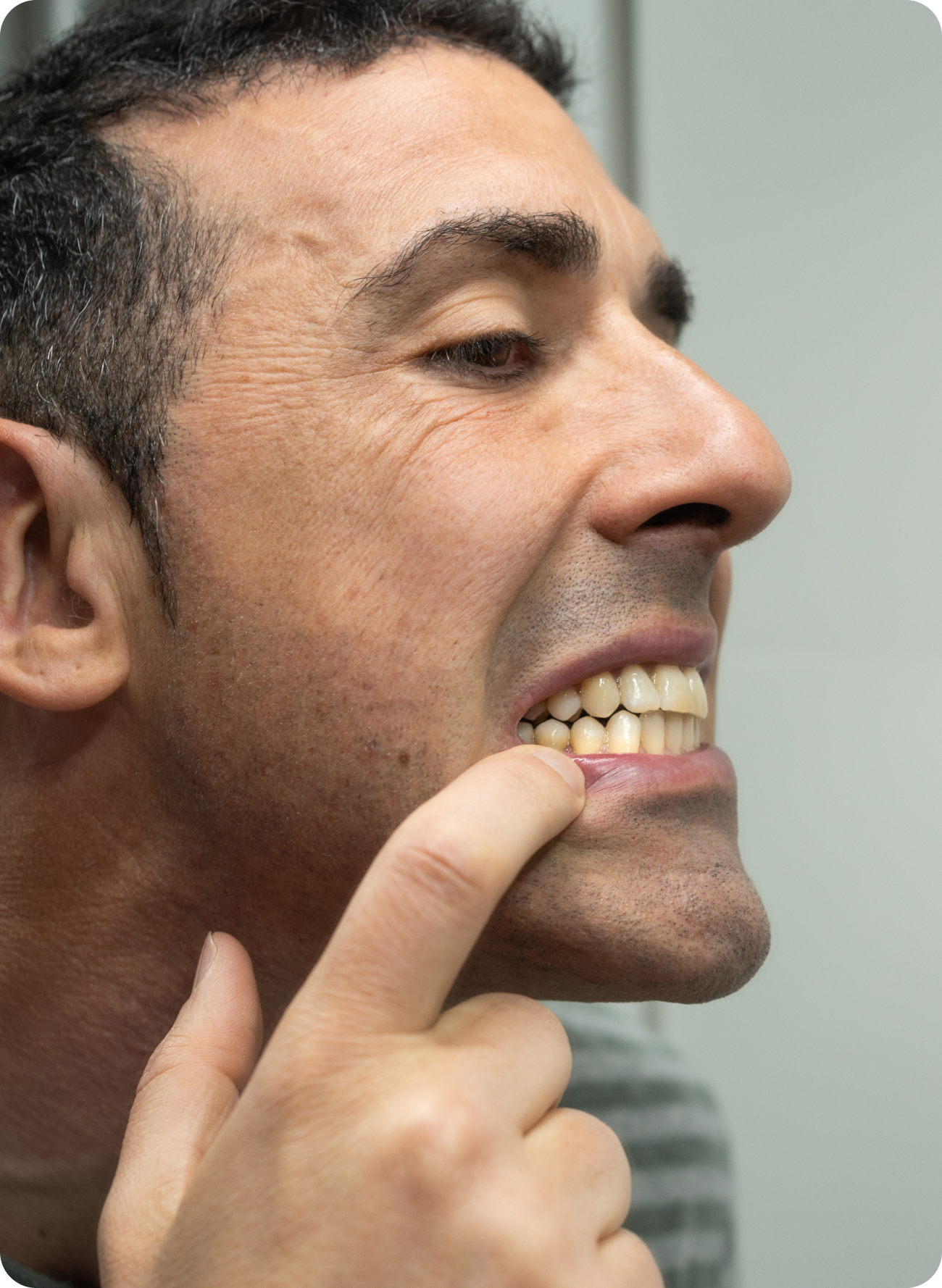
Throbbing or aching that doesn't go away on its own
A bad taste in your mouth, especially near the area
Bad breath that persists even after brushing
A small bump or pimple-like spot on the gum that may look red, white, or dark
Sensitivity when biting down or touching the area
Pus — a white or yellowish discharge from the gum
Fever or swollen lymph nodes in your jaw or neck
The last two — pus and fever — are signs of a more serious infection called a periodontal abscess. This is a pocket of pus that forms inside the gum tissue. A periodontal abscess does not resolve on its own and can spread to surrounding teeth and bone if not treated. If you have a fever alongside gum symptoms, seek care the same day.
When should I be concerned?
Any gum pocket that traps food regularly deserves attention — but some situations are more urgent than others.
See your dental provider soon if you notice:
Soreness or tenderness that has lasted more than a few days
Swelling that is getting larger
A bad taste that keeps coming back
Sensitivity when chewing
Seek same-day care if you have:
A visible bump or blister on the gum
Pus or discharge
Fever or swollen glands
Throbbing that is severe or spreading
What happens when food stays trapped in a gum pocket?
When food stays trapped in a gum pocket, bacteria feed on it and release toxins that inflame the gum tissue, causing it to pull further away from the tooth — deepening the pocket, damaging the surrounding bone, and increasing the risk of loose teeth or tooth loss.
According to the CDC, nearly half of adults age 30 and older have some form of gum disease.2 Many do not realize it because early gum disease often causes few noticeable symptoms.
The important thing to know is that a gum pocket will not close on its own. Professional treatment is needed to stop it from getting deeper.
What you can do at home right now
Home care won't close a gum pocket or treat an infection, but it can help manage symptoms while you wait for your appointment.
Rinse gently with warm salt water — dissolve half a teaspoon of salt in a glass of warm water and rinse for 30 seconds, 2–3 times a day. This helps reduce bacteria and soothe irritated tissue.
Use an interdental brush (a small brush designed to clean between teeth) or soft pick — these can help dislodge food from the pocket more effectively than floss alone. Be gentle — aggressive probing can push debris deeper.
Avoid hard or crunchy foods near the affected area to reduce irritation.
Do not use a toothpick to dig into the pocket — this can damage the gum tissue and introduce more bacteria.
Do not ignore it — home care is a temporary measure, not a solution. The pocket will not improve without professional treatment.
What your dental provider will do
If food keeps getting trapped in a hole near your tooth, the right time to be seen is now. Gum pockets don't resolve on their own, and the longer bacteria have access to that space, the greater the risk of infection and bone loss. Based on the findings, treatment may include:
When to see your dental provider and what treatment they can do
If food keeps getting trapped in a hole near your tooth, it's worth having the area evaluated sooner rather than later. Gum pockets don't typically improve on their own, and the longer bacteria remain trapped in the space, the greater the risk of infection and bone loss.
A dental provider can measure the pocket, determine whether infection is present, and recommend the most appropriate treatment. Depending on the severity, treatment may include:
Professional cleaning — for early-stage pockets, a thorough cleaning above and just below the gum line may be enough to reduce inflammation and allow the gum to reattach
Scaling and root planing — often called a deep cleaning, this procedure removes tartar and bacteria from below the gum line and smooths the root surface so the gum can heal and reattach more effectively
Localized antibiotics — in some cases, a medicated gel or antibiotic is placed directly into the pocket to help clear the infection
Pocket reduction surgery — for deeper pockets that don't respond to non-surgical treatment, a minor procedure can reduce pocket depth and make the area easier to keep clean
If a periodontal abscess is present, your provider will drain it and may prescribe antibiotics to clear the infection before other treatment begins. Schedule an appointment with your nearest Aspen Dental provider to have the area evaluated.
There's a hole in my gum and food keeps getting stuck FAQs
Can a hole in my gum heal on its own?
It depends on the cause. A socket left after a tooth extraction will close naturally over several weeks as tissue heals. A periodontal pocket caused by gum disease will not — it typically deepens over time without professional treatment. If you're unsure which you have, an evaluation will tell you quickly.
How long does a hole in the gum take to close after a tooth extraction?
Most extraction sockets begin to close within 1–2 weeks as soft tissue fills in. Full bone healing takes several months. During this time, food can get caught in the socket, which is normal. Rinsing gently after meals helps keep the area clean. If the socket becomes increasingly sore, develops a foul smell, or the throbbing worsens after the first few days, contact your dental provider — this may indicate dry socket or infection.
Is a hole in my gum behind my back molar normal?
A small opening behind the last molar is sometimes related to a partially erupted wisdom tooth. When a wisdom tooth doesn't fully emerge, a flap of gum tissue can cover part of it, creating a pocket where food and bacteria collect. This is called pericoronitis and can become infected. If you notice soreness, swelling, or a bad taste behind your back molar, have it evaluated — it won't resolve on its own.
What's the difference between a gum pocket and a gum abscess?
A gum pocket is the space that forms between the gum and tooth when gum tissue pulls away. It's a structural problem. A gum abscess is what happens when bacteria in that pocket cause a localized infection — a collection of pus inside the gum tissue. An abscess typically causes more acute symptoms: a visible bump, throbbing, a bad taste and sometimes fever. Both require professional treatment, but an abscess is more urgent.
Can I use mouthwash to treat a gum pocket?
Mouthwash can help reduce surface bacteria and temporarily freshen breath, but it cannot penetrate deep enough into a periodontal pocket to treat the underlying infection or remove hardened tartar. It's a useful addition to your daily routine, but it is not a substitute for professional treatment.
Sources
1National Institute of Dental and Craniofacial Research. Periodontal (Gum) Disease. https://www.nidcr.nih.gov/health-info/gum-disease
2Centers for Disease Control and Prevention. About Periodontal (Gum) Disease. https://www.cdc.gov/oral-health/about/gum-periodontal-disease.html