Last updated 03.12.2026
Dental Implant Solutions for Loose Dentures in Charlotte, NC
Dr. Ryan Buddendeck helps Charlotte patients fix loose dentures with relines, new dentures and implant solutions.
You’re at a cookout in Myers Park when someone hands you an ear of corn—and your lower denture shifts. No one else notices, but you feel it immediately.
If your dentures feel loose or unstable in Charlotte, you’re not imagining it. Denture fit can change over time for natural biological reasons, and warm, humid North Carolina summers can sometimes make the issue feel more noticeable.
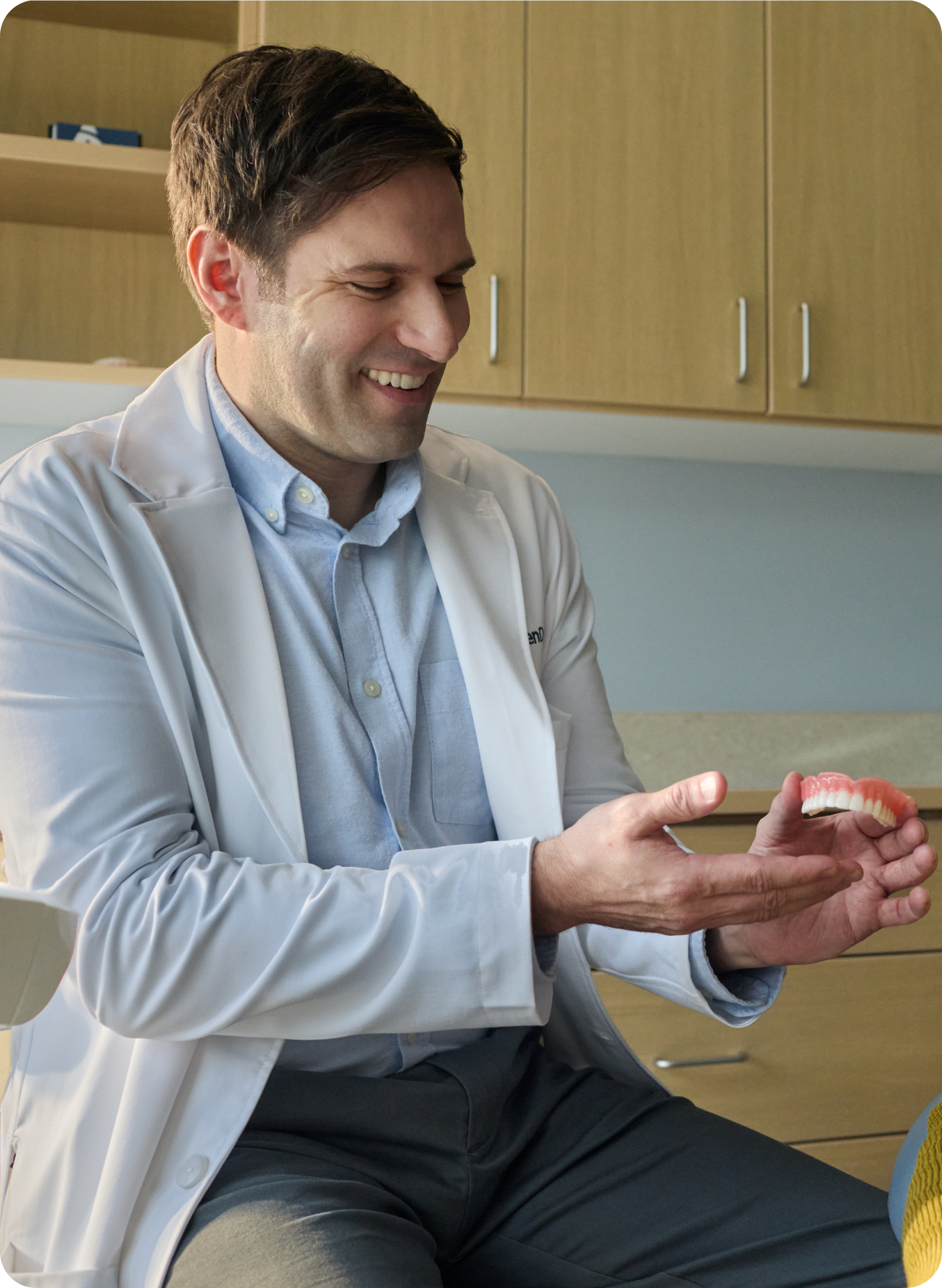
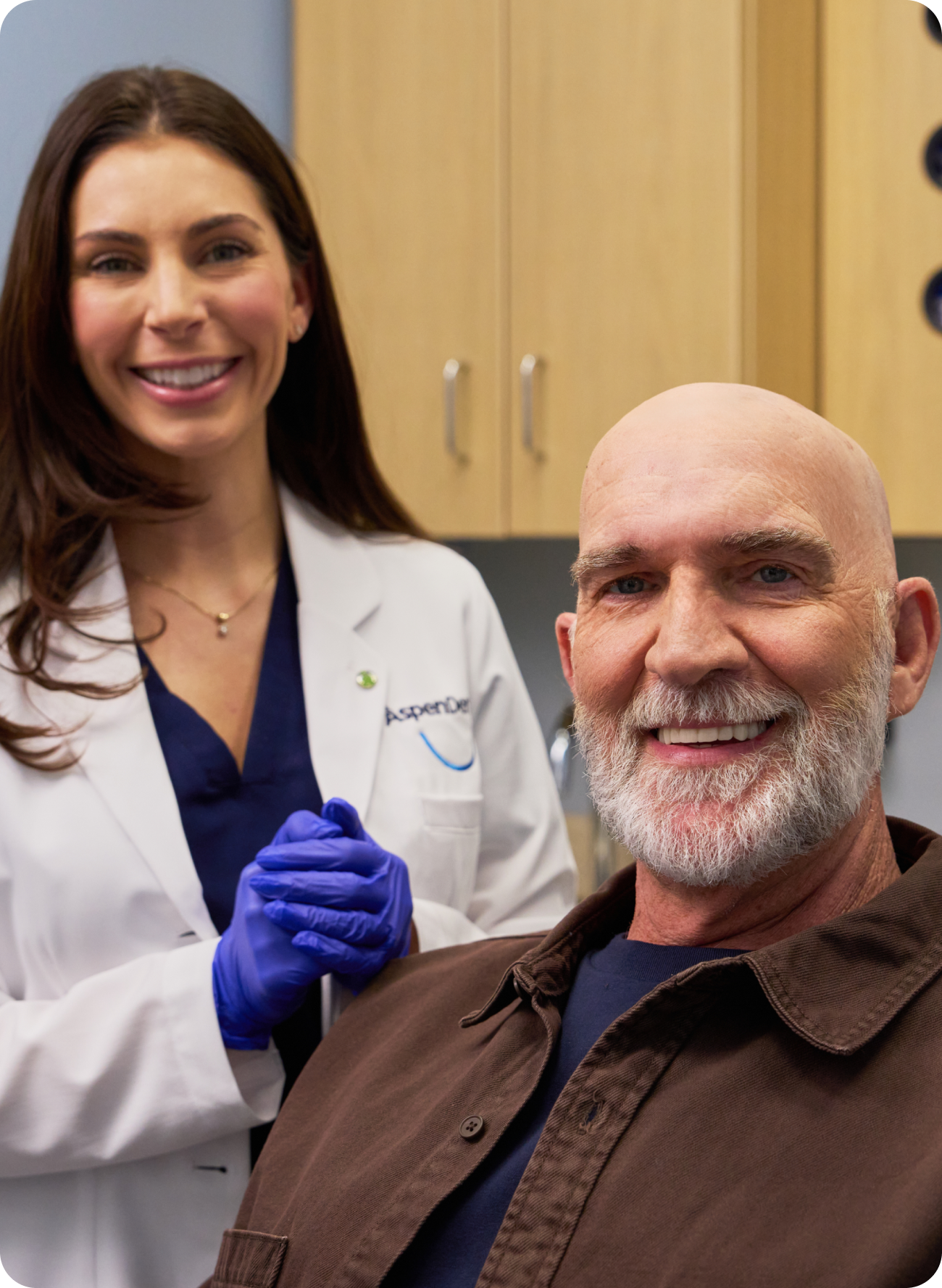
The good news is that solutions are available, ranging from simple adjustments to longer-lasting options like implant-supported dentures. Dr. Ryan Buddendeck at Aspen Dental in Charlotte regularly helps patients address this concern and find an approach that restores comfort and stability.
Why do dentures get loose over time?
Dentures are designed to fit the shape of your gums and jawbone at the time they’re made. But your mouth naturally changes over time. After teeth are removed, the jawbone begins to shrink because the tooth roots that once stimulated the bone are no longer present. This process, called bone resorption, happens gradually for everyone who wears dentures.
During the first year after extractions, the jawbone can lose a noticeable amount of width. Over time, the ridge continues to change shape, altering the surface your dentures rest on. What once felt secure may begin to loosen, which can lead to slipping, clicking or sore spots.
This doesn’t mean anything went wrong—it’s a normal biological process. That’s why Dr. Ryan Buddendeck encourages regular denture checkups at Aspen Dental in Charlotte, even when your dentures still seem to fit well. Regular visits allow providers to monitor changes and recommend adjustments when needed.
How does Charlotte's humidity affect denture fit?
Many denture wearers are surprised to learn that heat and humidity can make loose dentures feel even less stable.
Charlotte summers often reach the 90s with humidity levels around 70%. Those conditions can affect how dentures feel throughout the day. One reason is dehydration. When the body loses fluids, gum tissue can shrink slightly. Even small changes in the gums can affect how dentures fit.
Dehydration can also reduce saliva production. Saliva helps create a natural cushion between dentures and gums, improving comfort and stability. When saliva decreases, dentures may feel looser and friction can increase. If your dentures seem less stable on hot days spent outdoors at places like Freedom Park or around NoDa, hydration may be part of the reason.
Drinking enough water can help support comfort, but if the denture fit has changed, hydration alone may not solve the issue. In those cases, a denture adjustment or evaluation may be recommended.
What are your options for fixing slipping dentures?
Not every loose denture needs to be replaced. The right solution depends on how much your jaw has changed and what kind of stability you're looking for. Dr. Buddendeck and the Charlotte Aspen Dental team typically walk patients through 3 main paths:
Denture reline
A denture reline reshapes the inner surface of your existing denture so it better matches the current shape of your gums. It’s often the quickest and most affordable way to address mild slipping.
Soft relines use a flexible material that can be more comfortable for sensitive gums, while hard relines use acrylic designed to last longer. In many cases, a reline can be completed in a single visit.
If your dentures are relatively new and changes in your jawbone are minimal, a reline may be enough to restore a more stable and comfortable fit.
New dentures
When jawbone changes become more significant, a reline may no longer provide the support needed for a secure fit. In those cases, a new set of dentures designed around the current shape of your gums and jaw may be recommended.
Aspen Dental offers several denture options in Charlotte, including our Signature Elite and other denture offerings. Each option is designed with different materials and features to support varying levels of comfort, appearance and durability.
A provider like Dr. Ryan Buddendeck can evaluate your denture fit and help you choose the option that aligns with your oral health needs, lifestyle and budget.
Implant-supported dentures
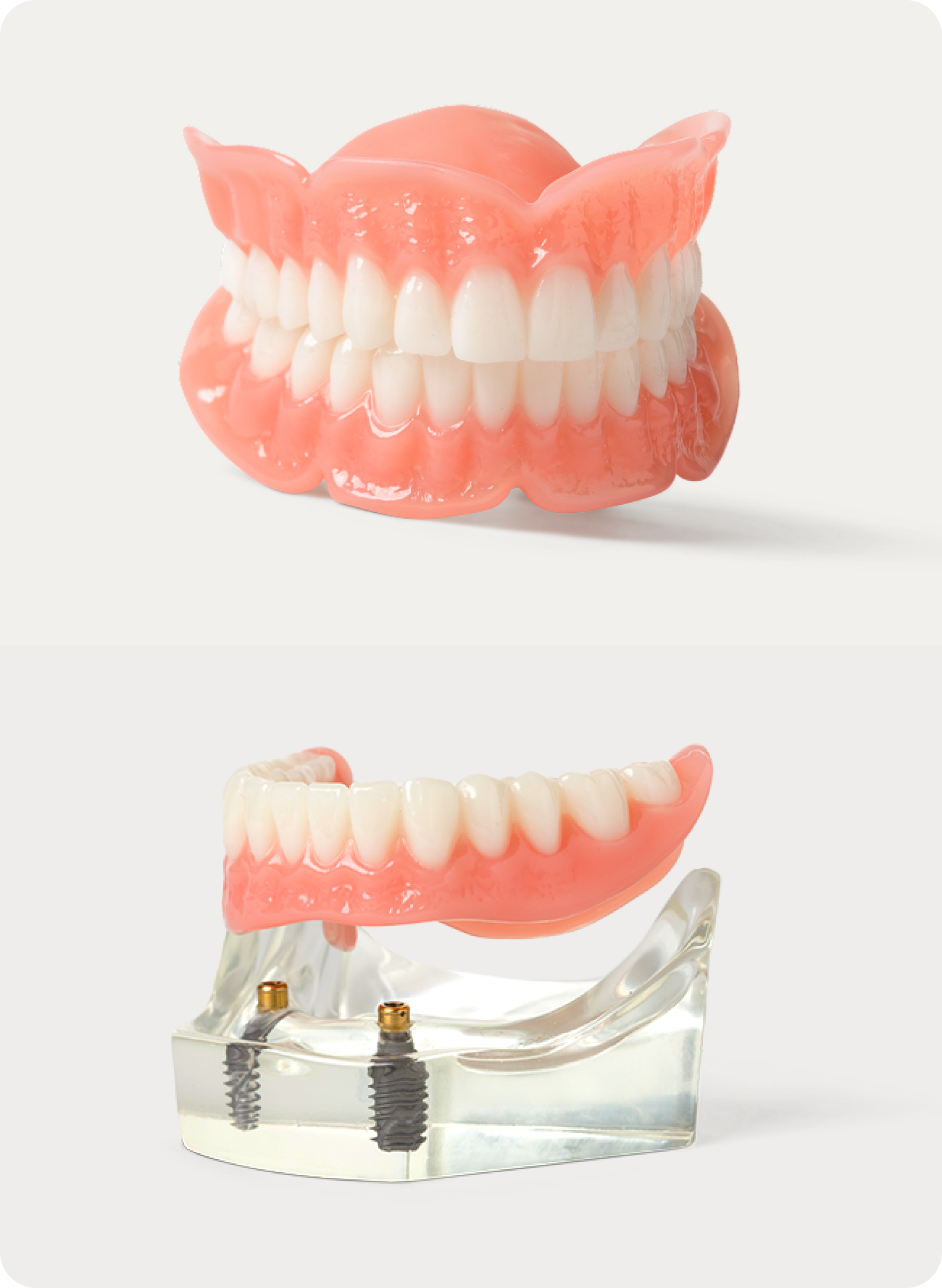
For patients tired of adhesives and constant adjustments, implant-supported dentures—often called snap-in dentures or overdentures—offer a different approach. Titanium dental implants are placed into the jawbone, and a custom denture attaches directly to them for improved stability.
Unlike traditional dentures that rest on the gums, implant-supported dentures stay more securely in place throughout the day. Many patients find it easier to eat a wider range of foods and speak with greater confidence. Because implants stimulate the jawbone in a way similar to natural tooth roots, they can also help slow bone resorption, which may support a more stable long-term fit.
For patients looking for an even more permanent solution, a fixed full arch may also be an option. A full arch prosthetic is secured to multiple dental implants and stays in place at all times. It does not need to be removed for cleaning and is designed to function similarly to natural teeth, offering the highest level of stability and chewing strength.
Aspen Dental offers various implant denture options, which may be worth discussing with Dr. Buddendeck during your visit. If implants are not the right step right away, some patients begin with Signature Elite dentures and later transition to implant-supported options when they’re ready.
How do implant dentures compare to relines and new dentures?
Each solution serves a different need. Here's how they compare:
A denture reline is the fastest, lowest-commitment option. It works well for mild slipping when the dentures are still in good condition. But relines wear down, and most patients need a new one every 1 to 2 years as the jaw continues to change.
New dentures address more significant jaw changes and provide a fresh start. However, they still rest on gum tissue, so the cycle of loosening eventually repeats.
Implant-supported dentures break that cycle. By anchoring into the jawbone, they provide stability that doesn't depend on gum fit alone. Studies show dental implants are likely to last at least 25 years with proper care and maintenance in most cases.
How can Charlotte denture wearers pay for treatment?
Most dental insurance plans cover a portion of denture services, including relines and new dentures. Coverage for implant-supported dentures varies by plan. The team at Aspen Dental in Charlotte can review your insurance during your appointment and help you understand what's covered.
For patients without insurance or with out-of-pocket costs, Aspen Dental offers flexible financing options. 99% of patients who apply for financing through third-party lenders are approved. Payment plans can make implant dentures more accessible than you might expect.
Medicaid is not accepted at Aspen Dental offices.
Frequently asked questions about loose dentures
Can I fix loose dentures at home?
No. Over-the-counter adhesives and DIY reline kits may offer temporary relief, but they don't address the underlying bone and tissue changes. Poorly adjusted dentures can cause sore spots and further bone loss. Dr. Buddendeck can evaluate the fit and recommend the right fix at Aspen Dental in Charlotte.
How often should I have my dentures checked?
At least once a year. Even if your dentures feel stable, the jawbone is still changing. Annual checkups at Aspen Dental in Charlotte give your provider a chance to spot early signs of loosening and address them before they become a bigger problem.
Does Aspen Dental in Charlotte accept Medicaid for dentures?
No. Medicaid is not accepted at Aspen Dental offices. However, the Charlotte team can help you review other insurance benefits and financing options to make treatment more affordable.
Are implant dentures worth it for someone with significant bone loss?
Yes, in many cases. Even patients with moderate bone loss may be candidates for implant-supported dentures. Dr. Buddendeck can assess your bone density during an evaluation and discuss whether bone grafting or a modified implant approach would work for your situation.
How long does it take to get implant-supported dentures?
The full process typically takes several months to heal completely from implants. This includes implant placement, a healing period while implants fuse with the jawbone and fitting the final denture. Your provider at Aspen Dental in Charlotte will outline a personalized timeline.
Does dehydration really affect denture fit?
Yes. Dehydration causes gum tissue to shrink and reduces saliva, both of which affect how dentures sit in your mouth. In Charlotte's hot summers, denture wearers should aim for at least 8 glasses of water a day, more when spending time outdoors.
Take the next step toward a better fit in Charlotte
Loose dentures don't have to be something you just live with. Whether you need a simple reline or you're ready to talk about implant-supported dentures, Dr. Ryan Buddendeck and the Aspen Dental team in Charlotte, NC are here to help you find the right solution.
Schedule an appointment today. The team will evaluate your current fit, walk you through your options and help you build a plan that works for your smile and your budget.