Last updated 06.17.2026
Why can't I open my mouth after a dental injection?
Learn why jaw stiffness can occur after a dental injection, how to relieve it at home and when symptoms may require professional care.

Jaw stiffness after a dental injection is almost always trismus — a temporary tightening of the jaw muscles caused by irritation near the injection site. In most cases, it is not a sign that anything went wrong and improves on its own within a few weeks.
If the stiffness is significant, worsening or making it difficult to eat, drink or speak comfortably, schedule an appointment with your dental provider. They can evaluate the area and make sure your recovery is progressing as expected.
What you'll learn in this article:
Trismus — the medical term for jaw stiffness after a dental injection — is usually caused by temporary muscle irritation, not nerve damage.
Lower jaw injections are more likely to cause trismus because the injection is placed deeper near the muscles that control jaw movement.
Most cases begin improving within a few days and resolve completely within 2–6 weeks.
Warm compresses are often more effective than ice because they help relax tight muscles and increase blood flow to the area.
Gentle jaw exercises can help restore normal movement and support recovery.
Fever, worsening swelling or difficulty swallowing are not typical signs of trismus and should be evaluated promptly.
What's actually happening in your jaw
Why it happens more often after lower-tooth numbing
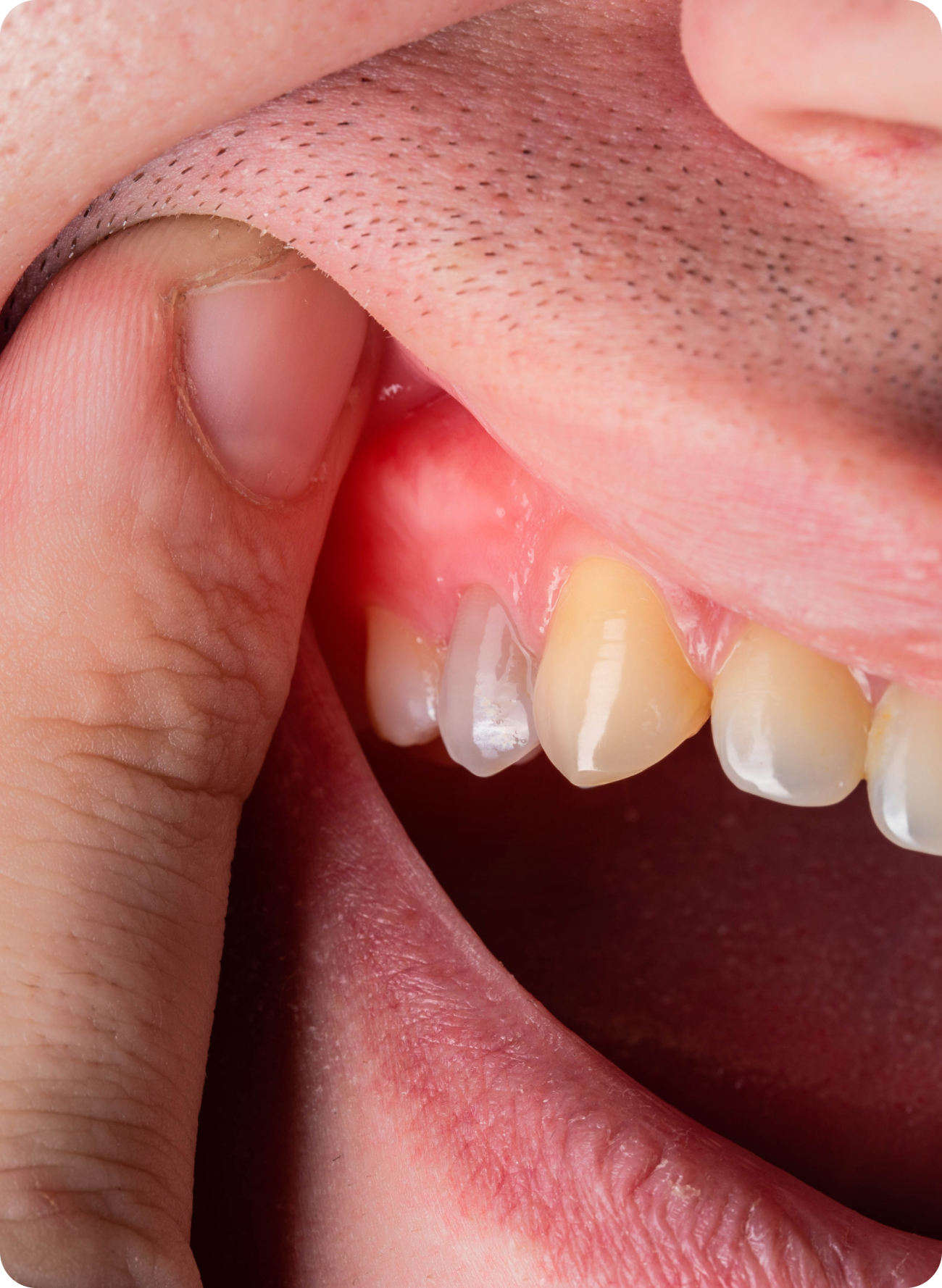
Trismus means your jaw muscles are having trouble opening fully after your injection. Your jaw muscles sit right next to the nerves your provider needs to numb. When the needle passes through those muscles — especially two called the medial pterygoid and masseter — they can get irritated and tighten up.
Think of it like a muscle bruise. It feels stiff and sore for a few days, then slowly gets better. That is all that is happening here.
What does trismus feel like?
Most people describe it as:
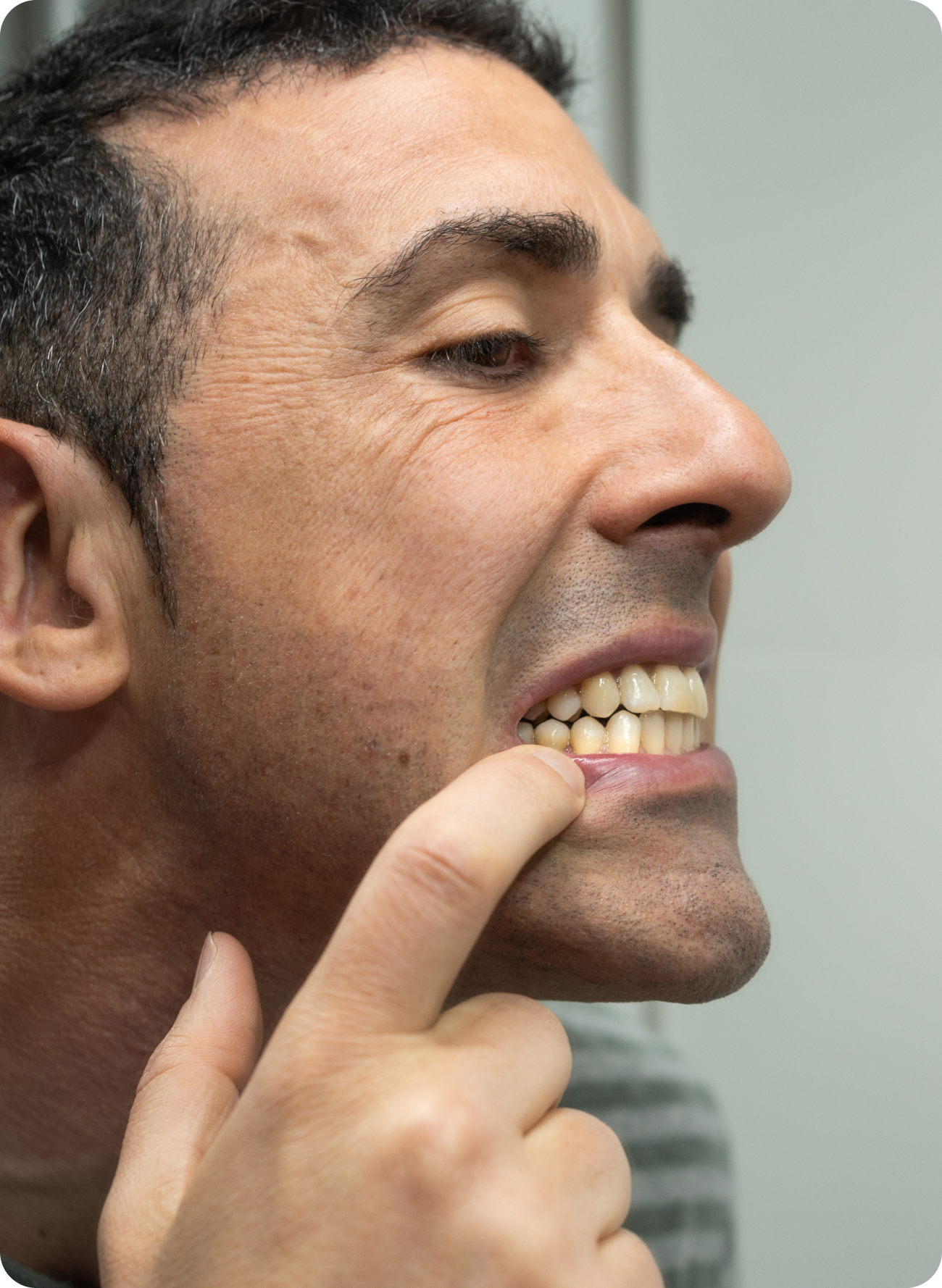
Stiffness or tightness when trying to open wide
Soreness or aching in the jaw, cheek, or just in front of the ear
A feeling that the jaw is "stuck" or resisting movement
Tenderness when pressing on the cheek or jaw muscle
Normal mouth opening is roughly 40–60 millimeters — about the width of two to three fingers stacked together. With trismus, that range narrows. You may only be able to open one or two fingers wide. This can make eating, brushing, and talking uncomfortable, but it is rarely dangerous on its own. The good news is that most cases follow a predictable recovery pattern.
How long does trismus last?
Recovery varies, but here is a general timeline most people follow:
Days 1–2: Stiffness and soreness are at their peak. Opening wide feels difficult and uncomfortable. This is normal.
Days 3–5: Most people notice gradual improvement. The jaw starts to loosen slightly, especially with heat and gentle movement.
Week 1–2: Significant improvement for most people. Opening range increases and daily activities become easier.
Weeks 2–6: Full resolution in the majority of cases. Some people with more significant muscle irritation take longer, but continued improvement is the expected pattern. If you are not seeing any improvement after two weeks, or if symptoms are getting worse rather than better, that is worth a conversation with your provider.
What can you do right now to feel better
You do not have to wait passively for this to resolve. There are three things that consistently help.
Why warm compresses work better than ice
Ice is most helpful immediately after an injury because it reduces blood flow and helps limit swelling. But trismus is usually caused by muscle irritation and tightness, not significant swelling.
A tight or spasming muscle benefits from increased blood flow. That's why warm, moist heat is often more effective than ice once the initial soreness has passed. Heat helps relax the muscle, improve circulation and support the body's natural healing process.
Apply a warm compress to the outside of your jaw for 15–20 minutes, two to three times a day. A warm towel or a microwaveable heat pack wrapped in a damp cloth both work well. Many patients find that their jaw feels looser and easier to move after a few sessions.
Gentle jaw exercises that help
Gentle movement is important. Keeping the jaw completely still can actually slow recovery by allowing the muscle to tighten further. Try these simple exercises every 3–4 hours:
Slow open and close: Open your mouth as far as is comfortable — not to the point of sharp discomfort — then close slowly. Repeat 10 times.
Side-to-side movement: With your mouth slightly open, move your lower jaw gently to the left, then to the right. Repeat 5 times in each direction.
Chin tucks: Gently pull your chin back toward your neck, hold for 3 seconds, release. This helps relax the muscles at the base of the jaw.
Do not force your mouth open. The goal is gentle, progressive movement — not stretching through sharp discomfort.
Over-the-counter relief
An over-the-counter anti-inflammatory such as ibuprofen or naproxen (if appropriate for you) can help reduce inflammation and ease jaw soreness.
Follow the directions on the label. For the best results, take it as directed during the first few days rather than waiting until discomfort becomes more noticeable. If you have a medical condition or take other medications, check with your healthcare provider before using anti-inflammatory medications.
While your jaw recovers, stick to soft foods such as yogurt, scrambled eggs, soup and mashed potatoes. Avoid foods that require wide bites or prolonged chewing until opening your mouth feels more comfortable.
When to contact your dental provider
Trismus after a dental injection is common and usually resolves on its own. But some symptoms suggest a different problem that needs prompt attention.
Contact your dental provider if you notice:
Fever or chills alongside the jaw stiffness
Swelling that is getting larger or spreading toward your neck or throat
Difficulty swallowing or breathing
No improvement after two weeks of home care
Symptoms that are getting noticeably worse rather than better
Spreading redness across your cheek, jaw, or neck
These signs can indicate an infection rather than simple muscle irritation. An infection in the jaw or surrounding tissue needs treatment — it will not resolve with heat and exercises alone.
Nerve damage from a dental injection is extremely rare, estimated to occur in roughly 1 in 26,000 to 160,000 injections. If you experienced a sharp electric-shock sensation during the injection and now have numbness, tingling, or a burning feeling rather than stiffness, mention this specifically when you contact your provider.
What to do next
Jaw stiffness after a dental injection can feel alarming, but it is usually a temporary and highly treatable reaction. In most cases, the muscle irritation that causes it follows a predictable healing process, with noticeable improvement within the first week.
Warm compresses, gentle jaw exercises and over-the-counter anti-inflammatory medication can often help ease symptoms and support recovery. For many patients, a few days of conservative care is all that is needed.
If the stiffness is not improving, is getting worse, or is accompanied by fever, swelling or difficulty swallowing, schedule an evaluation with your Aspen Dental provider. They can determine the cause, rule out infection and recommend the appropriate next steps.
Why can’t I open my mouth after dental injection FAQs
Can I make the stiffness worse by trying to open my mouth?
Gentle movement will not make it worse — in fact, it helps. The key word is gentle. Forcing your jaw open aggressively or trying to stretch through sharp discomfort can strain the muscle further. Slow, controlled movement within a comfortable range is what promotes healing.
Is it normal for the stiffness to feel worse in the morning?
Yes. Jaw muscles tend to tighten overnight, especially if you clench or grind your teeth during sleep without realizing it. Morning stiffness that loosens up as the day goes on is a normal part of the recovery pattern. Applying a warm compress first thing in the morning can help.
Why can't I open my mouth after wisdom tooth removal?
This is common after wisdom tooth extraction, especially for lower wisdom teeth. The combination of the numbing injection and inflammation from the procedure can temporarily irritate the jaw muscles, making it harder to open your mouth — a condition called trismus. Most cases improve within one to two weeks with warm compresses, gentle jaw exercises and over-the-counter anti-inflammatory medication.
Do I need to see someone, or will this go away on its own?
Most people recover fully with home care alone — warm compresses, gentle jaw stretches and over-the-counter anti-inflammatories are usually enough. Professional treatment is typically only recommended when symptoms last beyond several weeks or the restriction is severe. If your provider feels you need additional care, they will refer you.
Could this be related to my TMJ?
Possibly. People who already have temporomandibular joint (TMJ) issues may find that a dental procedure — including the injection and the time spent with their mouth open — aggravates existing sensitivity. If you have a history of jaw clicking, locking, or chronic jaw soreness, let your provider know. They can help determine whether your symptoms are purely from the injection or connected to an underlying jaw condition.
Sources
1Cleveland Clinic. Trismus: Symptoms, Causes & Treatment. https://my.clevelandclinic.org/health/diseases/24086-trismus
2Today's RDH. Trismus: A Potential Complication of Administering Local Anesthesia. https://www.todaysrdh.com/trismus-a-potential-complication-of-administering-local-anesthesia/