Last updated 06.23.2026
I can see my tooth roots — is my tooth falling out?
Learn why tooth roots become visible, what gum recession means for your oral health and when treatment may be needed.

No, seeing your tooth roots does not mean your tooth is falling out. In most cases, it means your gums have receded, exposing the root surface beneath the gumline. While gum recession is common, it should not be ignored because it can increase the risk of sensitivity, root decay and, in more advanced cases, tooth loss.
What you'll learn in this article:
Seeing your tooth roots usually means your gums have receded — not that your tooth is about to fall out.
Exposed roots are more sensitive and prone to decay than the rest of the tooth.
Gum disease is the most common cause, but aggressive brushing and teeth grinding can also pull gums away from the tooth over time.
Receded gums do not grow back on their own, but treatment can stop further damage.
A tooth that feels loose, throbs, or has swelling near the gumline needs prompt attention — these are signs of a more advanced problem.
If you're noticing changes in your gums or have questions about what you're seeing, schedule an appointment with your dental provider. They can evaluate the area and explain what's causing the changes.
What it means when you can see your tooth roots
A tooth has two main parts: the crown, which sits above the gumline, and the root, which is normally covered by gum tissue and anchored in the jawbone.
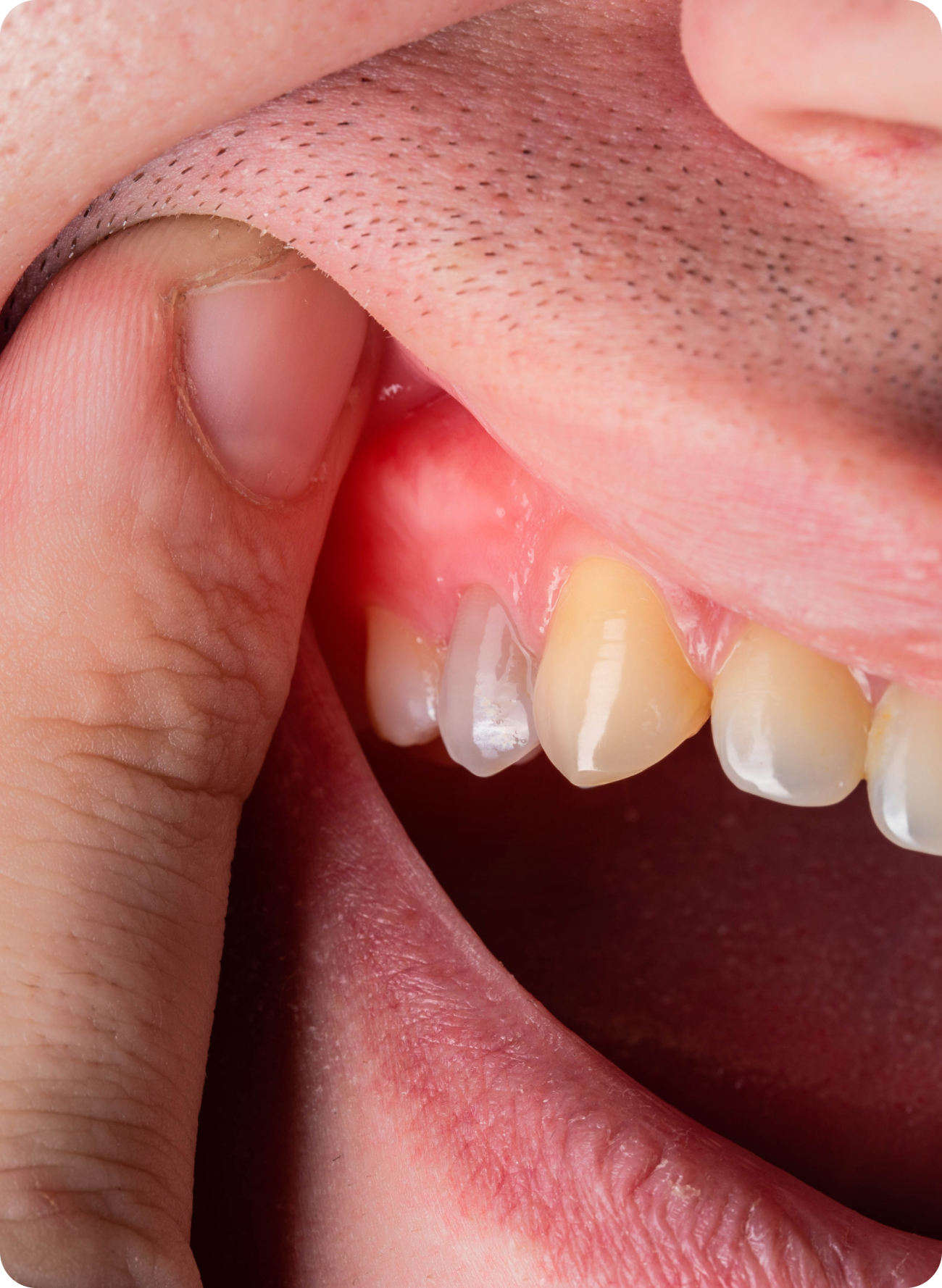
When the gums recede, the root becomes exposed. Unlike the crown, which is protected by enamel, the root is covered by a softer material called cementum. Once exposed, this area is more vulnerable to sensitivity and decay.
This is why exposed roots often react to cold drinks, sweet foods, or even cold air. You may also notice your teeth look longer than they used to because more of the tooth is visible above the gumline.
How to tell if your situation is urgent
Not all exposed roots are emergencies — but some signs mean you should seek care right away. Do a quick self-check:
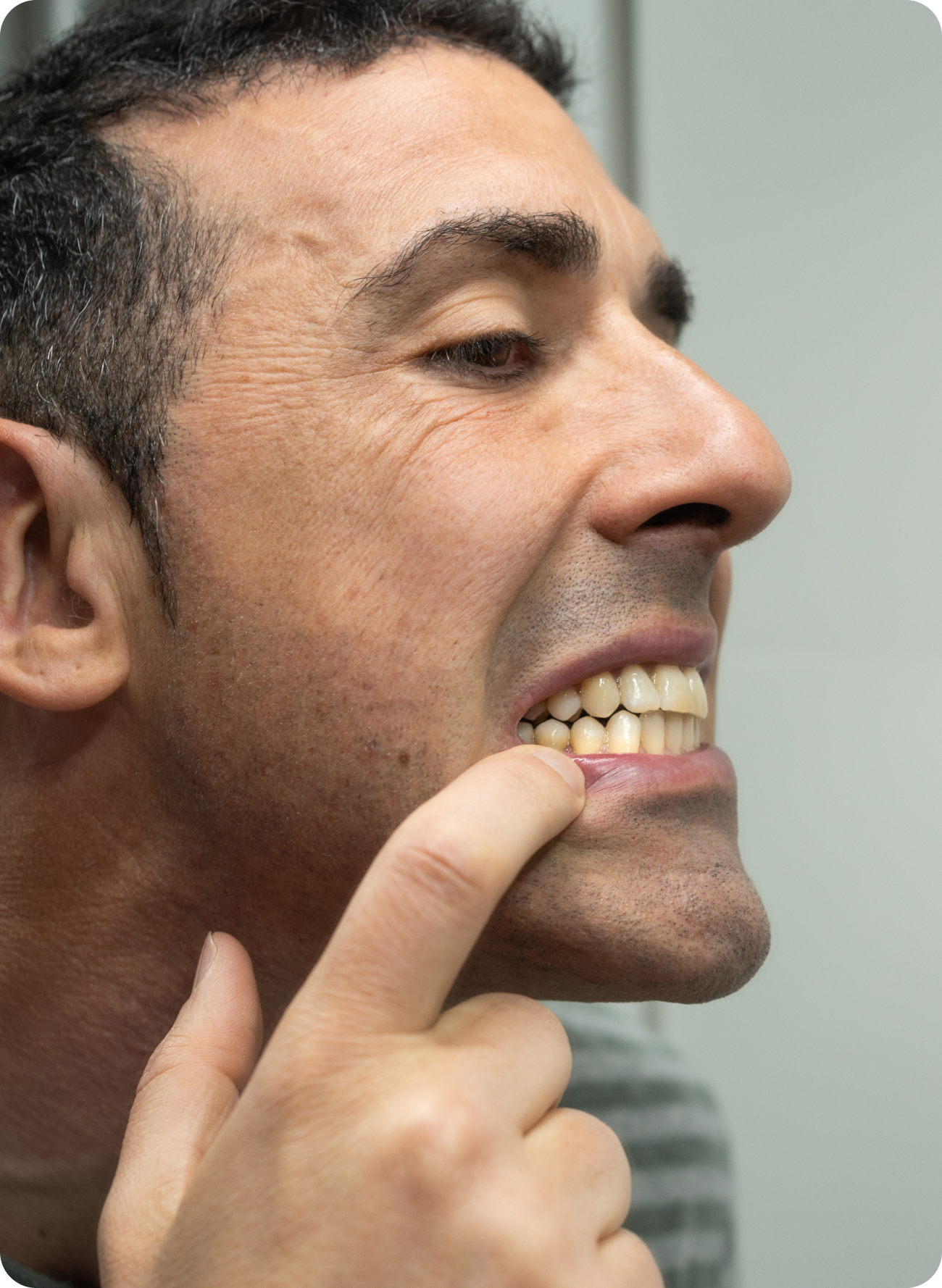
Does the tooth feel loose? Press it gently with your finger or tongue. If it moves, that's a sign of significant bone or tissue loss.
Is there throbbing or constant pain? Sensitivity triggered by food or temperature is common with exposed roots. Pain that doesn't go away is different.
Do you see swelling or a bump near the gumline? This can indicate infection.
Has the sensitivity become severe enough to affect eating? That level of discomfort warrants prompt evaluation.
If you answered yes to any of these, contact your dental provider sooner rather than later.
Is this the same as a loose tooth?
No — and this distinction matters. A loose tooth means the bone or tissue supporting the root has been significantly damaged, usually from advanced gum disease. An exposed root, on its own, doesn't mean the tooth is loose or about to fall out.
That said, if gum disease is the underlying cause of your recession and it goes untreated, it can eventually progress to bone loss and tooth loosening. Catching it before it reaches that stage gives your dental provider far more options.
Why your gums pull back
Gum recession rarely happens overnight. It develops gradually, which is why many people don't notice it until the roots are already visible. Several things can cause it.
Gum disease
Gum disease is the most common cause of gum recession. It's a bacterial infection that damages the gum tissue and the bone supporting your teeth.
According to the CDC, about 4 in 10 U.S. adults aged 30 and older have some form of periodontitis.¹ In its early stages, gum disease is often painless — which is why many people don't realize they have it until recession has already begun.
Brushing too hard
Aggressive brushing — especially with a hard-bristled toothbrush — can gradually wear away gum tissue over time. This type of recession tends to affect the outer surfaces of the teeth, particularly the particularly the front and side teeth. Switching to a soft-bristled brush and using gentle, circular strokes rather than scrubbing back and forth can help prevent further damage.
Teeth grinding and clenching
Grinding or clenching your teeth (a condition called bruxism) puts excessive pressure on the teeth and surrounding tissue. Over time, this pressure can contribute to gum recession. Many people grind at night without realizing it — a sore jaw in the morning or worn-down tooth edges are common signs. A custom nightguard from your Aspen Dental provider can protect your teeth and reduce this pressure.
Other contributing factors
Other causes include:
Misaligned teeth, which put uneven pressure on the gums
Tobacco use, which reduces blood flow to gum tissue and slows healing
Genetics — some people are simply more prone to thin or receding gum tissue
Hormonal changes, particularly during pregnancy or menopause
What symptoms come with exposed roots?
Exposed roots are easy to spot — but they often come with other symptoms that affect daily comfort.
Sharp sensitivity to cold, heat, sweet or acidic foods and drinks
Tenderness when brushing near the gumline
A notch or groove you can feel at the base of the tooth with your tongue
Teeth that look longer than they used to
These symptoms can range from mild to significant depending on how much of the root is exposed. Some people have visible recession with very little discomfort; others find it affects eating and daily comfort. If you're experiencing tooth sensitivity alongside visible root exposure, both are worth mentioning to your provider.
What happens if exposed roots go untreated?
Gum tissue that has receded won't grow back on its own.² Without treatment, the situation tends to worsen — not improve. Over time, untreated recession can lead to:
Root decay — the soft cementum layer is far more susceptible to cavities than enamel, and decay on a root can progress quickly
Worsening sensitivity that makes eating and drinking increasingly uncomfortable
Bone loss if gum disease is the underlying cause
Tooth loss in severe, long-untreated cases
This is why early evaluation matters. Catching recession early gives your dental provider more options and makes treatment simpler and less involved.
How your dental provider can help
The good news is that there are effective options for every stage of recession — and the earlier you act, the simpler treatment tends to be. Your provider will evaluate the area, identify what's driving the recession and recommend the most appropriate approach.
Desensitizing treatments and fluoride
For mild exposure, your provider may apply a desensitizing agent or fluoride directly to the root surface. This helps reduce sensitivity and strengthens the exposed area. Prescription-strength desensitizing toothpaste may also be recommended for home use.
Dental bonding
A tooth-colored composite material can be applied to cover the exposed root surface. This protects the root from decay and sensitivity while blending naturally with the tooth.
Scaling and root planing
If gum disease is contributing to the recession, a deep cleaning procedure called scaling and root planing removes bacteria and buildup from below the gumline. This helps the gum tissue heal and stops further damage from progressing.
Gum graft
For more significant recession, a soft tissue graft can cover the exposed root and restore the gumline. Tissue is typically taken from the roof of the mouth or a donor source and placed over the affected area. This is the most effective way to cover an exposed root and protect it long-term. For more complex cases, your dental provider may refer you to a periodontist — a specialist in gum tissue — to perform the procedure.
Nightguard
If teeth grinding is a contributing factor, a custom nightguard protects the teeth from the pressure that accelerates recession over time.
When to see your dental provider
If you can see your tooth roots, schedule an appointment — even if you're not experiencing significant discomfort. Early treatment is simpler, less invasive, and more effective than waiting.
Seek care sooner if you notice:
A tooth that feels loose or moves when you press on it
Throbbing or aching that doesn't go away on its own
Swelling, redness, or a bump on the gum near the tooth
Sensitivity so severe it affects eating or drinking
These symptoms can indicate a more advanced problem — including infection or significant bone loss — that needs prompt attention.
Visit an Aspen Dental office near you for a full evaluation. Your provider can assess the extent of the recession, identify the underlying cause, and walk you through your treatment options in plain language.
I can see my tooth roots — is my tooth falling out? FAQs
Can gum recession be reversed?
Gum tissue that has already receded cannot grow back on its own. However, the right treatment can stop it from getting worse — and in cases where a gum graft is performed, it can restore coverage over the exposed root. The key is acting before the recession progresses further.
Is it normal for gums to recede with age?
Some degree of gum recession becomes more common with age, but it is not inevitable. Recession is most often caused by gum disease, brushing habits or grinding — all of which can be managed. If you notice your gums pulling back at any age, it's worth having it evaluated rather than assuming it's just a normal part of aging.
Will desensitizing toothpaste fix exposed roots?
Desensitizing toothpaste can reduce the sensitivity caused by exposed roots, but it doesn't treat the underlying recession. It's a helpful tool for managing discomfort at home, but it won't stop the recession from progressing or protect the root from decay. Professional treatment is still needed to address the cause.
How do I know if my tooth is loose or just sensitive?
A loose tooth will move slightly when you press on it with your finger or tongue. Sensitivity from an exposed root, on the other hand, is triggered by temperature or pressure from eating — not by the tooth physically moving. If you're unsure, your dental provider can assess the stability of the tooth during an exam.
Can I brush normally if I have exposed roots?
Yes, but technique matters. Use a soft-bristled toothbrush and gentle, circular strokes rather than scrubbing back and forth. Avoid pressing hard against the gumline. Your provider may also recommend a specific brushing technique or toothbrush to help prevent further recession.
How much does gum recession treatment cost?
The cost of treatment depends on the cause of the recession and how advanced it is. For example, a deep cleaning is generally less involved than a gum graft, which is a surgical procedure. Your dental provider will explain your treatment options and provide a cost estimate before treatment begins. If cost is a concern, ask about available payment options.
Sources
¹Centers for Disease Control and Prevention. About Periodontal (Gum) Disease. https://www.cdc.gov/oral-health/about/gum-periodontal-disease.html
²Cleveland Clinic. Gum Recession: Causes, Prevention, Surgery & Treatment. https://my.clevelandclinic.org/health/diseases/22753-gum-recession