Last updated 06.16.2026
Can a sinus infection cause tooth pain? How to tell the difference
Learn why sinus infections can cause tooth discomfort, how to tell it apart from a dental problem and when to seek care.

Yes, a sinus infection can cause tooth discomfort, and it happens more often than many people realize. The largest sinus cavities are located directly above the roots of your upper back teeth. When those sinuses become inflamed, the pressure can create discomfort that feels like a toothache — even when the teeth themselves are healthy.
What you'll learn in this article:
Sinus infections can make your upper back teeth ache even when the teeth themselves are healthy — your largest sinus cavities sit just above the roots of your upper molars and premolars.
Sinus-related tooth soreness usually affects several upper teeth at the same time and often feels worse when you bend forward or lie down.
Dental problems are more likely to affect a single tooth and often cause sensitivity to hot or cold.
A quick self-check can help you figure out whether your symptoms are more likely coming from your sinuses or your teeth.
Sinus infections almost never cause soreness in the lower teeth — if your lower teeth hurt, a dental problem is much more likely.
If the soreness is severe, focused on one tooth, or does not improve after your sinus symptoms go away, the cause is likely dental and should be evaluated.
If you're not sure what's causing your tooth pain, your dental provider can evaluate the area and help you get the right answer.
Why do sinus infections cause tooth discomfort?
Your sinuses are hollow spaces inside your skull. The largest pair, called the maxillary sinuses, sit behind your cheekbones and directly above the roots of your upper molars and premolars. In some people, those roots extend very close to the sinus cavity.
When a sinus infection develops, the lining of these cavities becomes inflamed and fills with fluid. The resulting pressure can push against the nerves around nearby teeth, causing an aching or throbbing sensation that feels similar to a toothache.
Sinus infections affect more than 30 million Americans each year.¹ For many people, tooth discomfort is one of the first symptoms they notice, making it easy to mistake a sinus problem for a dental one.
What sinus-related tooth soreness feels like
Sinus-related tooth soreness has a distinct pattern. Knowing what to look for can help you figure out what's going on before you see anyone.
Does the soreness affect one tooth or several?
Sinus-related soreness almost always affects multiple upper teeth at the same time — usually the molars on one or both sides of your upper jaw. A dental problem, by contrast, is almost always isolated to a single tooth. If several upper teeth are aching at once and you can't point to one specific spot, that's a strong sign your sinuses may be involved.
Does it get worse when you bend forward?
This is one of the most reliable self-checks you can do. Tilt your head forward — as if you're looking at the floor — and hold that position for a few seconds. If the aching in your upper teeth intensifies, it's likely coming from your sinuses. The reason: bending forward shifts the fluid and pressure inside your sinus cavities, which increases the force pushing against your tooth roots. Dental pain is generally less affected by head position than sinus-related discomfort.
The same effect can happen when you lie down — sinus pressure redistributes with gravity, which can intensify the aching in your upper teeth. If your tooth pain is worse when you first wake up or when you lie flat, that's another sign your sinuses may be involved.
Are you also congested or feeling facial pressure?
Sinus-related tooth soreness rarely happens by itself. It usually comes with other symptoms, such as a stuffy or runny nose, pressure in the cheeks or forehead, postnasal drip, or a feeling of fullness in the face. If your teeth hurt and you also feel like you have a cold, your sinuses may be the cause.
Some people also notice a dull ache in the upper jaw when their sinuses are inflamed. Because the maxillary sinuses sit just above the upper teeth and jaw, pressure in the sinuses can spread into those areas. Jaw soreness that occurs alongside congestion and facial pressure is often sinus-related rather than a problem with the teeth themselves.
What a dental problem feels like
Dental issues have their own distinct pattern — and a few key signs that sinuses simply don't produce.
Is the soreness sharp and focused on one tooth?
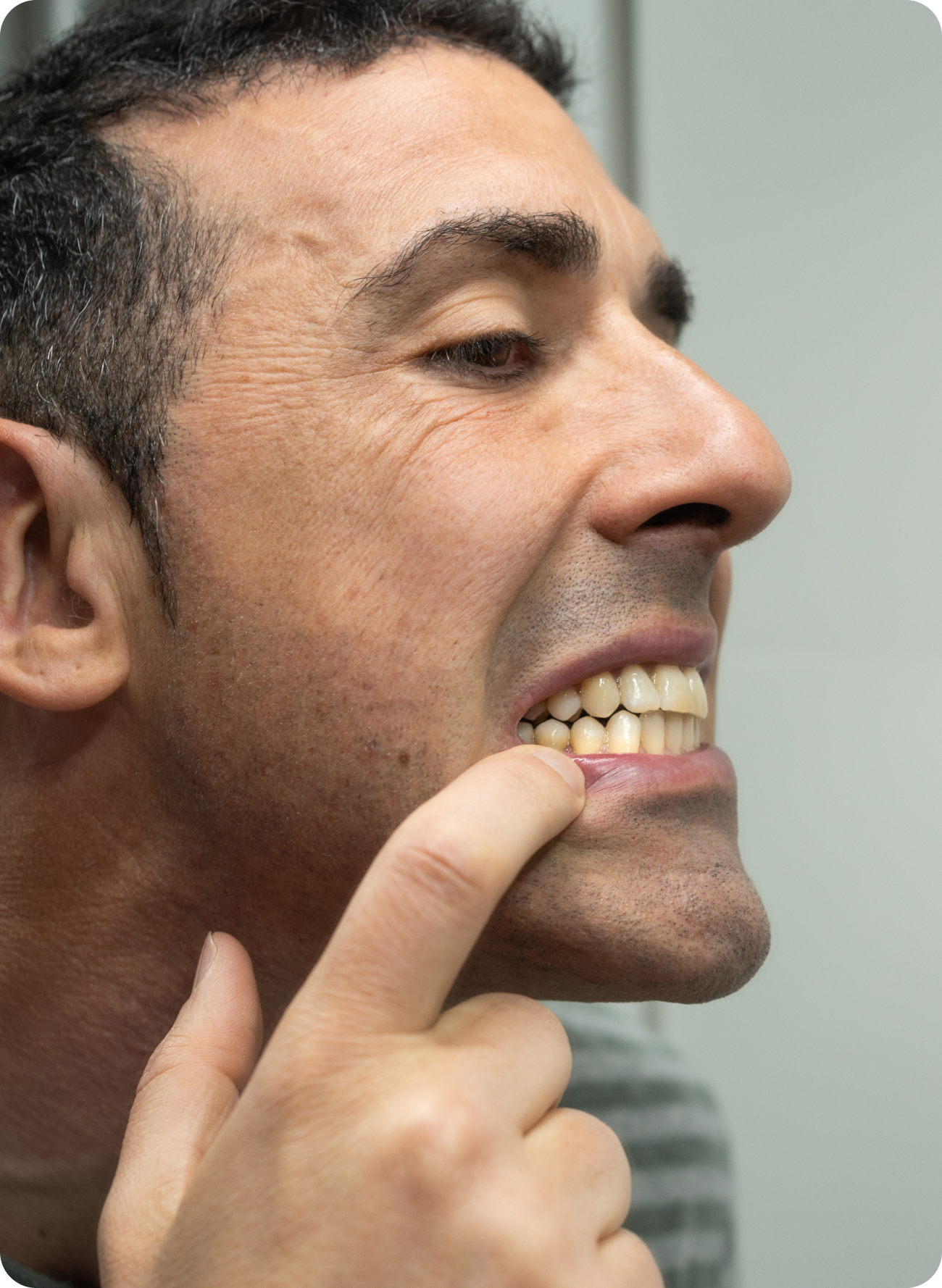
A cavity, cracked tooth or infected nerve tends to cause sharp, intense soreness that you can pinpoint to a single tooth. You can usually tap on the tooth and feel it respond. Sinus-related soreness is duller and more spread out — it doesn't zero in on one spot.
Does hot or cold make it worse?
Temperature sensitivity is a strong dental signal. If a sip of cold water or a bite of hot food triggers a jolt of discomfort in a specific tooth, that's your tooth responding — not your sinuses. Sinus pressure doesn't react to temperature changes.
Is there swelling, a bad taste or visible damage?
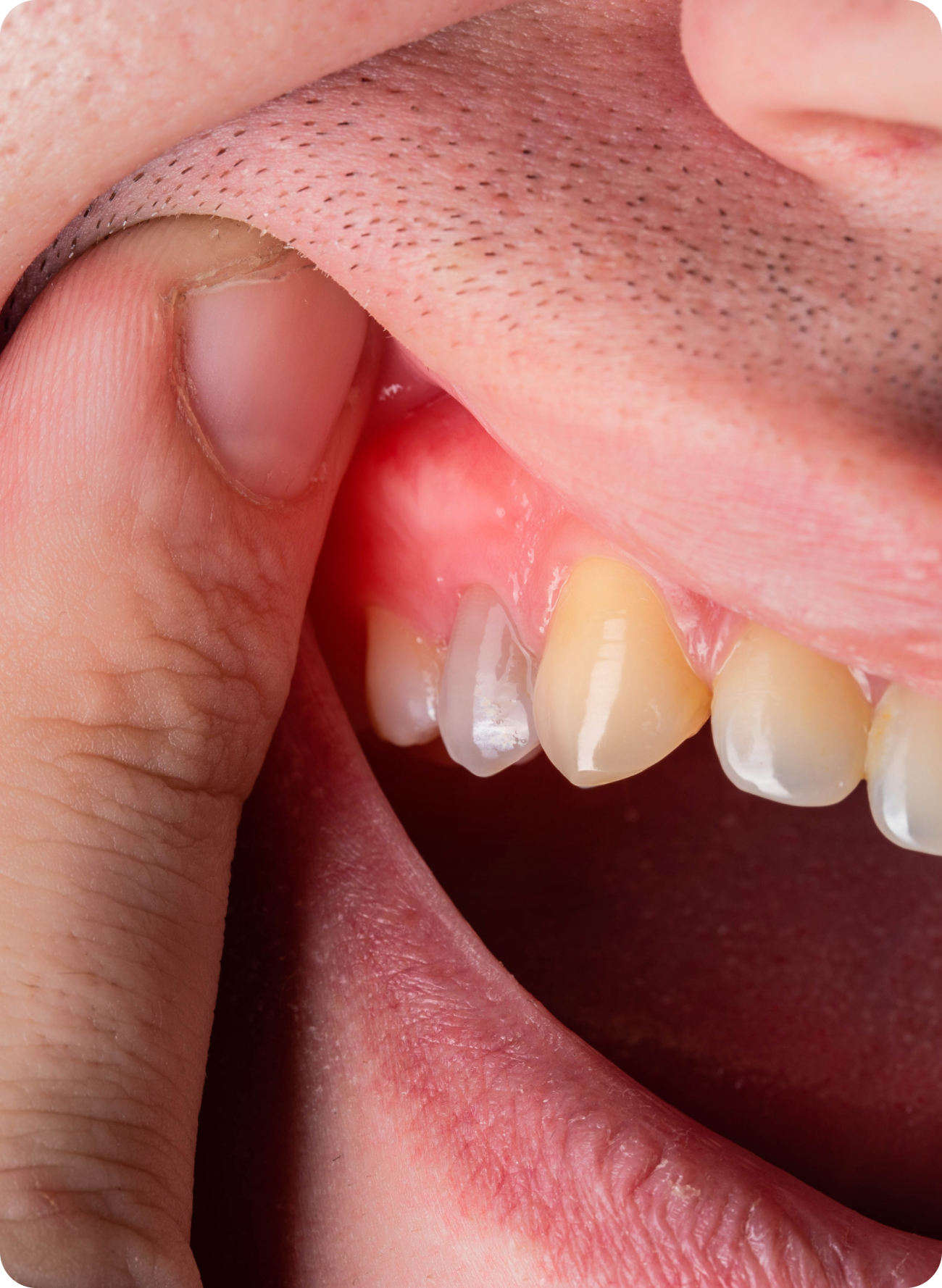
Swollen gums, a bad taste in your mouth, a visible chip or crack, or a small bump on the gum near a tooth are all signs of a dental problem. These symptoms don't occur with sinus infections. If you notice any of them, the issue is almost certainly in the tooth itself.
A simple self-check to help you tell the difference
If you're unsure which is causing your discomfort, work through these four questions:
Are multiple upper teeth aching at once? → More likely sinus
Does the aching get worse when you bend your head forward? → More likely sinus
Do you also have nasal congestion or facial pressure? → More likely sinus
Is the soreness sharp, isolated to one tooth and triggered by hot or cold? → More likely dental
The more "sinus" answers you have, the more likely your discomfort is coming from your sinuses. But this self-check is a guide — not a diagnosis. If you're unsure or the discomfort is getting worse, see your dental provider to have the area properly evaluated.
How do I relieve sinus tooth pain at home?
If your self-check points to a sinus cause, a few simple measures can help reduce the pressure and ease the aching while your body fights the infection.
Stay hydrated: Drinking plenty of water helps thin the mucus in your sinuses, which reduces the pressure pushing against your tooth roots.
Use a saline nasal rinse: A saltwater rinse helps flush irritants and mucus from your nasal passages, reducing inflammation and pressure.
Inhale steam: A hot shower or a bowl of hot water with a towel over your head can open nasal passages and provide temporary relief.
Try a warm compress: Applying a warm cloth to your cheeks and forehead can ease facial pressure and reduce the aching sensation in your upper teeth.
Consider an over-the-counter decongestant: These can help reduce sinus swelling and relieve pressure. Follow the label instructions and check with your pharmacist if you have any health conditions.
These measures work by addressing the sinus inflammation — which is the actual source of the tooth pain. They won't help if the cause is dental. If your symptoms don't improve within 7–10 days, or if the pain is getting worse, schedule an appointment with your dentist’s office to rule out a dental cause.
Can a sinus infection cause discomfort in lower teeth?
Almost never. The maxillary sinuses sit above your upper jaw — not your lower jaw. Lower teeth have no anatomical connection to the sinus cavities, so sinus pressure doesn't reach them. If you're experiencing soreness in your lower teeth, a dental cause is far more likely. That's worth getting checked.
When to see your dental provider
Sinus-related tooth soreness usually improves as the sinus infection clears — often within 7–10 days. But some situations call for a professional evaluation sooner.
See your dental provider if:
The soreness is severe or getting worse
You have swelling in your gums or face
The discomfort is focused on one tooth and doesn't improve
You notice a bad taste or smell in your mouth
Your sinus symptoms have cleared but the tooth soreness remains
That last point matters. If your congestion and facial pressure resolve but your teeth are still aching, the problem is likely dental — not sinus-related. A tooth infection won't go away on its own and can become more serious without treatment.
Schedule an appointment at your nearest Aspen Dental office to have your symptoms evaluated. Your provider can determine whether the cause is dental or sinus-related and help you get the right care.
Sinus pain vs. tooth pain FAQs
Do I need antibiotics for a sinus infection that's causing tooth pain?
Not necessarily. Most sinus infections — including those causing tooth pain — are caused by viruses, and antibiotics don't treat viral infections. Studies show most sinus infections resolve on their own within 7–10 days. Antibiotics are generally only recommended if the infection is bacterial or if symptoms persist or worsen after about a week.
What is the best way to relieve sinus tooth soreness at home?
Staying hydrated, using a saline nasal rinse, and inhaling steam can help reduce sinus pressure and ease tooth soreness. Over-the-counter decongestants may also help. These measures address the sinus inflammation — which is the actual source of the discomfort. They won't help if the cause is dental.
Can a sinus infection cause tooth soreness on just one side?
Yes. Sinus infections often affect one maxillary sinus more than the other, which can cause soreness on just one side of your upper jaw. This can make it harder to distinguish from a dental problem. The key is still whether multiple upper teeth are involved and whether bending forward makes it worse.
Can a sinus infection cause discomfort in my front teeth?
It's uncommon. The maxillary sinuses sit above your upper molars — not your front teeth. Front tooth soreness is more likely to have a dental cause, such as a cavity, a cracked tooth or gum recession. If your front teeth are aching, it's worth having them evaluated.
Is it possible to have a sinus infection and a dental problem at the same time?
Yes — a sinus infection and a dental problem can occur simultaneously, and each can trigger the other. Dental problems can also trigger sinus infections — when bacteria from an infected tooth root spreads into the nearby sinus cavity, it can inflame the maxillary sinus directly. This is one reason that getting a dental evaluation matters even when your symptoms seem purely sinus related.2
Sources
1University of Cincinnati — "How to tell if tooth pain is caused by a sinus infection" (November 2024): https://www.uc.edu/news/articles/2024/11/how-to-tell-if-tooth-pain-is-caused-by-sinus-infection.html
2Mayo Clinic — "Sinus infection and toothache: Any connection?": https://www.mayoclinic.org/diseases-conditions/acute-sinusitis/expert-answers/toothache/faq-20058299