
How to get rid of gum disease
Gum disease, also called periodontal disease, is a common form of infection of the gums that weakens the gums and bones that support the teeth. Minor gum disease, also called gingivitis, is reversible if treated immediately, but if left untreated, can progress and lead to serious consequences. Good oral health habits and regular dental visits are key to prevention and early detection. This article explores gum disease, symptoms, treatments, and more to help you better understand your oral health.
What are the symptoms of gum disease?
Numerous signs and symptoms could indicate gum disease:
Bleeding or red, swollen gums
Gums that bleed easily, such as when eating or during dental work, could be infected. Infection causes swelling which will lead to red puffy gums that bleed easily and hurt.
Sensitive gums or teeth
Gum infections can cause swelling, redness and pain. Infected gums may recede, which can expose roots and cause sensitivity to hot, cold or sweet foods. These areas may also hurt when brushed or touched
Bad breath
Halitosis, or consistent bad breath, can indicate bacteria buildup in your mouth and may be a sign of gum disease.
Unpleasant taste
Unpleasant taste may indicate gum disease for the same reason as bad breath.
Receding gums
Gum disease can cause gum tissue to roll away from the teeth, exposing the tooth roots underneath.
Loose teeth
More advanced gum disease can loosen your teeth.
Is gum disease curable?
Gum disease may be curable depending on the stage. Gingivitis, the earliest stage of gum disease, can be fully cured and reversed with proper oral health care and, if necessary, basic procedures like scaling and root planing. Maintaining strong oral health habits can prevent it from developing again. Once gum disease progresses beyond gingivitis, it can’t be fully cured. However, it can be managed well with proper oral care. What that looks like depends on the stage:

Mild periodontitis
Scaling and root planing can help remove bacteria, plaque, and tartar below the gumline. Then, routine cleanings, called periodontal maintenance, and careful oral health habits can prevent further progression.

Moderate periodontitis
Scaling and root planing are crucial here. Depending on the disease severity, the dentist may consider antibiotics. If tooth decay accompanies the gum disease, procedures like fillings or crowns may be needed.

Advanced periodontitis
Teeth may be loose, requiring removal and replacement with procedures like dental implants or partial dentures depending on how many teeth are affected. Other surgical procedures detailed later may be necessary.
Gum disease treatment
Many treatments are available to manage and cure gum disease, depending on the stage:

Dental cleaning
Routine cleanings can help correct gingivitis, restore your gums to good health, and stop the disease from progressing to incurable forms. During a cleaning, the dentist removes plaque and debris from each tooth and just below the gumline with a dental pick, called a scalar, and a handheld mirror. After that, they apply gritty toothpaste with an electric toothbrush to remove debris, reduce discoloration, and polish your teeth. They follow this up with thorough flossing of your teeth.
The dentist may give you mouthwash at the end to kill more bacteria and clean out any remaining debris. They often provide oral health routine tips during dental cleanings as well.

Scaling and root planing
Scaling and root planing, also referred to as dental deep cleaning, cleans plaque and tartar from the teeth and deeper below the gumline. The dentist administers local anesthesia and then starts by thoroughly cleaning the teeth both above and below the gum line. They’ll then remove all plaque and tartar before smoothing the roots with root planing to prevent bacteria from attaching. Typically, you can expect to have half of your mouth treated in one appointment, and the other half at a later date.

Medications
Medications help you and your dentist supplement oral health habits and dental care by killing existing bacteria and inhibiting further growth. For example, antimicrobial mouthwashes can be used at home to kill bacteria. Dentists may use antimicrobial gels during scaling and root planing or prescribe antibiotics depending on the infection’s stage. Medications pair with any necessary dental procedures to maximize effectiveness and help you manage gum disease.
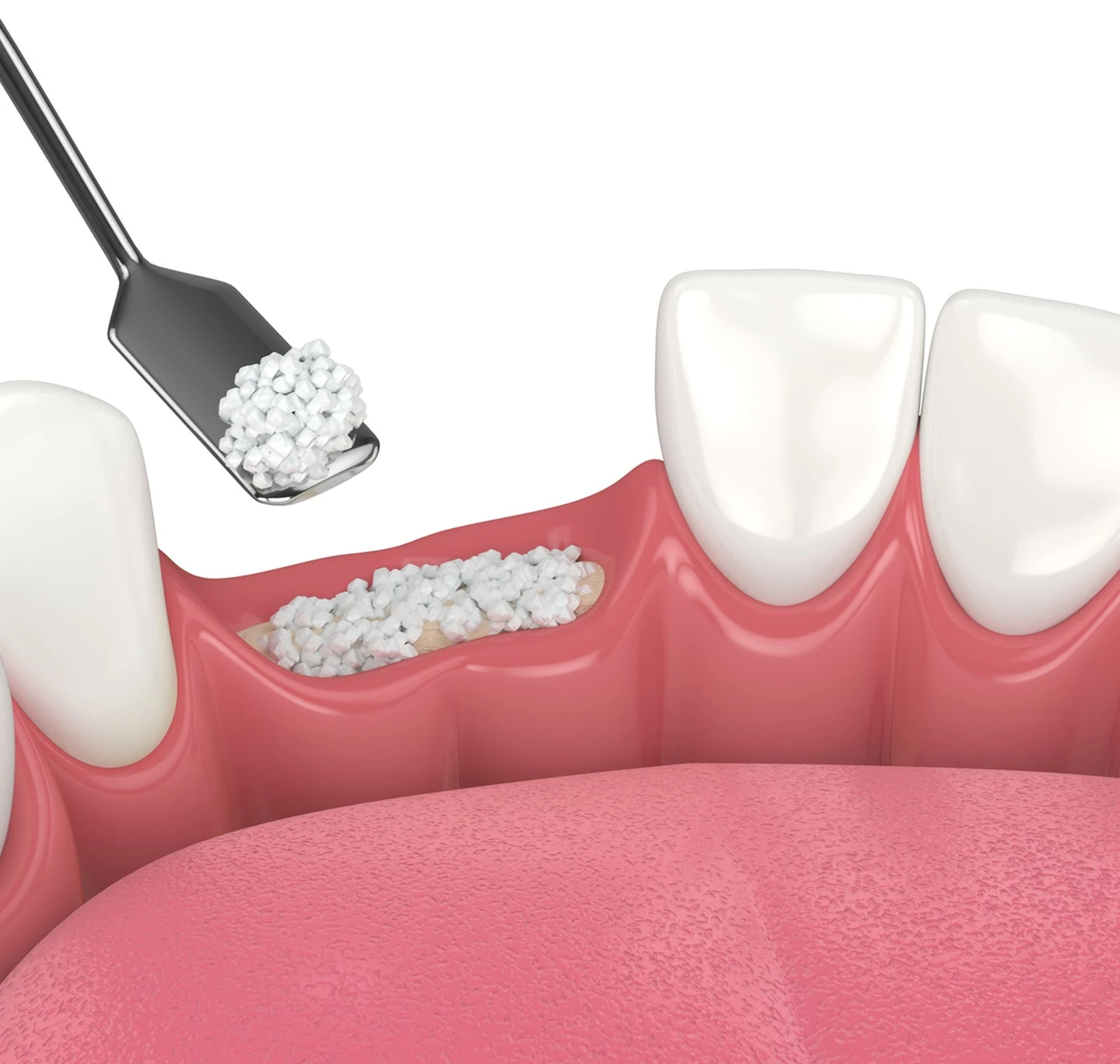
Bone grafts
Moderate to advanced periodontitis causes jawbone loss, loosening your teeth and potentially altering your facial structure if not treated. When bone loss is severe, bone grafts corrects this by adding bone tissue to the area, strengthening the area, and stimulating jawbone growth. Bone grafting is especially necessary before placing implants when teeth are lost. Before the bone graft, speak with your dentist about your material options and other concerns.
Four bone graft types exist:
Autograft
The dentist takes bone material from another part of the patient’s body, such as the jaw or hip. This reduces the risk of rejection and other complications while promoting natural healing. However, you will have to recover from an additional surgery.
Allograft
The dentist uses bone from a human donor, usually sourced from a bone bank. Your jawbone replaces the donor bone over time. This helps you avoid additional surgery and is incredibly safe, but there is naturally a slightly higher risk of complications.
Xenograft
The dentist uses bone from a different species, usually bovine (cow) bone. The bone supplier processes the bone to make it safe for humans. Your body replaces this donor bone over time, but it may take longer since it is an animal bone.
Alloplast
The dentist uses synthetic materials, such as biocompatible ceramics or calcium phosphate. This eliminates donor-based disease transmission risk and avoids a second surgery. However, synthetic materials can be harder to integrate into your jawbone and take longer to heal.

Soft tissue grafts
If gum disease has caused your gums to recede significantly, the dentist can perform a soft tissue graft to cover the exposed roots and reduce further recession. The dentist applies anesthesia, then takes soft tissue from another area — usually, from the roof of the mouth — and grafts it onto the target site. They’ll suture it up, and it’ll then heal over a couple of weeks.

Guided tissue regeneration
Dentists may use a surgical procedure called guided tissue regeneration (GTR) for advanced periodontitis. This procedure uses a small mesh-like material to prevent gum tissue from growing into areas where there should be jawbone.
Is gum disease preventable?
Family health history and genetics may impact the rate at which gum disease could develop.
However, you can prevent gum disease from developing at all by following good oral hygiene habits:

Oral hygiene routine
Brush twice daily, and floss and rinse once daily. Use antimicrobial dental products to inhibit bacterial growth.

Dental checkups and cleanings
Regular dental checkups and cleanings allow a professional to thoroughly clean your teeth. The dentist can also catch early warning signs and address them when they’re easier and less expensive.

Diet
A nutritious diet can provide your body with the nutrients to fight bacteria and repair gum tissue. Minimizing sugars can reduce bacterial growth since bacteria feed on sugars.

Lifestyle choices
Avoiding tobacco products and reducing alcohol consumption can reduce your risk of gum disease.
Gum disease FAQs
How can I prepare for gum disease treatment?
Maintain great oral hygiene habits. Tell your dentist about any medical conditions you have and medications you’re taking. Discuss with them any concerns as well. Follow all post-care instructions to facilitate healing and prevent further gum disease from occurring.
What is the best toothpaste for gum disease?
Antimicrobial toothpaste can often be best for gum disease. Look for either triclosan or stannous fluoride as the active ingredient. Triclosan helps reduce bacterial growth and inflammation. Stannous fluoride also fights bacteria, strengthens enamel, and helps prevent cavities. Antimicrobial mouthwash could be a good supplement to your toothpaste.
What does gum disease look like?
Gingivitis often appears as swollen, red, and bleeding gums when brushing, flossing, or getting a dental cleaning. Gums can recede to form pockets as gum disease progresses, and you may experience bad breath and tooth sensitivity. Advanced gum disease can loosen teeth and weaken the jawbone.
How can I get rid of gum disease fast?
You can’t fix gum disease overnight. However, focusing on strong oral health habits and visiting your dentist can help reverse gingivitis or stop more advanced gum disease from progressing with procedures like scaling and root planing. That said, quitting tobacco use and reducing sugar consumption could go a long way in slowing the development of gum disease.
Explore more for your oral health
Prevent gum disease today
Get into your local Aspen Dental office today to take charge of your oral health.