Last updated 07.13.2026
Why does my tooth feel hollow when I tap it?
A hollow feeling when tapping a tooth can signal decay, a crack, nerve damage or infection and should be evaluated before the problem worsen
A hollow feeling or sound when you tap a tooth usually means the structure or nerve inside has changed. It can point to deep decay, a crack, a failing restoration or an infection developing at the root. The sensation itself is clinically meaningful, and understanding what is behind it is the first step toward knowing what to do next.
What you'll learn in this article:
A hollow feeling when you tap a tooth often points to hidden damage, decay, a crack or a problem with the nerve.
Deep decay, cracked teeth, failing fillings or crowns and infections are the most common causes.
Throbbing, swelling or sensitivity that lingers after heat or cold means you should be evaluated promptly.
Finding the cause early often leads to simpler treatment and a better chance of saving the tooth.
That window for a simpler fix is exactly why this symptom is worth acting on now. If your tooth is already giving you that signal, your dental provider can identify the cause, walk you through your options and help you avoid a more involved procedure down the road.
Why tapping a tooth reveals problems
Healthy teeth feel solid and absorb impact evenly. When something changes inside or around a tooth, tapping creates a noticeably different sensation: hollow, muffled or sharply tender.
This is not coincidental. Providers use a percussion test — gently tapping a tooth with an instrument — to help locate problems. A tooth that sounds or feels different when tapped signals that its inner tissue, supporting bone or root may be affected. When you notice this at home, you are picking up the same clue.
Common causes of a hollow feeling in a tooth
A hollow feeling in a tooth typically means hidden damage, decay or failing dental work has compromised its structure.
What does deep decay do to a tooth?
Deep decay hollows out the dentin, which is the softer tissue beneath the hard outer enamel. Once decay breaks through that inner structure, the tooth loses its solid density. Tapping it sounds and feels different because there is less material inside absorbing the force.
Can a crack make a tooth feel hollow even with no visible damage?
Cracks are not always visible. A crack can run deep into a tooth without breaking it apart, but it changes how the tooth responds to pressure. Tapping or biting on specific spots may produce a sharp, distinctive sensation that shifts depending on exactly where the pressure lands. This is called cracked tooth syndrome.1
Why would a filling or crown cause a hollow sensation?
Older restorations gradually lose their seal. When a filling or crown lifts slightly from the tooth surface, a tiny gap forms. Air gets trapped in that space. Tapping on the tooth then produces a hollow sound or sensation because of that air pocket sitting between the restoration and the tooth underneath.
What happens when the nerve inside a tooth dies?
When the nerve inside a tooth dies, the tooth often stops responding normally — feeling hollow, muffled, or simply "off" compared to surrounding teeth. The pulp (the nerve tissue at the tooth's center) can be damaged or killed by deep decay, trauma or infection, often with no visible sign on the outside to indicate anything is wrong.
How does an abscess make a tooth sensitive to tapping?
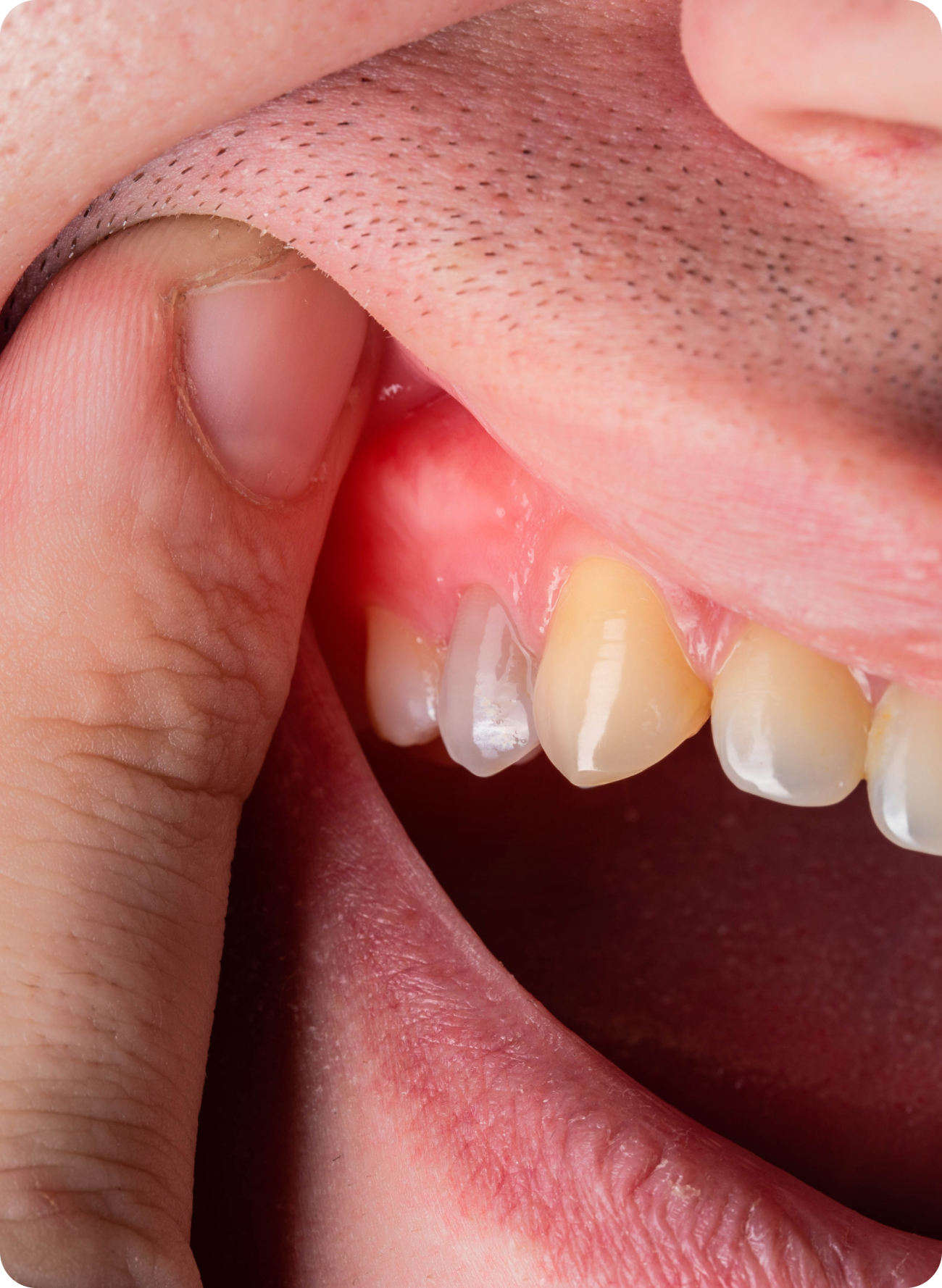
An abscess creates inflammation at the base of the tooth root that the surrounding tissue cannot absorb. That built-up pressure makes even light tapping produce strong soreness — the inflamed tissue has no capacity to buffer impact the way healthy tissue does.2
Knowing the possible cause is useful. But the more important question is whether your symptoms suggest the problem is already advancing.
Symptoms that mean you should not wait
Not every hollow sensation is urgent. But some symptoms signal that a problem is advancing and needs care soon.
Seek an appointment promptly if you notice:
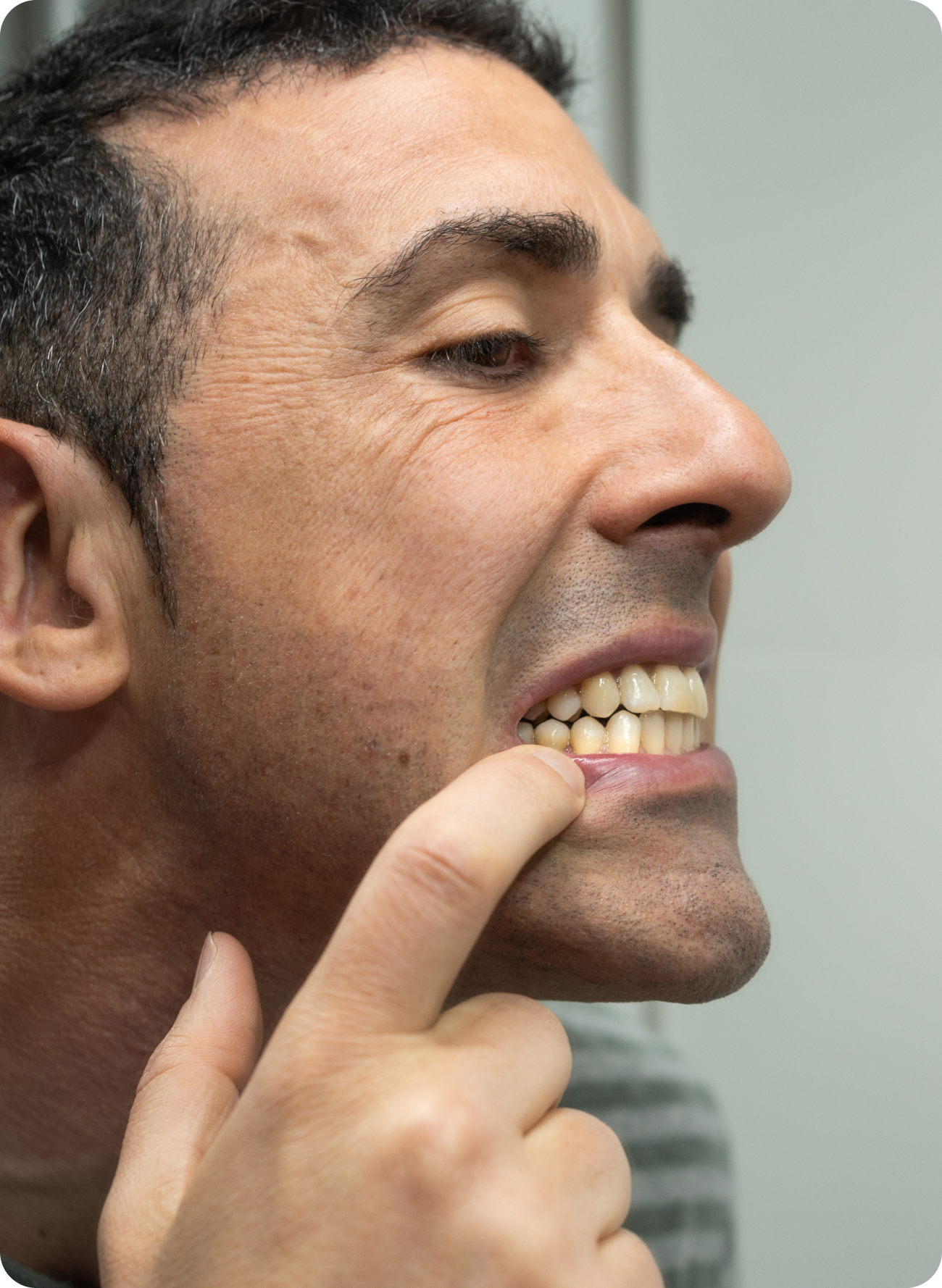
Tenderness or soreness when tapping or biting down
Throbbing or aching that comes and goes
Sensitivity to heat or cold that lingers after the source is removed
Swelling in the gum near the tooth
A small bump or pimple-like spot on the gum
Discomfort that wakes you up or becomes difficult to ignore
If you develop visible swelling in the jaw or face, or have difficulty swallowing, seek care the same day.
When to see your dental provider
What this symptom is telling you is that something inside the tooth has shifted — and that the longer it goes without evaluation, the fewer options you may have. The good news is that most causes respond well to treatment; a new filling, a crown or a root canal can restore the tooth and stop any infection from advancing. The sooner the problem is identified, the simpler the solution tends to be.
Do not wait to see if the sensation goes away on its own. Visit an Aspen Dental office near you. A dental provider can examine the tooth, take an X-ray, and give you a clear picture of what is happening inside — and exactly what it will take to fix it.
Why does my tooth feel hollow when I tap it FAQs
Can a tooth feel hollow without any visible damage?
Yes. Many of the most common causes (including nerve damage, internal cracks and early-stage infection) are not visible on the surface. Only a clinical exam and X-ray can reliably identify what is happening inside the tooth.
Does a hollow-feeling tooth always need a root canal?
Not necessarily. If the cause is a loose filling or early decay, a simple restoration may be all that is needed. A root canal is only required when the nerve is infected or has died. Your dental provider can determine which applies after examining the tooth.
How long is it safe to wait before getting this checked?
There is no reliable way to determine how advanced the underlying issue is from home. If you have any soreness when tapping or experience lingering sensitivity or swelling, do not delay. Even without those symptoms, a hollow sensation is worth seeking an evaluation. Decay and infection can progress without producing obvious discomfort early on.
Can this happen under an existing crown?
Yes. Decay can develop under a crown if the seal is not intact, and the tooth's nerve can become infected even with a crown in place. A hollow or tender sensation under a crown should always be evaluated, since the underlying tooth is not directly visible without an X-ray.
Sources
1Cleveland Clinic — Cracked Tooth (Fractured Tooth): https://my.clevelandclinic.org/health/diseases/21628-fractured-tooth-cracked-tooth
2Cleveland Clinic — Periapical Abscess: Symptoms, Causes & Treatment https://my.clevelandclinic.org/health/diseases/24896-periapical-abscess