Last updated 07.16.2026
What causes a tingling sensation in a tooth with no pain?
Learn why a tooth can tingle without pain, what conditions may cause it and when the sensation should be evaluated before it worsens.

A tooth can tingle — sometimes described as a sensation of pins and needles, buzzing, or fuzziness — without any noticeable discomfort, and it usually means the nerve inside is sensing early irritation. The most common causes include enamel erosion, a hairline crack, early tooth decay, and gum recession — and when caught early, most are straightforward to treat.
What you'll learn in this article:
A tingling tooth without discomfort is often an early warning sign of irritation from enamel erosion, a small crack, early decay or gum recession.
Many causes of tooth tingling are easiest to treat when caught early, before discomfort or more serious damage develops.
Sinus pressure and recent dental work can also cause temporary tooth tingling that usually improves as you heal.
If the tingling keeps coming back, gets worse, or is triggered by cold, heat, or sweets, it's time to see your dental provider.
That early warning signal is exactly why this symptom is worth checking out. If a tooth has started tingling unexpectedly, your dental provider can determine what's causing it and recommend treatment before discomfort or damage has a chance to progress.
Why a tooth can tingle before discomfort sets in
Inside every tooth is a soft center called the pulp that contains nerves and blood vessels. These nerves are very sensitive. They can notice small changes long before a tooth starts to hurt.
A tingling feeling is often an early warning sign. It can happen when enamel wears down, a small crack forms, or a cavity starts to develop.
Think of it like a smoke alarm going off before you see any flames. The tingling does not always mean something serious is wrong, but it does mean something has changed. Finding the cause early usually makes treatment simpler.
What does tingling in one specific tooth usually mean?
Tingling that spreads across multiple teeth or involves the lips, tongue, or jaw is a different pattern — one worth mentioning to your provider, as it can sometimes point to a health condition unrelated to the teeth themselves.
The most common causes of tooth tingling without discomfort
Enamel erosion
The outer layer of each tooth — enamel — acts as a protective shield for the nerve underneath. Acidic foods, sodas, citrus drinks, and acid reflux can slowly wear this layer down. As enamel thins, the nerve becomes more exposed to the outside world. The result is often a faint tingling or buzzing sensation, especially when eating or drinking something cold or sweet, without any outright soreness yet.
A hairline crack in the tooth
Teeth can develop tiny cracks that are invisible to the naked eye. Chewing hard foods, clenching, or grinding — even a minor impact from years ago — can cause these micro-fractures. When you bite down, the crack flexes slightly and disturbs the nerve inside. Most patients feel a brief tingling or zinging sensation only when biting in a certain way. At rest, there is often no discomfort at all.
Early tooth decay
Decay in its early stages often produces no soreness. But as bacteria work through the enamel toward the nerve below, a mild tingling can develop. At this stage, the tooth usually only needs a filling. Left untreated, the decay deepens and the problem becomes more involved.
Early pulp inflammation (pulpitis)
When the nerve inside a tooth becomes irritated, the condition is called pulpitis. In its earliest form, it often presents as tingling or mild sensitivity rather than outright discomfort. This stage — called reversible pulpitis — is still treatable with relatively simple intervention. Without attention, it can advance to a point where more significant treatment is needed.1
Gum recession
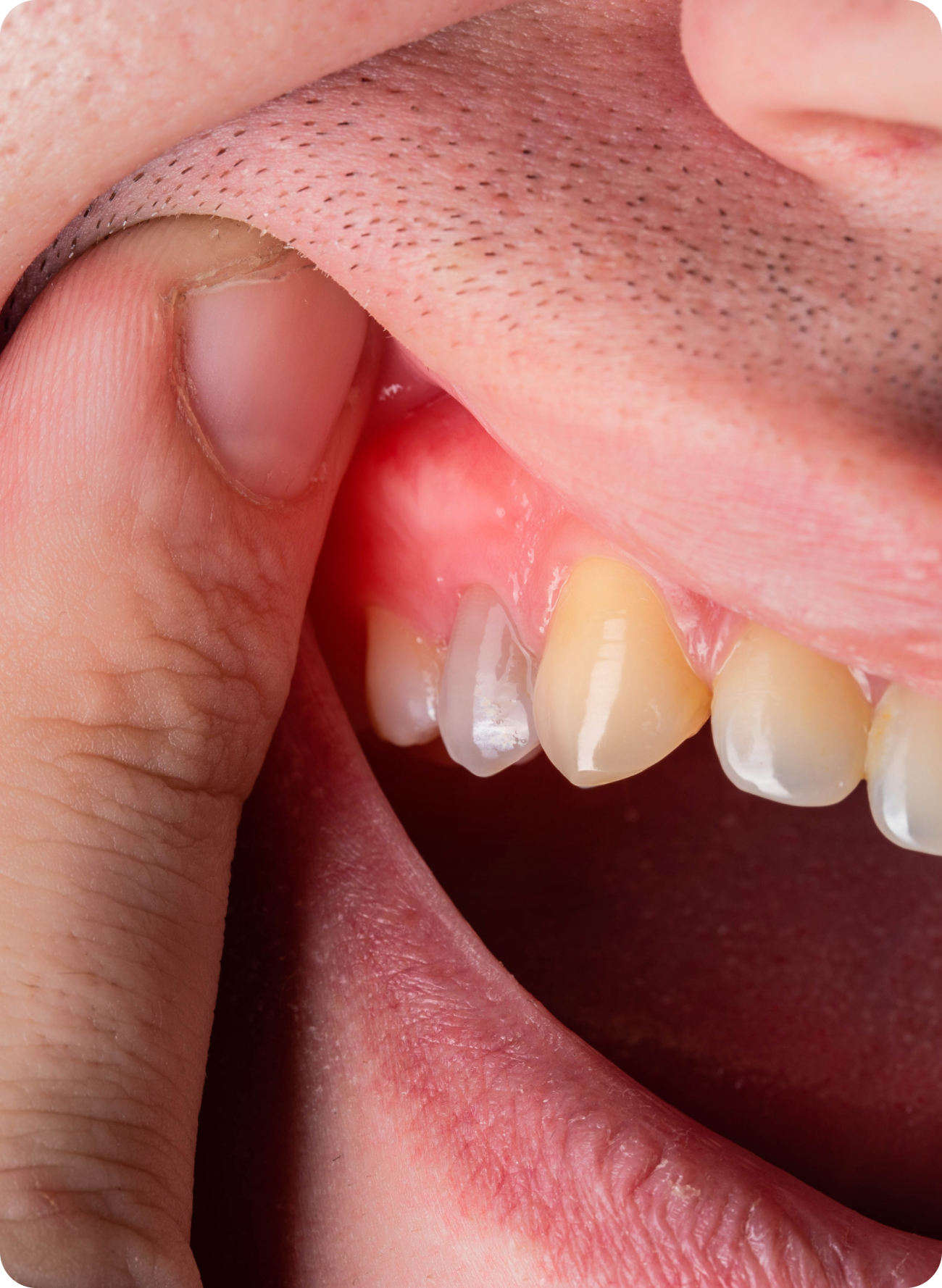
When gums pull back from the base of a tooth, they expose the root surface. Unlike the crown of the tooth, the root has no enamel covering. This area is far more nerve-sensitive, and even minor temperature changes or brushing can trigger a persistent tingling — often without visible swelling or obvious soreness.
Sinus pressure affecting upper teeth
The roots of your upper back teeth sit very close to the sinus cavities. When sinuses become inflamed — from a cold, allergies, or a sinus infection — the pressure can push against those tooth roots and create a tingling sensation in the upper teeth. This typically affects more than one tooth at a time and tends to ease once the sinus issue clears. It is easy to mistake for a dental problem.
Tingling after a recent filling or dental procedure
Some mild tingling after a filling is completely normal. The tooth is adjusting to a new material, and the nerve may remain mildly irritated for a few days to a few weeks. If the sensation is fading, it is likely part of normal healing. If it is persisting or worsening after 2–3 weeks, let your dental provider know.
A few less common causes
Teeth grinding (bruxism)
Many people grind or clench without realizing it — particularly at night. Research estimates that 8 to 31 percent of adults grind their teeth during sleep, making bruxism one of the most common unconscious contributors to unexplained dental symptoms.
Vitamin B12 or folate deficiency
Low levels of vitamin B12 or folate can cause tingling in the mouth, but it usually affects several teeth or areas at the same time rather than a single tooth.2
These vitamins help keep nerves healthy. When levels are too low, nerves can send unusual signals that cause tingling or mild numbness in the gums, tongue, or multiple teeth. Unlike a cavity or cracked tooth, deficiency-related tingling rarely stays isolated to one spot.
Other symptoms may include fatigue, brain fog, or numbness in the hands and feet.
Overuse of whitening products
Whitening strips and gels can sometimes make teeth tingle. These products work by reaching below the enamel to lift stains, which can temporarily irritate the nerve inside the tooth. The sensation usually goes away within a few days after you stop using the product.
If the tingling does not improve or continues after you stop whitening, mention it to your dental provider.
When to see your dental provider
See a dental provider if tooth tingling returns more than once, is triggered by temperature or sweets, or is getting stronger over time — early evaluation almost always means a simpler fix. A single, brief tingle that passes quickly and never returns may not require urgent attention. But the following patterns mean the tooth needs professional evaluation sooner rather than later:
The tingling keeps coming back or is gradually getting stronger
Cold, heat, or sweets reliably trigger it
You feel it in the same specific tooth every time
The area around the tooth looks swollen or the gum tissue appears darker than usual
The tooth has been growing more sensitive over time, not less
If any of these describe your situation, schedule an appointment at your nearest Aspen Dental. Tingling caught at this stage almost always involves a simpler, less invasive solution than waiting until discomfort develops.
Seek same-day care if you notice any of the following:
Tingling that spreads to the same side of your face or jaw
Visible swelling anywhere in the mouth, jaw, or cheek
Soreness that is expanding beyond the original tooth
These signs can indicate an infection that needs prompt treatment.
What causes a tingling sensation in a tooth with no pain FAQs
Can a tooth infection cause tingling with no discomfort?
Yes. An early dental abscess can irritate nearby nerve endings before significant soreness develops. The infection may put pressure on surrounding tissues, creating a tingling, or buzzing sensation without obvious throbbing. This is one reason a persistently tingling tooth should not be dismissed — even without discomfort, an infection may be present and will worsen without treatment.
Why does my tooth tingle when I eat sweets?
Sugar triggers tingling when enamel is damaged or thinned. Bacteria on the tooth surface feed on sugar and produce acids that briefly stimulate exposed nerve endings. If sweets reliably cause a tingling sensation in the same spot every time, that tooth likely has early decay or significant enamel erosion that is worth evaluating.
Can teeth tingling be a sign of something other than a dental problem?
Yes. If the tingling affects several teeth, your lips, your tongue, or part of your face instead of a single tooth, it may be related to a health condition outside the mouth. Possible causes include vitamin B12 deficiency, circulation issues, or, in rare cases, a nerve disorder.
Tingling that stays in one tooth is usually caused by a dental problem. Tingling that spreads, moves, or affects other areas should be discussed with both your dental provider and your primary care physician.
Will a tingling tooth stop on its own?
It depends on what is causing it. Tingling from temporary post-procedure sensitivity or short-term sinus pressure often resolves without treatment. Tingling from decay, a crack, enamel erosion, or early pulp irritation will not heal on its own — and in most cases, it gradually worsens over time. An early evaluation keeps your options simpler.
Is a tingling front tooth a different concern than a tingling back tooth?
Location can offer useful clues. Front tooth tingling is more commonly linked to enamel erosion from acidic foods, a hairline crack or old minor trauma. Back tooth tingling more often points to early decay, grinding, pulp irritation or sinus pressure. Either way, a tingling sensation that keeps returning in any single tooth is worth having evaluated — front or back.
Sources
1Iqbal M, et al. Symptomatic irreversible pulpitis, and other orofacial pain. PubMed Central, National Library of Medicine. Published April 2025. https://pmc.ncbi.nlm.nih.gov/articles/PMC11991903/
2Al-Hakami AM, et al. Oral manifestations of vitamin B12 deficiency. PubMed Central, National Library of Medicine. Published 2024. https://pmc.ncbi.nlm.nih.gov/articles/PMC11254220/