Last updated 05.04.2026
What is geographic tongue? Benign migratory glossitis
Geographic tongue is a harmless condition causing smooth, red, map-like patches. Learn symptoms, triggers, treatment options, and when to see your Aspen Dental care team.
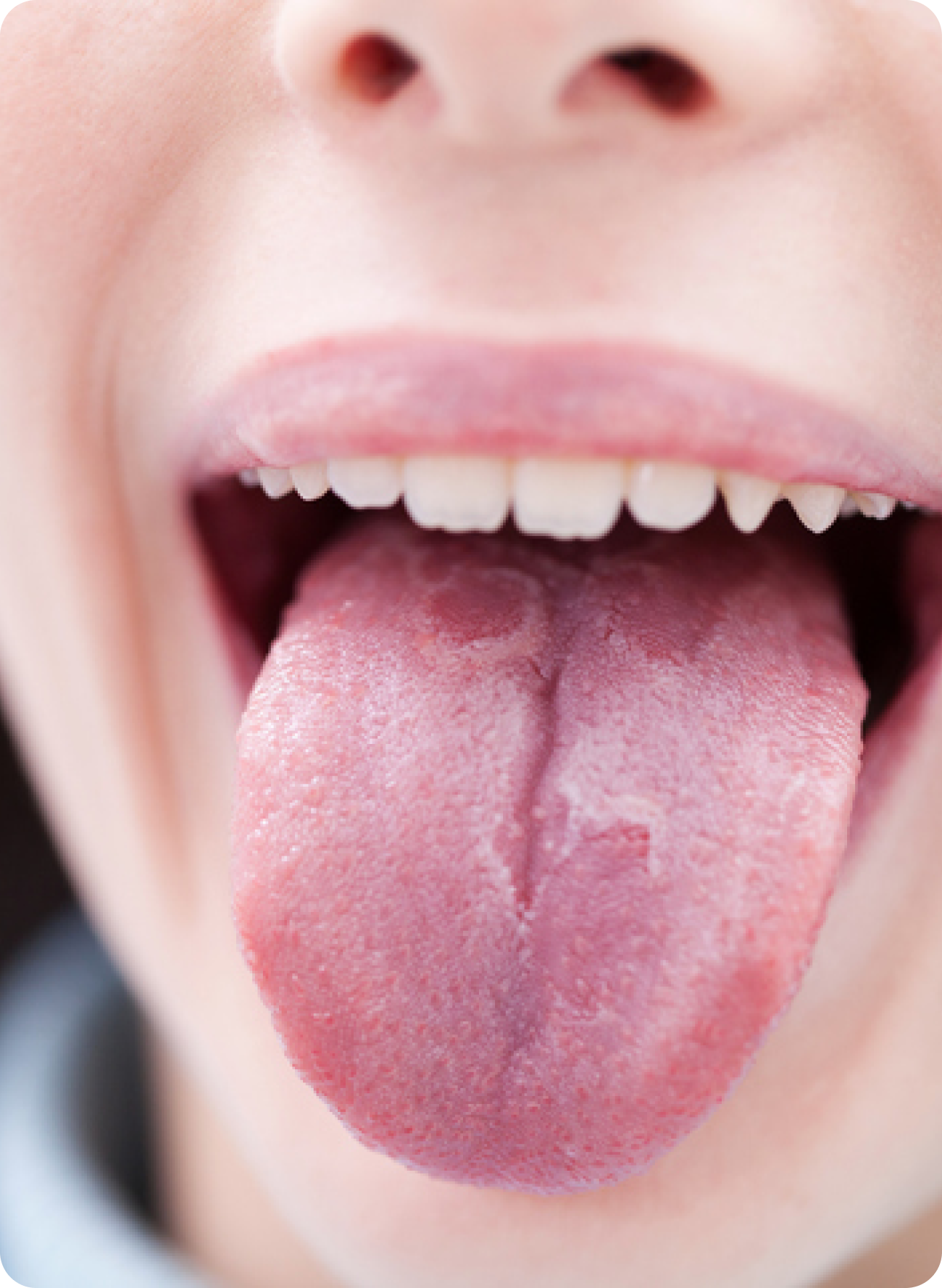
You glanced in the mirror, noticed red patches on your tongue and immediately started looking for answers. First, take a breath. What you’re seeing may be geographic tongue, one of the more common harmless conditions that can affect the surface of the tongue.
Geographic tongue, also called benign migratory glossitis, causes smooth, red, map-like patches to appear as tiny surface bumps on your tongue that temporarily disappear. For most people, it comes and goes on its own.
This guide explains what geographic tongue is, what may trigger it, how it’s different from conditions like oral thrush and when it’s worth talking to a dental provider.
Is geographic tongue harmless?
Yes, geographic tongue is generally harmless. It causes smooth, red, map-like patches to appear on the surface of your tongue. These patches are areas where the tiny bumps on your tongue, called papillae, have temporarily worn away.
Normally, the top of your tongue is covered in tiny bumps that help you grip food and contain taste buds. When you have geographic tongue, patches of those bumps temporarily disappear. This leaves behind smooth, red areas that often have slightly raised white or light-colored borders.
The patches can heal in one area and show up in another, which is why the pattern may seem to move or change. That changing, map-like appearance is where geographic tongue gets its name.
It may look concerning, but geographic tongue is not an infection and it is not a sign that you did something wrong with your oral care. It can affect people of all ages, from children to older adults.
Geographic tongue symptoms
The most common geographic tongue symptoms are smooth, irregular red patches on the top or sides of your tongue. These patches may change shape, size or location over time. You may also notice a white or light-colored border around the red areas. For many people, the appearance of the tongue is the only symptom. Over a few days or weeks, you may notice one patch healing while another appears somewhere else. Some people do feel discomfort along with the visible changes. You may notice:
A mild burning or stinging feeling
Sensitivity to certain foods
A raw feeling on the tongue
Mild discomfort when brushing your teeth or tongue
Symptoms can come and go. You may go months or even years with no noticeable changes, then see the patches return. That pattern is common with geographic tongue. If you are unsure about a new symptom or a change in your mouth, your Aspen Dental care team can take a closer look and help you understand what’s going on.
What causes geographic tongue?
The exact cause of geographic tongue is not fully known. Dental experts believe it may be linked to genetics, stress, hormonal changes, vitamin deficiencies or certain health conditions. It is also associated with psoriasis, though having one does not mean you will have the other.
While there is no single clear cause, several factors may play a role in flare-ups.
Family history
Geographic tongue can run in families. If a parent or sibling has had similar map-like patches, you may be more likely to experience them too.
Stress and anxiety
Some people notice flare-ups during stressful periods. Stress does not mean you caused the condition, but it may be one factor that makes symptoms more noticeable.
Hormonal changes
Hormonal shifts may affect how the tongue responds to inflammation. Some people notice symptoms during certain times of the menstrual cycle or during pregnancy.
Vitamin deficiencies
Low levels of certain nutrients, especially B vitamins, zinc or iron, may make the tongue more sensitive or more likely to develop irritation.
Other health conditions
Geographic tongue has been linked with psoriasis. It may also be more common in people with fissured tongue, which means the tongue has deeper grooves or wrinkles, or in people with allergies or asthma.
It’s also important to know what does not cause geographic tongue. It is not caused by poor oral hygiene, it is not contagious and it is not usually a sign of a serious health problem.
Foods that can trigger or worsen geographic tongue
For some people, certain foods and drinks can make geographic tongue feel more uncomfortable. Triggers vary, but common ones include:
Spicy foods, such as hot peppers, spicy sauces and heavily seasoned dishes
Acidic foods, such as citrus fruits, tomatoes, vinegar-based dressings and pickled foods
Salty snacks, such as chips, pretzels and heavily salted foods
Hot drinks, such as coffee, tea and hot soups
Alcohol, including wine, beer and spirits
Knowing your triggers can help you manage day-to-day comfort. If flare-ups bother you, try keeping a short food diary. Write down what you ate or drank, when symptoms started and how long they lasted. Over time, patterns may become easier to spot.
How do you treat geographic tongue?
Geographic tongue usually does not need treatment because it often clears on its own and does not cause lasting harm.
If you have burning, stinging or sensitivity, treatment focuses on comfort. Your Aspen Dental care team may recommend:
Over-the-counter pain relievers, if you can take them safely
Alcohol-free mouthwash
A gentle toothpaste without strong flavoring agents
Topical gels or ointments to soothe irritated areas
A prescription rinse if symptoms are more uncomfortable
You can also help reduce irritation by avoiding foods and drinks that trigger symptoms during a flare-up.
Geographic tongue vs. thrush
It’s easy to confuse geographic tongue with oral thrush because both can cause unusual patches in the mouth. But they are different conditions.
Oral thrush is a fungal infection caused by an overgrowth of Candida. It often causes creamy white or yellowish patches that may wipe away, sometimes leaving a red, tender area underneath. Thrush is more common in babies, older adults and people who take antibiotics or steroids.
Geographic tongue is a harmless inflammatory condition. The patches are usually smooth and red with lighter borders. They do not wipe away.
A simple clue is whether the patch comes off when gently wiped. Thrush may come off. Geographic tongue does not. If you are not sure, schedule an exam with an Aspen Dental provider.
Geographic tongue pain
Geographic tongue pain is usually mild. It often feels more like burning, stinging or sensitivity than a sharp ache. Discomfort is often triggered by spicy, acidic, salty or hot foods and drinks. Once the irritant is gone, the discomfort usually settles down. If pain is severe, lasts longer than expected or makes it hard to eat, drink or speak, reach out to Aspen Dental. There are ways to manage the discomfort and make sure something else is not causing your symptoms.
When to seek professional care
You can often manage mild geographic tongue flare-ups at home. Still, it’s a good idea to schedule an appointment with your Aspen Dental care team if:
The patches last longer than 10 days without changing or improving
Pain makes it hard to eat, drink or speak
You notice swelling, bleeding or sores that look different from the usual smooth red patches
The patches appear with fever or other symptoms
You feel anxious and want the reassurance of a professional diagnosis
A quick exam can help confirm what’s going on and rule out other conditions that may need treatment.
Your frequently asked questions about geographic tongue, answered
How do I get rid of geographic tongue?
You usually cannot get rid of geographic tongue permanently. It tends to come and go over time. You can manage flare-ups by avoiding foods that trigger discomfort, using a gentle toothpaste and keeping up with good oral hygiene. If symptoms are uncomfortable, an Aspen Dental provider may recommend a soothing rinse or topical treatment.
Does geographic tongue go away?
Yes, geographic tongue often goes away on its own. A flare-up may last a few days to a few weeks. The red patches can heal, then return later in a different area. Many people go long stretches with no symptoms at all.
Is geographic tongue contagious?
No, geographic tongue is not contagious. You cannot pass it to someone else through kissing, sharing drinks or sharing utensils. It is a harmless condition and does not spread from person to person.
What type of mouthwash can I use for geographic tongue?
Choose an alcohol-free, gentle rinse. Alcohol-based mouthwashes can sting and may make burning feel worse during a flare-up. If discomfort is significant, your Aspen Dental care team may recommend a prescription rinse to help soothe irritation.
How long does geographic tongue last?
A geographic tongue flare-up usually lasts a few days to a few weeks. Because it can recur, you may have a normal-looking tongue for months or years before new patches appear.
Does geographic tongue hurt?
Sometimes. Many people have no pain at all. Others notice mild burning, stinging or sensitivity, especially after eating spicy, acidic, salty or hot foods. If pain is severe or does not improve, it’s best to have it checked.
What causes red spots on the tongue?
Red spots on the tongue can have several causes, including geographic tongue, irritation, burns, canker sores, infections or trauma from biting the tongue. If the spots do not improve, keep coming back or come with pain, swelling or bleeding, schedule a dental visit.
Don’t spend another day unsure about your dental health
Changes in your mouth can be unsettling, especially when you are not sure what you’re looking at. Geographic tongue is usually harmless, but you deserve clear answers and peace of mind.
Whether you are dealing with tongue irritation, due for a routine cleaning or have questions about your oral health, Aspen Dental is here to help with affordable, judgment-free care.
Schedule an appointment at a nearby Aspen Dental office today. Same-day appointments may be available.