Last updated 09.15.2026
The 3 AM dental emergency survival guide
Learn how to handle a nighttime dental emergency, when to seek ER care and what steps can safely manage symptoms until morning.

A dental emergency at 3 AM comes down to one question: Do you need the emergency room now, or can you manage safely until your dentist’s office opens? If you have swelling spreading toward your throat, difficulty breathing or swallowing or uncontrolled bleeding, go to the ER immediately as these can become life-threatening quickly.
For everything else, this guide covers what to do overnight, what actually relieves discomfort at home and what to avoid until you can get professional care.
What you'll learn in this article:
ER or wait until morning? How to triage your situation accurately — and why both over- and under-reacting carry real consequences.
Why pain feels worse at night — and why intensity alone doesn't indicate severity.
The 30-minute rule for knocked-out teeth — the storage mistake that makes reimplantation much more difficult.
Abscess warning signs that signal a spreading infection requiring immediate emergency care.
What the ER can (and cannot) treat — no matter how severe your symptoms.
Home relief that works — and the common instincts that make things worse.
What to tell your dentist first thing in the morning to get seen as fast as possible.
Dental pain that can't wait until morning? Schedule an appointment at your nearest Aspen Dental provider. Many locations offer same-day emergency appointments.
Is this a true emergency?
According to the American Dental Association (ADA), a dental emergency is any condition requiring immediate treatment to stop bleeding, alleviate severe pain or treat infection that could become life-threatening.¹
Not every dental crisis at 3 AM requires a trip to the ER. The most important decision you'll make tonight is distinguishing between a life-threatening situation and one that is urgent but manageable until morning.
Symptoms that require the ER right now
Go to the emergency room immediately — do not wait — if you have any of the following:
Facial swelling that is spreading toward your neck, throat or chest
Difficulty breathing or swallowing
Uncontrolled bleeding that does not slow after 15–20 minutes of firm, continuous pressure
Jaw injury or suspected fracture following trauma
High fever (above 101°F) combined with facial swelling
Spreading facial swelling combined with difficulty swallowing can indicate a rapidly progressing infection of the floor of the mouth — a condition called Ludwig's angina — that can compromise your airway within hours. This is a medical emergency. The ER is the right destination, not a dental office.
Situations that are urgent but can wait until morning
The following are serious and need professional attention — but they do not require an ER visit if you can manage the discomfort at home:
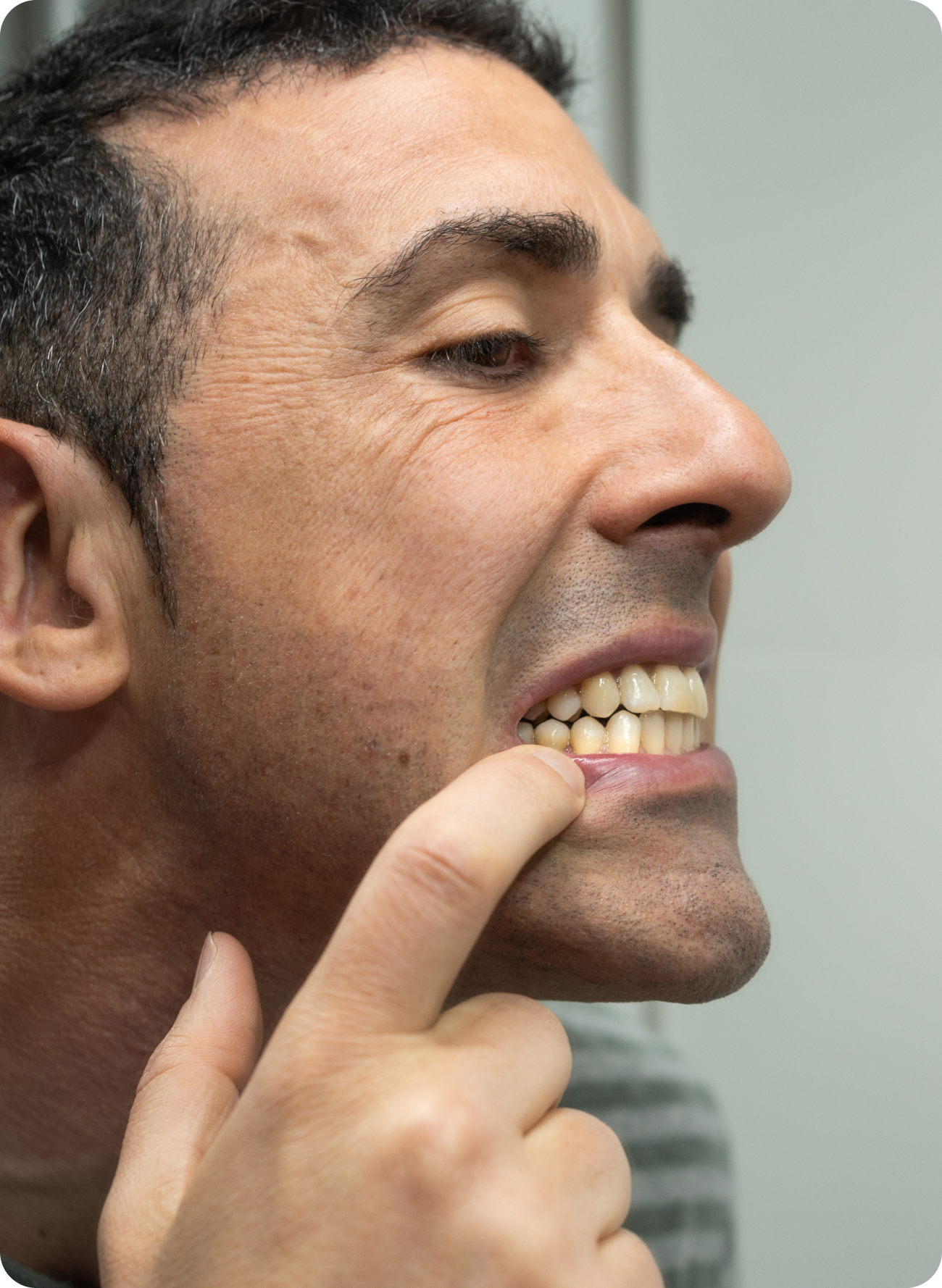
Severe toothache without facial swelling or fever
A knocked-out tooth (act immediately using the steps below and seek emergency dental care as quickly as possible)
A cracked or broken tooth without significant bleeding
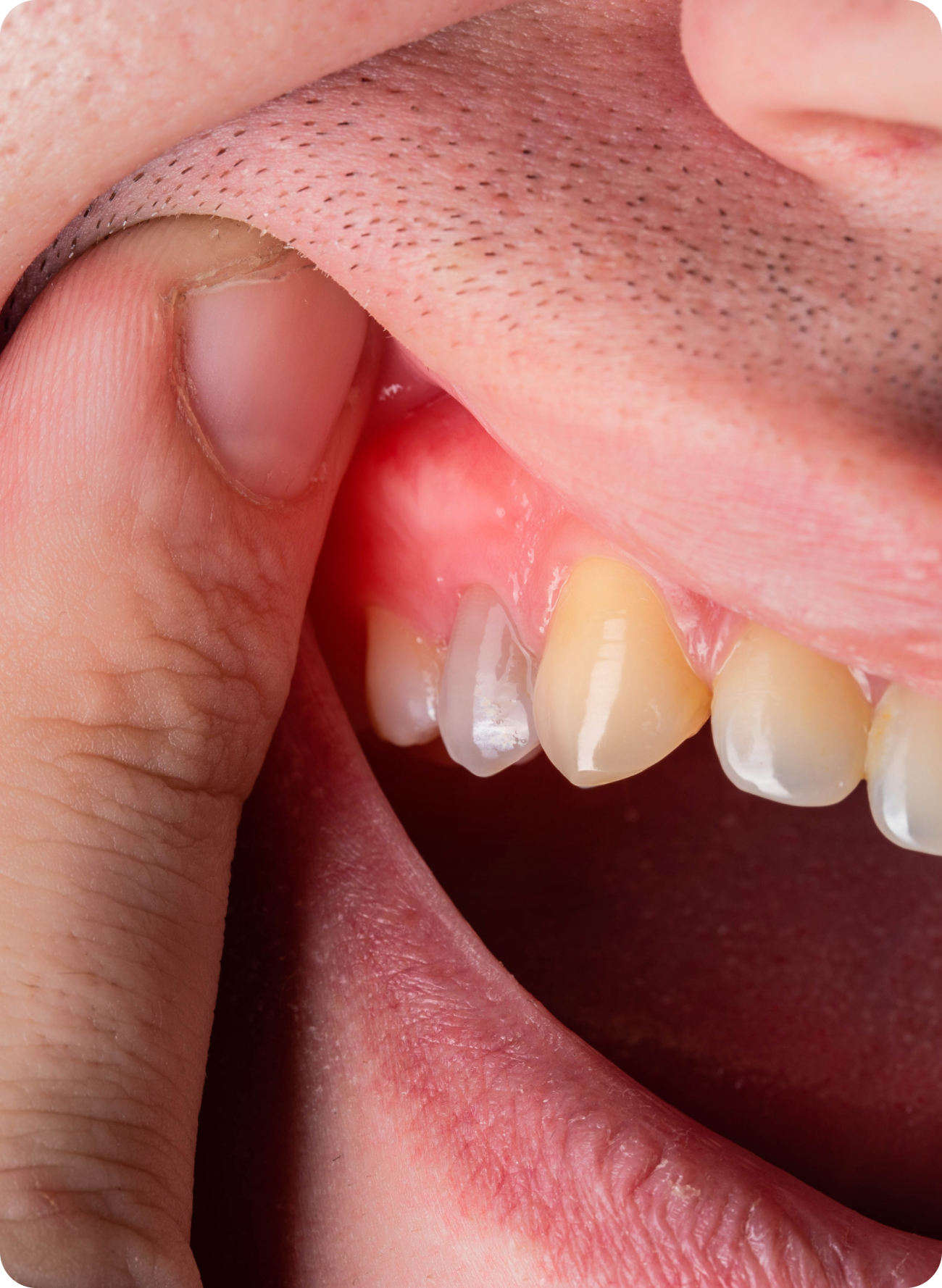
A localized abscess — swelling confined to the gum around one tooth, not spreading
For these situations, focus on first aid and discomfort management tonight, then contact your dentist’s office first thing in the morning.
Why does dental discomfort feel worse at night?
Lying down increases blood flow to your head, amplifying the throbbing in an already inflamed tooth. With no daytime distractions competing for your attention, every pulse feels sharper.
Two factors compound this: Bruxism (nighttime grinding) can aggravate a sensitive tooth without you realizing it, and sinus congestion — worse when lying flat — creates pressure that mimics a toothache in the upper back teeth.
Intensity at 3 AM is not a reliable indicator of severity. Triage based on your specific symptoms, not how much it hurts right now.
Step-by-step first aid for common nighttime dental emergencies
Knocked-out tooth — the 30-minute window
A knocked-out (avulsed) tooth is one of the few dental emergencies where minutes genuinely matter. According to the American Association of Endodontists, prompt reimplantation is important, and returning a tooth to the socket within 30 minutes may improve the likelihood of successful reimplantation.²
1. Pick up the tooth by the crown — the white visible part — never by the root.
2. If it's dirty, rinse it gently with cold whole milk or saline; do not scrub or use tap water.
3. If possible, gently reinsert it into the socket and hold it in place by biting softly on a clean cloth.
4. If reinsertion isn't possible, store the tooth submerged in cold whole milk or between your cheek and gum — never in water or wrapped in a tissue.
5. Get to an emergency dental provider immediately
Water can damage periodontal ligament cells on the root that are important for reimplantation. Milk may help preserve these cells and is generally recommended as a temporary storage medium until professional care is available. This single detail is the difference between saving and losing the tooth.
Dental abscess — when does it become dangerous?
A dental abscess is a bacterial infection that creates a pocket of pus near the tooth root or surrounding gum tissue. Swelling limited to one area of the gum is serious but usually not life-threatening. Ibuprofen and warm saltwater rinses may help manage discomfort overnight, but you should see your dentist as soon as possible.
The situation becomes more urgent if swelling spreads into the jaw, cheek, neck or throat. According to the Mayo Clinic, untreated dental infections can spread into deeper tissues and, in severe cases, affect the airway.³ If you develop spreading swelling, difficulty swallowing or trouble breathing, go to the emergency room immediately.
Do not try to drain the abscess yourself. Puncturing or squeezing it can push the infection deeper into surrounding tissue.
Broken or cracked tooth
A broken tooth is urgent if there is significant bleeding, intense sensitivity to air or touch (indicating exposed nerve tissue) or if a large fragment has broken off. A minor chip with no discomfort can wait until morning without first aid beyond rinsing.
1. Rinse gently with warm water.
2. If there is bleeding, apply gentle pressure with a clean gauze pad for 10–15 minutes.
3. Save any broken fragments in a small container of milk or saliva.
4. Cover sharp edges with a small piece of sugar-free gum or dental wax to protect your tongue and cheek.
5. Avoid chewing on that side
Lost filling or crown
A lost filling or crown is rarely a true emergency, but the exposed tooth can be extremely sensitive to temperature and pressure. Temporary dental cement (sold as Dentemp or similar at most pharmacies) can protect the tooth overnight.
1. Clean the area gently with warm water.
2. Apply a small amount of temporary dental cement or a piece of sugar-free gum to cover the exposed area.
3. Avoid chewing on that side.
4. Avoid very hot, cold or sweet foods and drinks until you're seen.
Bleeding that won't stop
Minor bleeding from a bitten cheek or irritated gum usually responds to 15–20 minutes of firm, continuous pressure with a clean gauze pad or a damp black tea bag (the tannic acid in black tea helps constrict blood vessels). Do not keep lifting the gauze to check; consistent pressure is what stops bleeding.
If bleeding does not slow after 20 minutes of firm pressure, or if it is coming from a deep laceration or trauma site, go to the ER.
What the ER can — and cannot — do for dental emergencies
This is one of the most misunderstood aspects of nighttime dental care. Knowing what to expect prevents wasted time and frustration.
The ER can:
Prescribe antibiotics for spreading infection
Prescribe stronger medication for discomfort
Treat facial trauma and jaw fractures
Manage life-threatening infections and airway concerns
Administer IV antibiotics for severe spreading cellulitis
The ER cannot:
Perform root canals
Reimplant knocked-out teeth
Repair broken or cracked teeth
Place fillings or crowns
Drain a dental abscess (in most cases)
For most dental emergencies the ER is a bridge: It can manage infection and discomfort until you can see a dental provider. It is not a substitute for dental treatment. If your situation is not life-threatening, you will likely leave with a prescription and instructions to follow up with a dental provider as soon as possible.
Home relief methods that actually work
These approaches are clinically sound and can meaningfully reduce discomfort while you wait:
Ibuprofen and acetaminophen alternating
Taking 400 mg of ibuprofen and 500 mg of acetaminophen together (if you have no contraindications), may provide greater relief of acute dental discomfort than either medication alone. The two medications work through different mechanisms and are safe to combine at standard doses.⁴
Warm saltwater rinse
Reduces inflammation and helps keep the area clean; do not use hot water.
Cold compress
Apply to the outside of your cheek for 15–20 minutes on, 15 minutes off; cold reduces swelling and numbs the area; do not apply ice directly to the tooth.
Head elevation
Sleep with an extra pillow to reduce blood pressure to the head and lessen throbbing.
OTC topical anesthetics
Products containing benzocaine (such as Orajel) provide short-term surface numbing for gum soreness.
What not to do tonight
Some common instincts can make things worse:
Do not place aspirin directly on the gum or tooth: Aspirin is acidic and will chemically burn the soft tissue, causing additional damage.
Do not apply heat to a swollen area: Heat increases blood flow and can accelerate the spread of infection.
Do not attempt to drain an abscess yourself: This risks pushing bacteria into deeper tissue.
Do not store a knocked-out tooth in water: Water destroys the root cells needed for reimplantation; use milk or saliva.
Do not ignore spreading swelling: If swelling is moving toward your neck or throat, go to the ER — do not wait until morning.
When to see your dentist
If your symptoms do not require the ER tonight, the next step is getting professional care as early as possible tomorrow. Dental emergencies can worsen quickly. Infections spread, exposed nerves become more irritated and temporary fixes rarely last long.
Call your nearest Aspen Dental office when it opens. Many locations offer same-day emergency appointments. When you call, explain:
Where the discomfort is located
Whether you have swelling or fever
How long the symptoms have been present
What steps you have already taken
Mention if the discomfort woke you from sleep, since that often signals a more urgent problem.
3 AM dental emergency survival guide FAQs
Can a toothache go away on its own overnight?
Minor irritation (such as food trapped between teeth or a small gum injury) may improve overnight. Discomfort caused by infection, a cracked tooth or nerve inflammation usually will not. If the discomfort woke you from sleep or feels severe, it should be evaluated promptly.
Can sinus pressure cause tooth discomfort?
Yes. The roots of the upper back teeth sit close to the maxillary sinuses, so sinus pressure can create aching that feels like a toothache. Sinus-related discomfort usually affects multiple upper teeth at once and often occurs alongside congestion or a recent cold.
What can the ER actually do for a dental emergency?
Emergency rooms can treat the systemic effects of a dental emergency; they can prescribe antibiotics if an infection is spreading and provide prescription pain relief. What they cannot do is perform dental procedures. They will not drain an abscess, re-implant a knocked-out tooth or repair a fracture. If you go to the ER overnight, you still need to see a dentist the following morning to treat the underlying problem.
Will dental pain go away on its own by morning?
It depends on the cause. Pain from a cracked tooth, exposed nerve or abscess will not resolve on its own and will worsen without treatment. Discomfort caused by sinus pressure or minor gum irritation may ease with time. As a general rule: If the pain is severe, throbbing or accompanied by swelling, it will not go away without professional care. Do not wait to see if it improves. Schedule an appointment at your nearest Aspen Dental as soon as your office opens.
How long can I safely wait before seeing a provider for a knocked-out tooth?
A knocked-out tooth should be treated as immediately as possible (ideally within 30 minutes). After an hour outside the socket, the likelihood of successful reimplantation may be reduced. If it is the middle of the night and no emergency dental provider is available, keep the tooth stored in cold whole milk and get to a dental provider the moment one opens.
Sources
¹ American Dental Association — Dental Emergencies: https://www.ada.org/resources/ada-library/oral-health-topics/dental-emergencies
² American Association of Endodontists — Knocked Out Teeth: https://www.aae.org/patients/dental-symptoms/knocked-out-teeth/
³ Mayo Clinic — Tooth Abscess: https://www.mayoclinic.org/diseases-conditions/tooth-abscess/symptoms-causes/syc-20350901
⁴ Moore RA, et al. — "Single dose oral analgesics for acute postoperative pain in adults," Cochrane Database of Systematic Reviews: https://www.cochranelibrary.com/cdsr/doi/10.1002/14651858.CD008659.pub2/full
Disclaimer
This article is for informational purposes only and does not constitute medical advice. If you are experiencing a life-threatening emergency, call 911 or go to your nearest emergency room immediately. For dental concerns, consult your Aspen Dental provider.