Last updated 04.16.2026
Root canals: before and after
If you're experiencing tooth discomfort or jaw pain, talk to your Aspen Dental team about root canal therapy.
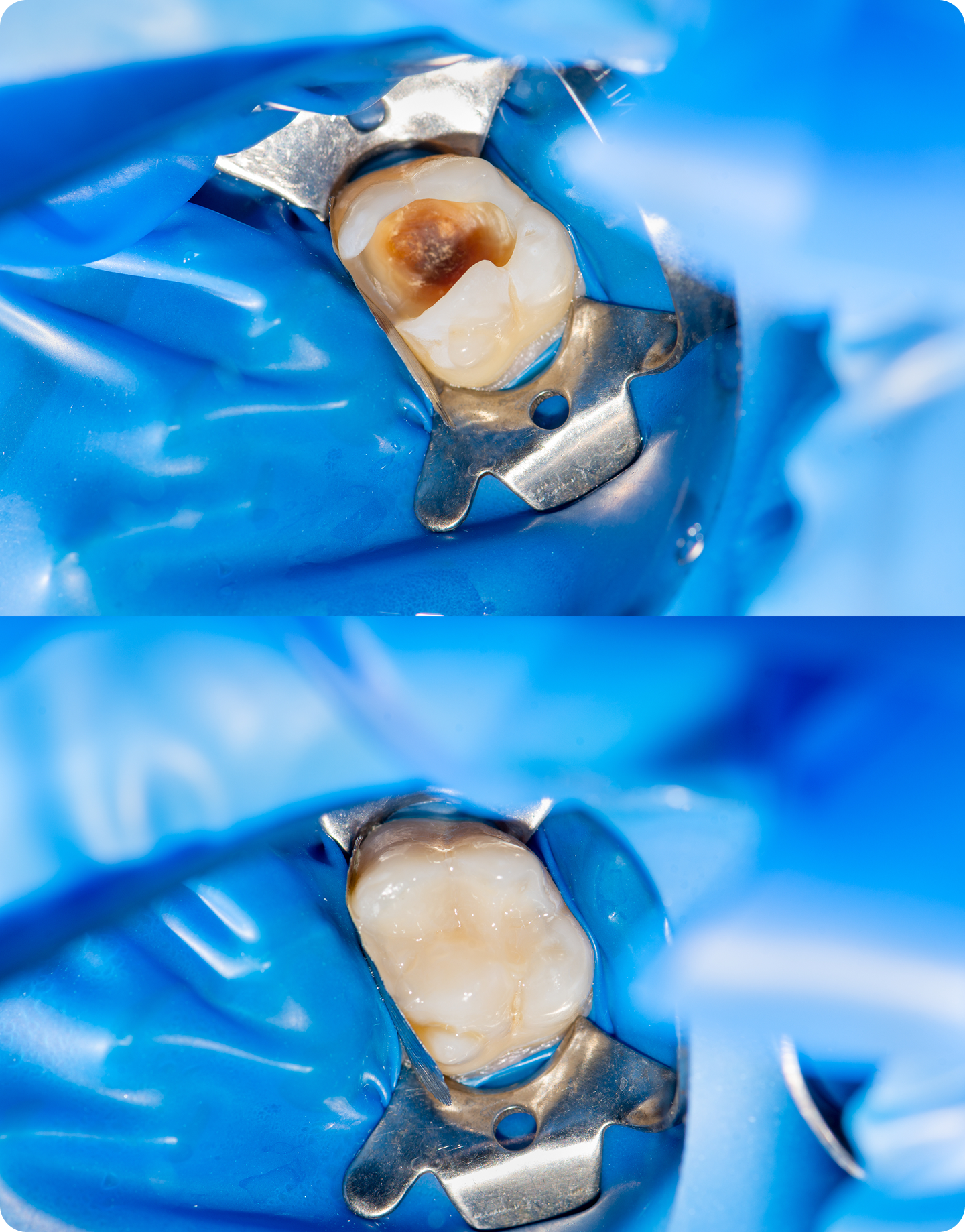
Although a root canal can sound intimidating, it’s actually a fairly simple procedure to help save the health of your tooth. If you’re experiencing tooth discomfort or jaw pain—talk to your Aspen Dental team about root canal therapy to get back to looking and feeling your best.
Deciding what to do before and after a root canal procedure
If your Aspen Dental care team recommends root canal therapy to benefit your oral health, don’t worry. It’s a fairly simple procedure, but it’s normal to have questions as you prepare for treatment.
Here’s a quick overview of what to expect before and after your root canal.
Before your root canal procedure
Consultation
Root canal therapy begins with a consultation with your Aspen Dental dentist. They’ll examine your tooth, take X-rays and go over your customized care plan with you.
Preparing for the procedure
Your dentist will provide you with instructions on how to best prepare for your root canal. This may include avoiding certain medications, fasting before the procedure, or arranging transportation if you'll be receiving any sedative medication.
Getting comfortable
Talk with your Aspen Dental care team about how you’re feeling going into the procedure. To provide you with a relaxing experience, your dentist can provide sedation if it makes you feel more comfortable.
Understanding the procedure
Understanding the steps of your root canal treatment can help you prepare for it. A root canal entails careful removal of the infected dental pulp from the affected tooth, thoroughly cleaning and disinfecting the area, and then finally sealing it to protect it from future damage.
Root canal questions? Just ask.
We’re happy to answer all your questions as you prepare for your root canal. We love it when our patients show up for treatment feeling confident, and we’ll do everything we can to make you feel as comfortable as possible.
After the root canal procedure
Recovery
Good news! Most people return to normal function within a day or so following root canal therapy. If you experience any discomfort or sensitivity after treatment, your dentist can prescribe you over-the-counter pain medication to help.
Temporary sensitivity
After your tooth has been treated, it’s common to experience temporary sensitivity. To minimize discomfort, avoid biting or chewing on hard foods on that side of your mouth until the sensitivity subsides.
Oral hygiene
Maintaining good oral hygiene is essential for a successful recovery. Follow your dentist’s instructions on brushing, flossing and using mouthwash.
Follow-up appointments
Your dentist will work with you to schedule any necessary follow-up appointments to monitor the health and improvement of your treated tooth.
Dental restoration
After the root canal, your tooth may need the protection of a dental crown or other restoration to protect and fortify it. Your Aspen Dental care team will share your options with you and work with you to schedule any additional appointments.
Diet
Immediately following treatment, we recommend sticking to soft foods that are easy to eat. Nix the hot coffee and cold ice cream for a bit to keep your teeth happy while you heal.
Managing discomfort
If for some reason you’re experiencing pain, swelling or other concerning symptoms, call your Aspen Dental dentist right away so they can get you the care you need.
Your healthy smile
Although they get a bad rap, root canals are straightforward dental procedures that alleviate discomfort and can save the health of your teeth. With proper care and follow-up, you’ll be smiling confidently again in no time.
Before and after root canal procedure on different types of teeth
A root canal procedure can be performed on all types of teeth, depending on the location and the condition of the affected tooth. Here’s a look at what you can expect before and after a root canal, as well as how root canals are performed on different types of teeth.
Types of root canals
Dead tooth root canals
A dead tooth root canal, also known as a non-vital root canal, is a dental procedure performed on a tooth that’s lost its vitality due to infection or trauma. A dead tooth root canal can effectively save the tooth from extraction, eliminate discomfort and prevent the spreading of infection to surrounding tissues.
Incisor, canine and premolar root canals
Because incisors, canines, and premolars have a single canal, the time it takes to perform the root canal treatment is significantly shorter. If you need a root canal in one of your front teeth, you’ll also have a shorter recovery time.
Molar root canals
Molar root canals take a bit more time to treat because they have two or three canals. Your dentist will take care to properly clean and shape the multiple canals to promote the health of your tooth and prevent recurring infection.
Ready for your before and after root canal moment?
If you’re ready to enhance the health of your smile, talk with your dentist to see if root canal therapy can help. Schedule an appointment today or visit your local Aspen Dental office.