Last updated 01.22.2026
Canker Sore: Causes and Treatment
Wondering why you get canker sores? Learn causes, symptoms, treatment options, and when to call a dentist.
Discover what causes canker sores, and the best treatment options to get rid of them. Managing canker sores can be uncomfortable. Knowing what triggers your sores and how to treat them is crucial for maintaining a pain-free, healthy smile. At Aspen Dental, we're dedicated to helping you navigate the challenges of canker sores with ease and confidence.
What are canker sores?
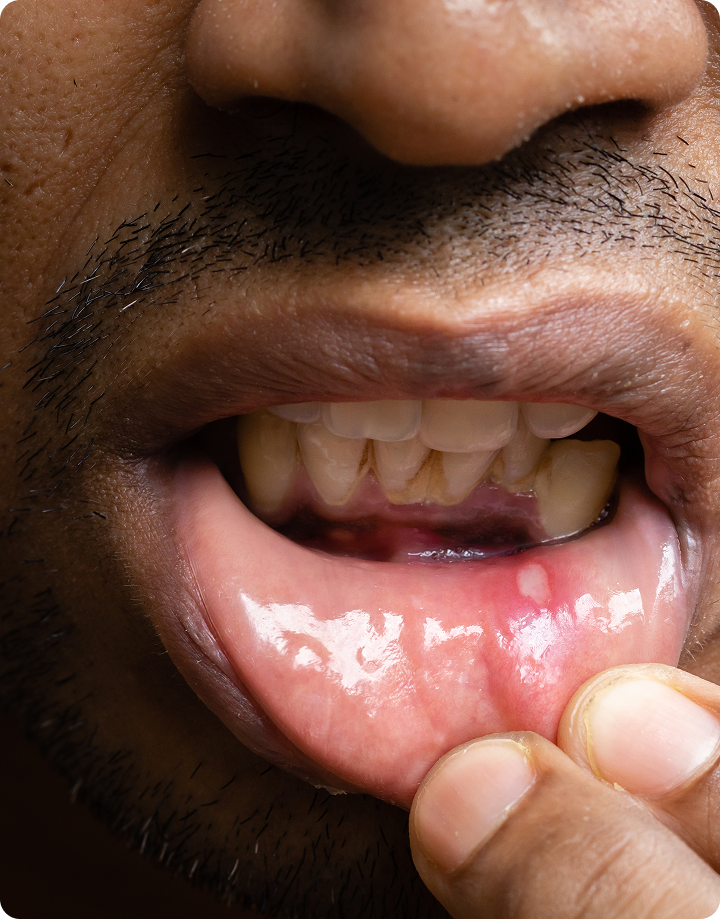
A canker sore (aphthous ulcers) is a small, shallow ulcer that makes eating and talking uncomfortable. These sores appear as round or oval with a white or yellow center and a red border inside the mouth, lips, tongue, inside of cheeks or gums. While they aren't contagious, canker sores usually heal within a week or two.
Causes of canker sores
While the exact cause of canker sores is unknown, according to the National Institute of Dental and Craniofacial Research (NIDCR)¹, they are said to be linked to:
Minor injury
Accidentally biting the inside of your cheek or brushing your teeth too vigorously can cause a canker sore to develop.
Certain foods
Spicy or acidic foods, as well as food sensitivities or allergies, can trigger canker sores in some people.
Nutritional deficiencies
Lack of certain vitamins and minerals, such as vitamin B-12, zinc, folic acid, or iron, may contribute to the development of canker sores.
Stress
Emotional stress or anxiety can weaken the immune system and make you more susceptible to developing canker sores.
Hormonal changes
Some people may experience canker sores during hormonal fluctuations, such as during menstruation.
Underlying health conditions
Conditions such as celiac disease, inflammatory bowel disease, or a weakened immune system may increase the likelihood of developing canker sores.
Smoking
Smoking can increase the risk of developing canker sores by irritating the mouth’s soft tissues.
¹Fever Blisters & Canker Sores | National Institute of Dental and Craniofacial Research, n.d.
Canker sore vs. cold sore
Canker sores and cold sores are often confused with each other. However, these two oral annoyances are completely different. Knowing the difference is important when approaching treatment.
Canker sores
These small, shallow ulcers typically appear inside the mouth on the inner cheeks, lips, tongue, or gums. They are not contagious and may be caused by stress, minor injuries, or nutrient deficiencies. Canker sores have a white or yellow center with a red border. For treatment, they might require over the counter topical ointments or at home remedies.
Cold sores
Caused by the herpes simplex virus, cold sores are contagious and often appear as fluid-filled blisters on or around the lips and face. They can be triggered by stress, sunlight, or illness and often crust over as they heal. They often improve with the use of topical treatments or antiviral medicines.
Types of canker sores
Minor canker sores
These are the most common type, usually small, oval ulcers with a red edge that heal without scarring within one to two weeks. They cause minimal pain and typically don’t cause any long-term issues.
Major canker sores
Larger and deeper than minor sores, major canker sores are round with defined borders but can be even more painful and may take up to four weeks to heal, potentially leaving behind a scar.
Herpetiform canker sores
Despite the name, these have no relation to herpes virus infections. Herpetiform ulcers are pinpoint in size and often appear in clusters of 10 to 100 at a time.
Symptoms of canker sores
Pain
Canker sores bring significant oral discomfort, ranging from mild to severe, especially when eating, drinking, or talking.
Lesions
These sores appear as round or oval white/yellowish lesions on the inner cheeks, lips, tongue, or gums, with a red inflamed border.
Burning or tingling sensation
Before the sore appears, a tingling or burning sensation in the affected area may be felt.
Difficulty eating or drinking
The tenderness makes consuming foods and beverages, especially acidic, spicy, or rough-textured items, challenging.
Swelling
The area around the sore may become swollen, adding to the discomfort.
Recurrent sores
Some individuals experience new lesions every few weeks or months, leading to a cyclical pattern.
Treatment options for canker sores
Over-the-counter (OTC) treatments
Products such as oral numbing gels can provide immediate pain relief. OTC topical pastes can also be applied directly to the ulcer to form a protective barrier and help reduce irritation.
Home remedies
Simple home remedies like rinsing the mouth with a saltwater solution or using a baking soda paste can help relieve pain and reduce inflammation.
Nutritional supplements
If your canker sores are due to nutritional deficiencies, supplements like vitamin B12, iron, and folic acid might be beneficial.
Home remedies for canker sores
Salt water rinse
Mixing one teaspoon of salt in a half cup of warm water and rinsing your mouth can help reduce soreness and swelling.
Baking soda paste
Create a paste with baking soda and a little water, apply it directly to the sore. This can help reduce inflammation and neutralize acids that irritate the sore.
Honey application
Honey is known for its antibacterial properties. Applying a small amount of honey to the sore several times a day can soothe irritation and help with healing.
Coconut oil
With its anti-inflammatory and antimicrobial properties, dabbing a little coconut oil on the sore can reduce swelling and prevent infection.
Chamomile tea rinse
To help prevent canker sores, practice good oral hygiene, avoid irritating foods, manage stress, stay hydrated, ensure a balanced diet with essential nutrients, quit smoking, and protect your mouth from irritation caused by dental appliances.
Preventing canker sores
Managing canker sores involves more than just treating them when they appear; it’s also about taking steps to prevent them from developing in the first place. Here are some preventive measures you can take to keep canker sores at bay:
Maintaining good oral hygiene
Regular brushing and flossing can help prevent canker sores by keeping your mouth clean and free of food particles and bacteria that may trigger them.
Avoid certain foods
Spicy, acidic, or sharp foods can irritate the mouth and lead to canker sores. Try to avoid foods that seem to trigger your sores.
Use soft toothbrushes
Harsh brushing with a hard-bristled toothbrush can damage mouth tissues. Using a soft-bristled brush can reduce irritation.
Manage stress
Stress can trigger canker sores, so finding effective ways to manage stress through activities like yoga, meditation, or regular exercise can improve mental and oral health.
Protect your mouth
If you have braces or other dental appliances, consider using orthodontic wax to cover any sharp edges that might irritate your mouth lining.
When to see your dentist
For the most part, canker sores do not require immediate medical attention, however, consider seeing a healthcare provider if sores are unusually large, persist for more than two weeks, are accompanied by severe pain, or if you experience high fevers. It’s best to keep your oral hygiene in check to keep these pesky sores at minimum.
Canker sore FAQs
How to get rid of canker sores?
Canker sores usually heal on their own within one to two weeks. To ease discomfort, avoid spicy or acidic foods, use over-the-counter oral pain relief gels, or rinse your mouth with a mild saltwater solution.
Are canker sores contagious?
No, canker sores are not contagious. They are ulcers that form inside the mouth and are not caused by a virus, unlike cold sores which are highly contagious.
Are canker sores and cold sores the same thing?
No, canker sores and cold sores are not the same. Canker sores are non-contagious ulcers that appear inside the mouth, whereas cold sores are highly contagious and usually appear on the lips or around the mouth as fluid-filled blisters. Cold sores are caused by the herpes simplex virus (HSV-1).
How do you speed up the healing of a canker sore?
To speed up the healing of a canker sore, try maintaining good oral hygiene, avoid foods that may irritate the sore, and apply topical treatments such as benzocaine. For severe cases, your dentist might prescribe antimicrobial mouthwashes or corticosteroid ointments to reduce pain and inflammation.
How do you prevent canker sores?
To help prevent canker sores, practice good oral hygiene, avoid irritating foods, manage stress, stay hydrated, ensure a balanced diet with essential nutrients, quit smoking, and protect your mouth from irritation caused by dental appliances.