Last updated 07.01.2026
Why does my bad tooth give me a migraine on one side?
Learn how a bad tooth can trigger one-sided migraine-like pain, the dental problems most often responsible and when to seek treatment.

A bad tooth is when a tooth becomes infected, cracked or severely decayed, irritation travels along this nerve and produces aching in your temple, eye or ear on the same side. This can cause a throbbing, one-sided headache — and it can feel exactly like a migraine. The reason is a nerve called the trigeminal nerve, which runs from your jaw up through one side of your face and head.
What you'll learn in this article:
The trigeminal nerve serves only one side of the face — which is why tooth-related headaches stay so localized
A dental infection is the most common trigger, and the aching will typically intensify without treatment
If the aching is consistently on the same side as a tooth you already know is bad, the tooth is almost certainly the cause
Swelling, fever or difficulty swallowing alongside the headache signals an infection that needs same-day evaluation
Treating the tooth typically resolves the one-sided aching within 24–48 hours
If these symptoms sound familiar, schedule an appointment with your nearest Aspen Dental provider.
How a bad tooth sends aching to one side of your head
Why does the discomfort only happen on one side?
The trigeminal nerve, which carries sensation from the teeth and face, has separate branches for each side of the mouth. When a tooth becomes infected, damaged or irritated, the discomfort usually travels along the nerve pathways on that same side. That's why a problem with a tooth on the left side is more likely to cause aching in the left jaw, cheek, temple or ear rather than the right side. This discomfort often feels very localized because the nerve signals typically do not cross to the opposite side of the face.
What is referred pain?
Referred pain is aching felt somewhere other than the actual source. Your brain struggles to pinpoint exactly where a nerve signal started, so it registers the discomfort across a wider area. A bad tooth produces head and face aching in the same way a heart attack can produce arm aching — the tooth is the source, but the head is where you feel it. This connection isn’t always clearly explained, which can leave patients wondering why a tooth problem seems to be causing a migraine.
Can a bad tooth actually trigger a real migraine?
Yes — and this is the part many people don't expect. Your teeth, jaw and much of the face share nerve pathways through the trigeminal nerve, which also plays a central role in migraine disorders. When a tooth is infected, damaged or severely inflamed, persistent irritation can sensitize the trigeminal nerve and trigger a chain of events associated with migraine symptoms.
As a result, some people experience throbbing, one-sided head pain, light sensitivity or nausea that feels indistinguishable from a migraine. Research on the trigeminal nerve's role in headache suggests that when an underlying dental problem is contributing to these symptoms, treating the source of the irritation may help reduce or resolve them.²
Which dental problems most commonly cause this
Now that you know how the signal travels, here is what starts it. Not every tooth problem generates enough nerve irritation to reach your head — but these do.
Tooth infection or abscess
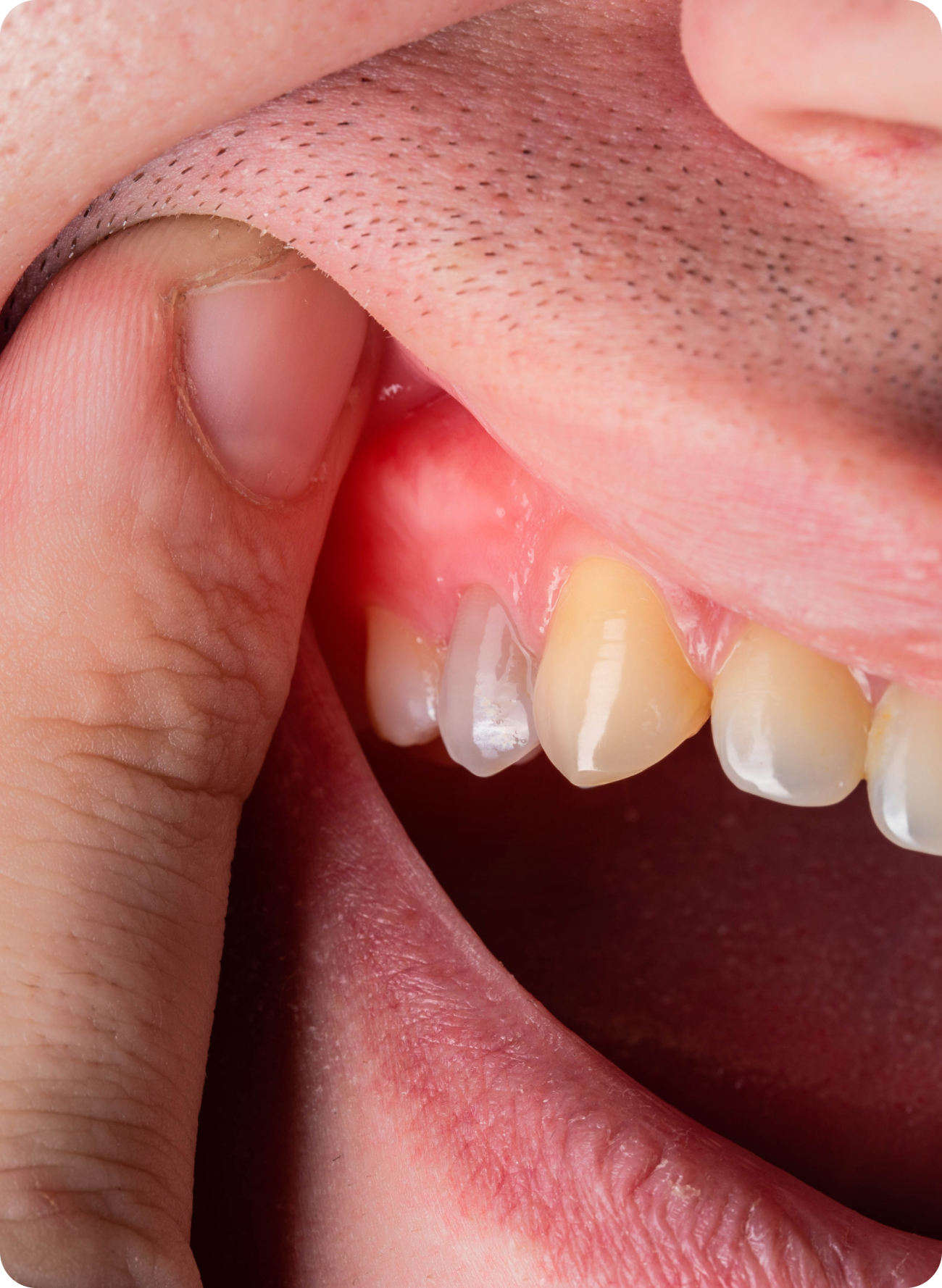
A bacterial infection inside a tooth can cause inflammation that irritates the trigeminal nerve, producing throbbing discomfort that radiates into the jaw, face, temple or one side of the head. Because these symptoms can closely resemble a migraine, dental infections are often overlooked as a potential cause of one-sided head discomfort. An untreated abscess is one of the most common dental causes of referred head pain. "A 2019 case study published in Neurology and Therapy documented a patient whose chronic migraine fully resolved once a hidden dental infection was identified and treated — a direct confirmation that the tooth was the source.1
A cracked tooth
A crack exposes the nerve inside the tooth. Biting down can send sharp, electric-like sensations up the nerve pathway. Over time, this becomes a persistent, one-sided throbbing.
Severe decay
When decay reaches the inner pulp — the soft tissue at the center of the tooth — the nerve becomes irritated. The result is often a deep ache that radiates upward into the jaw and temple.
Teeth grinding (bruxism)
Constant grinding puts sustained pressure on the jaw joint and surrounding muscles. This tension produces a dull ache in the temples and behind the eyes — usually on the dominant chewing side.
Impacted or emerging impacted wisdom tooth
A wisdom tooth, especially in the upper jaw — sits close to major nerves and sinus cavities. As it pushes against neighboring teeth and bone, it generates pressure that radiates upward into the temple and ear on that side. If your wisdom teeth have not been evaluated and you have ongoing one-sided head aching, this is worth investigating.
Bite compensation
When a tooth is sore, most people instinctively shift how they chew to avoid it — often without realizing. Over time, this uneven biting pattern strains the jaw joint and surrounding muscles. That sustained tension produces a dull, one-sided ache in the temple that closely mimics a tension headache or migraine.
How to tell if your headache is coming from your tooth
The location and pattern of aching are your clearest clues. Headaches with a dental source tend to:
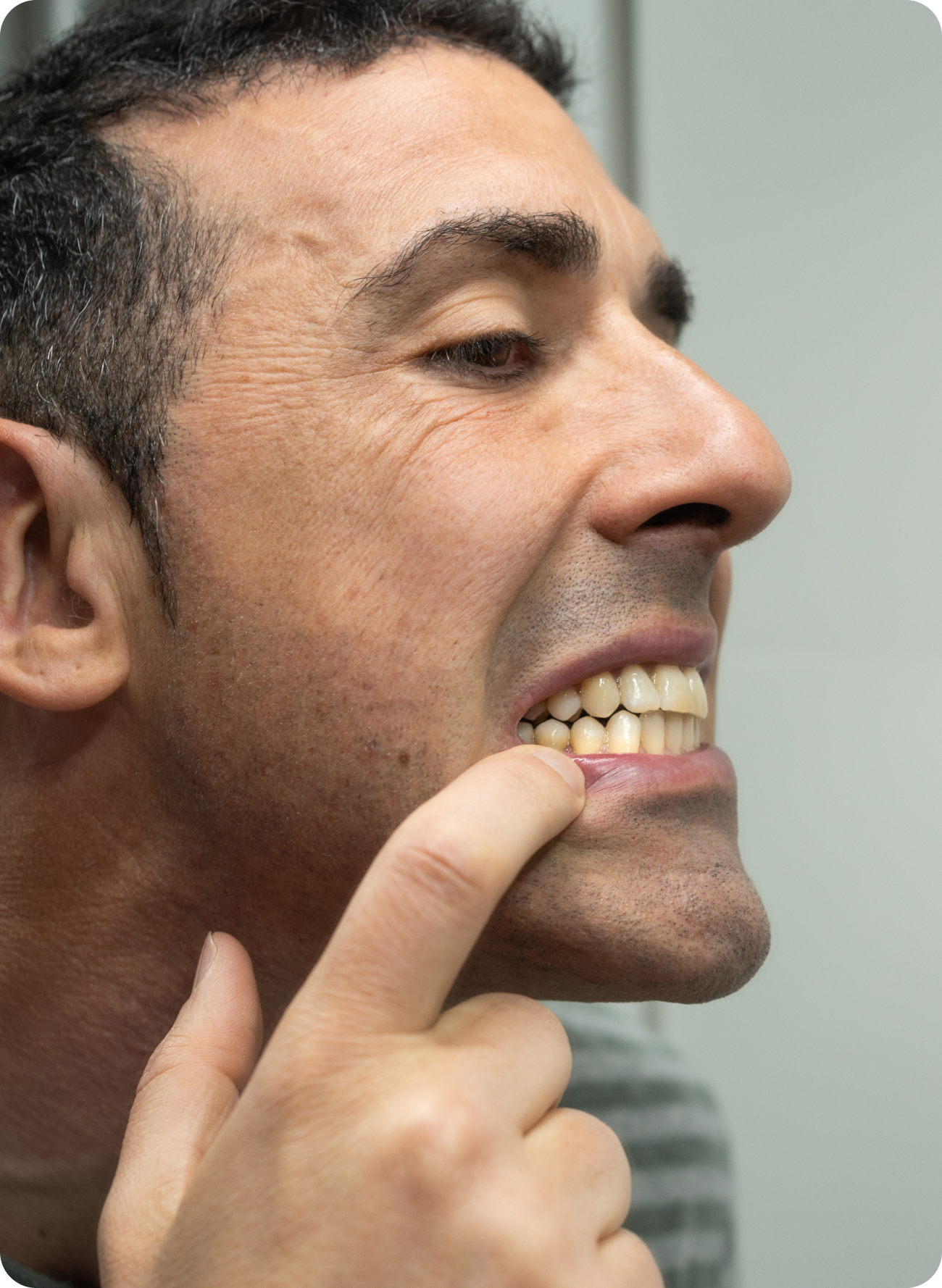
Occur on the same side as a tooth that has been sensitive, sore or recently troublesome
Worsen when biting down or chewing on that side
Come with jaw soreness, facial tenderness or visible swelling near the tooth
Be accompanied by sensitivity to hot, cold or pressure in a specific tooth
A true migraine, by contrast, typically brings light and sound sensitivity, nausea and visual changes — and may shift sides between episodes. If your headache is consistently on the same side as a tooth you already know is bad, the tooth is the more likely starting point.
When to seek care — and where to go
Not every tooth-related headache is the same level of urgency. Here is how to decide what to do next.
If you have any of these symptoms, go to an urgent care center or emergency room right away — do not wait for a dental appointment:
Swelling in your jaw, cheek or neck
Difficulty swallowing or opening your mouth fully
Fever alongside the facial aching
Swelling spreading toward your eye or throat
These are signs that a dental infection may have spread beyond the tooth into the surrounding tissue. That is a medical emergency.
If your symptoms do not include any of the above — but a tooth that has been sore, sensitive or visibly damaged is now producing one-sided head aching — that combination is not a coincidence. The two symptoms are connected, and treating the tooth is what resolves both.
A dental provider can examine the tooth, identify whether infection, a crack or decay is driving the aching and recommend the right course of treatment. Waiting to see if the discomfort passes is not a safe approach with dental infections — they intensify without care.
Schedule an appointment with your nearest Aspen Dental provider to have the tooth evaluated.
Why does my bad tooth give me a migraine on one side? FAQs
Can a tooth infection spread and make a headache worse over time?
Yes. As a dental infection grows, it creates more pressure and more widespread nerve irritation. One-sided head aching caused by an abscess tends to intensify — not improve — as the infection progresses. In rare but serious cases, an untreated dental infection can spread into the jaw and neck tissue. This is why escalating aching alongside swelling or fever requires urgent same-day evaluation, not a wait-and-see approach.
How long does a tooth-related headache typically last?
It depends on the cause. Aching from a dental infection persists until the infection is treated and typically worsens without care. Headaches from teeth grinding may ease temporarily with stress reduction but return without a long-term management plan such as a night guard. Once the underlying dental issue is addressed, most patients notice significant improvement in head aching within 24–48 hours.
Can this type of headache be confused with a sinus headache?
Yes — and it often is. A bad upper tooth sits directly below the sinus cavity, which means an infected upper molar can produce pressure, facial tenderness and one-sided aching that feels identical to a sinus headache. If you have been treating a sinus headache with decongestants and it is not clearing, a tooth is worth investigating. An Aspen Dental provider can help determine whether a dental issue or a sinus issue is driving the discomfort.
Will the headache go away once the tooth is treated?
In most cases, yes. Once the source of nerve irritation — infection, decay or structural damage — is resolved, the referred aching typically subsides along with it. Some patients notice improvement within the first day or two after treatment. If head aching continues after the tooth has been treated, let your dental provider know — they can help determine whether a separate underlying cause needs to be addressed.
Sources
1Zagury JG, et al. "Chronic migraine headache and multiple dental pathologies." Neurology and Therapy, 2019. https://pmc.ncbi.nlm.nih.gov/articles/PMC6768330/
2Edvinsson JCA, et al. "The fifth cranial nerve in headaches." Journal of Headache and Pain, 2020. https://pmc.ncbi.nlm.nih.gov/articles/PMC7275328/