Last updated 07.24.2026
Why does my dental floss keep shredding between the same two teeth?
Learn why floss keeps shredding in the same spot, the most common causes and when it's time to see a dental provider.

If your floss keeps shredding between the same two teeth, it's usually a sign of a problem with the tooth, not the floss. A rough filling, chipped tooth, tartar buildup or another sharp edge can catch and fray the floss each time you use it. The good news is that most of these problems are easy to fix, and your dental provider can identify the cause and recommend the right treatment.
What you'll learn in this article:
Floss shredding in the exact same spot is typically a sign of a structural issue between your teeth, not bad technique or poor-quality floss.
The most common causes include a rough filling edge, tartar buildup, a cracked tooth, a cavity between teeth and a poorly fitting crown or restoration.
Switching to a wax-coated or PTFE floss may reduce shredding temporarily, but it won't fix the underlying dental problem.
Most causes are easy to diagnose and treat — but left unaddressed, they allow cavities, gum problems and food traps to worsen.
If your floss keeps shredding between the same two teeth, schedule an appointment with your Aspen Dental provider for a personalized evaluation.
Why the "same spot" is the most important clue
If your floss shreds in different places, the problem may be the type of floss you're using or your flossing technique. But if it always shreds between the same two teeth, there's usually a structural problem.
Where two teeth touch is called the contact point. It should be smooth enough for floss to slide through with gentle resistance. If there's a rough filling, a sharp edge or another irregular surface, the floss can catch and fray. When shredding happens in the same spot every time, it's a sign that something in that area needs attention.
Common causes of floss shredding between teeth
Is a rough or overhanging filling causing the problem?
Fillings placed between teeth are among the most frequent culprits. If the edge of a filling isn't perfectly smooth and flush with the tooth surface, the floss catches on it. Sometimes a small amount of excess filling material projects slightly into the space — even a tiny irregularity is enough to fray floss consistently. Your dental provider can identify and smooth a rough filling edge, often in a single visit.
Can tartar make my floss shred?
Tartar — also called calculus — is hardened plaque that builds up on teeth over time. Unlike soft plaque, tartar has a rough, uneven texture that acts almost like sandpaper against floss. When tartar accumulates along the gumline between teeth, it can shred floss on contact. Tartar cannot be removed at home — only a professional cleaning will clear it.1
What if my tooth is cracked or chipped?
A crack or chip along the edge of a tooth can create a sharp point that consistently tears floss. This kind of damage isn't always visible in a mirror, especially between teeth. If the shredding spot also feels rough to your tongue, or you notice occasional sensitivity when biting down, a cracked or chipped tooth may be the cause.
Can a cavity between my teeth cause shredding?
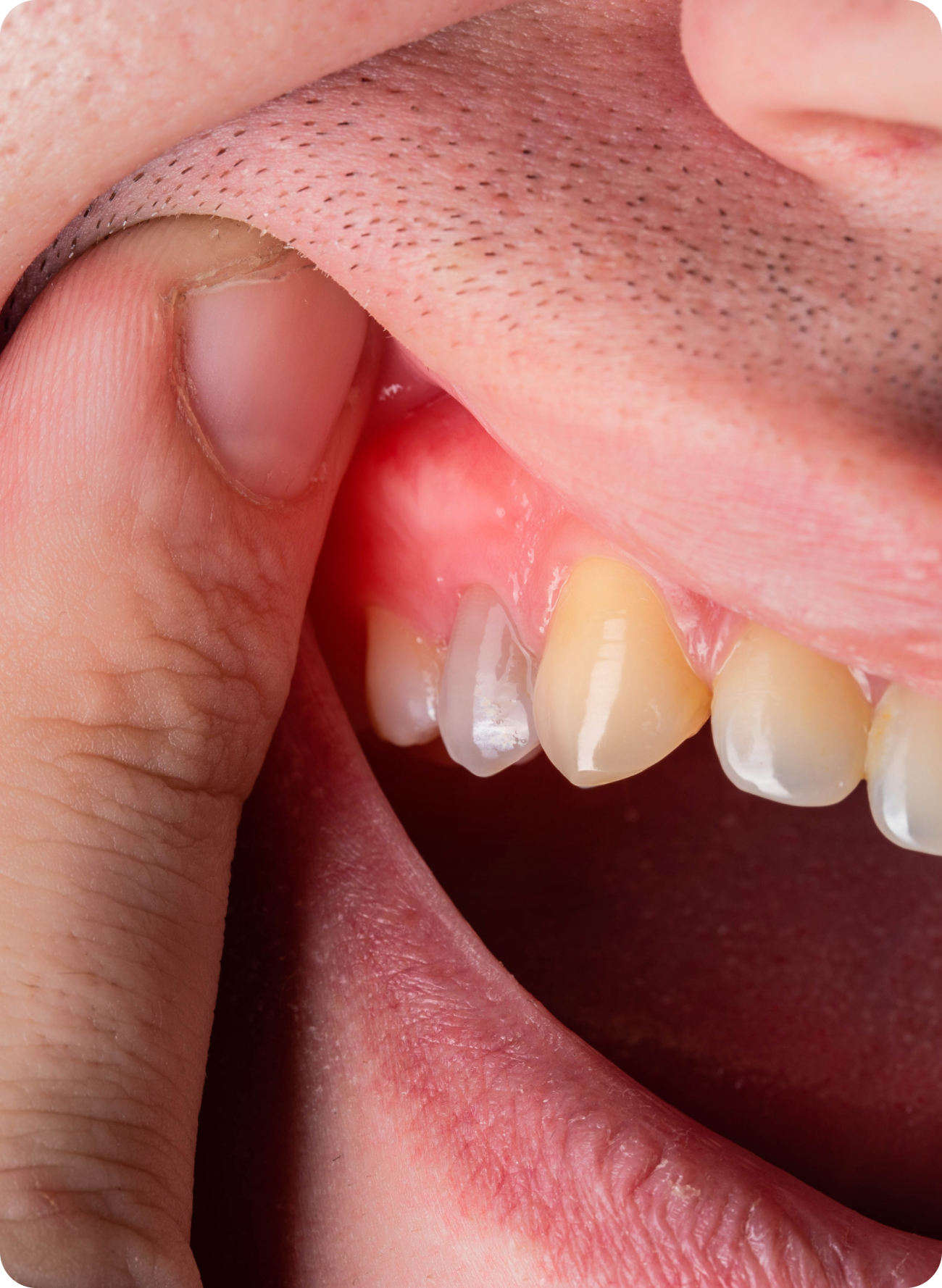
Cavities that develop between teeth (called interproximal cavities) create a soft, irregular surface on the tooth. As the decay progresses, the surface becomes uneven enough to catch and fray floss. Shredding in one spot is sometimes the first noticeable sign that a cavity is forming in an area that's hard to see on your own.
Could my crown or dental work be the problem?
If a crown, bridge or older restoration doesn't fit precisely at its edge, the small ledge where the restoration meets the tooth can catch floss in the same way a rough filling would. Over time, a poorly fitting restoration can also allow bacteria to collect underneath. This is another reason not to ignore a shredding spot that doesn't improve.
Could the floss itself be the problem?
Sometimes — it depends on the type of floss and where the shredding happens. Standard woven floss is more likely to shred than PTFE (which is short for polytetrafluoroethylene) floss, which is a smooth, single-strand floss often labeled "Glide" or "shred-resistant." Waxed floss is another good option because it slides more easily between tight teeth.
It's worth trying a different type of floss. But if it still shreds in the same spot, the floss isn't the problem. A rough or uneven surface between those teeth is likely catching it and should be checked by your dental provider.
When should you see your dental provider?
Schedule an appointment if:
Floss shreds between the same two teeth consistently
You notice bleeding, soreness or swelling in that area
Food keeps catching in the same spot
You feel a rough edge with your tongue
You had recent dental work in the area and the shredding started afterward
Your dental provider can identify the exact cause as part of a routine exam and recommend the right next step, whether that's smoothing a filling, a professional cleaning or another simple fix. Most of these problems are easy to address once they're found.
Why does my dental floss keep shredding between the same two teeth? FAQs
Most cases of shredding floss have a simple explanation, but it's normal to have questions. Here are answers to some of the ones patients ask most often.
Is shredding floss a sign of gum disease?
Not automatically, but there is a connection worth knowing. Plaque that isn't removed can harden into tartar, which increases the risk of gingivitis and gum disease.2 If the area where your floss shreds also bleeds, feels tender or looks swollen, let your dental provider know. Those symptoms may point to an underlying problem that should be evaluated.
How long can I wait before seeing a dental provider if my floss keeps shredding?
Don't wait longer than you have to. Most causes of floss shredding—such as a rough filling, tartar buildup or an early cavity—are easy to treat when caught early but can get worse over time. A cavity between two teeth, for example, may continue to grow before you notice other symptoms.
If the shredding is also causing bleeding, soreness or food getting stuck in the same spot, schedule an appointment as soon as you can. In the meantime, PTFE floss may shred less, but it won't fix the underlying problem. Your dental provider can identify the cause and, in most cases, treat it quickly.
Should I keep flossing even if the floss shreds every time?
Yes — don't stop flossing. Skipping that area allows plaque and debris to build up, which can make the underlying problem worse. PTFE floss may help you get through the space more comfortably while you wait for your appointment. Schedule an evaluation with your dental provider to identify the cause, and keep flossing the rest of your teeth in the meantime.
Sources
1American Dental Association. "Dental Floss/Interdental Cleaners." https://www.ada.org/resources/ada-library/oral-health-topics/floss
2Mayo Clinic. "Periodontitis — Symptoms and causes." https://www.mayoclinic.org/diseases-conditions/periodontitis/symptoms-causes/syc-20354473